


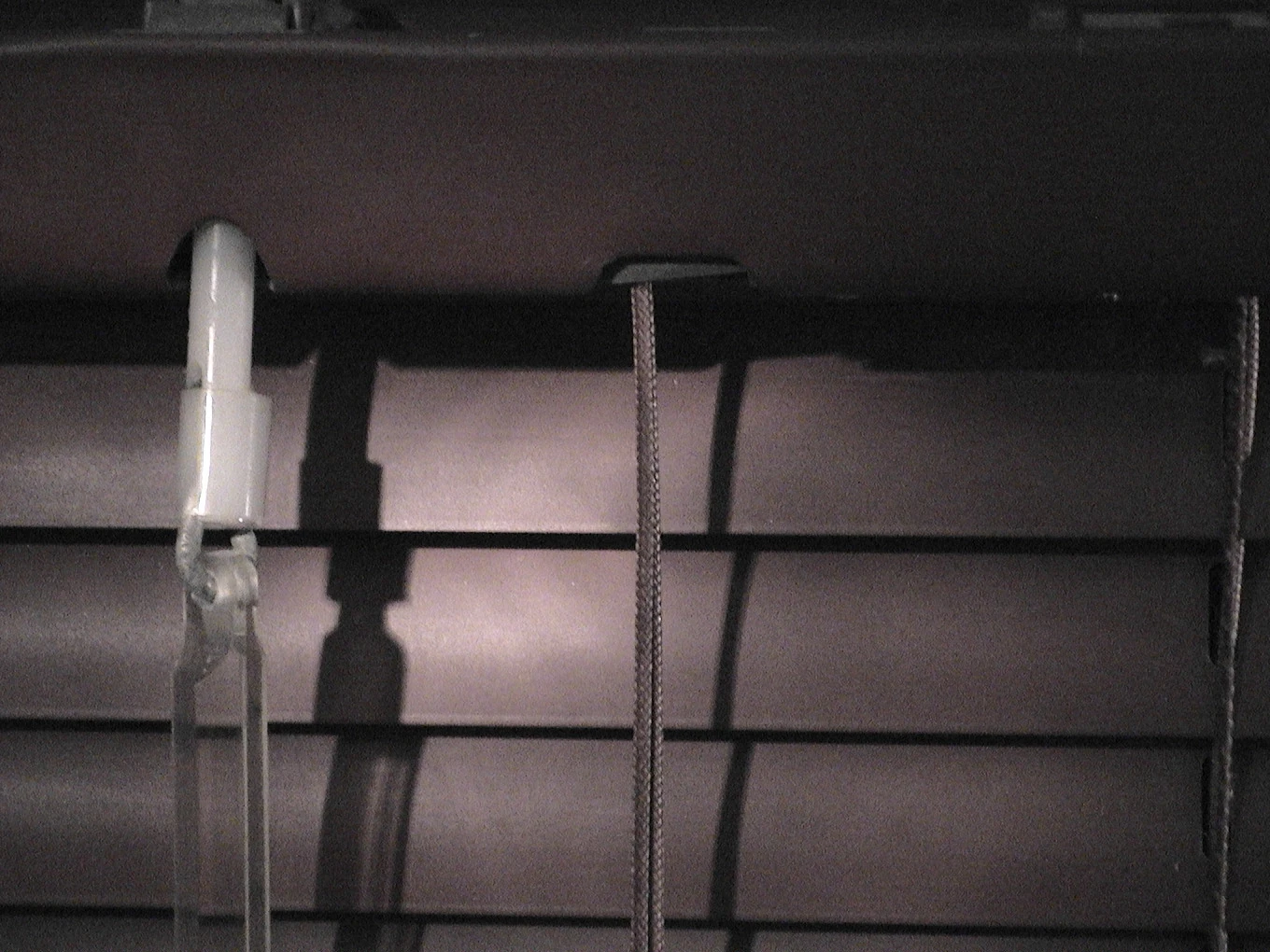
Blind cleaning starts with identifying the window covering. A soft cloth may be enough for dusty wood slats; the same cloth, dampened, may be unsuitable for a fabric shade. Check the maker and model before choosing a cleaner, even when two blinds look alike.
This guide covers routine household care and the decisions to make before tackling a stain. It does not assume that every shade can be washed, removed from its brackets or cleaned with an upholstery solvent. The product instructions take priority over the general suggestions below.
Find the care instructions before using water
Look for an order record, product label or installation booklet. Write down the manufacturer, collection and fabric name if you can find them. A description such as “white bedroom blind” is useful for your household list, but it will not tell a supplier whether the material tolerates moisture.
If the paperwork is missing, photograph the covering and ask the original seller or manufacturer for identification. Until you have an answer, avoid experimenting with stain removers or taking the assembly apart. A spare offcut, if available, is more useful for discussing the material than guessing from its color.
Do not transfer a W, S or X upholstery-care rule from a sofa to a window shade. Use a code only when the shade’s own documentation defines it. “Unknown” does not mean “dry-clean only,” and it is not permission to try a solvent.
What the manufacturer examples actually allow
| Product example | Care described by its maker | Limit to remember |
|---|---|---|
| LEVOLOR wood and faux-wood blinds in the linked installation guide | Periodic dusting with a soft cloth or duster; gentle vacuuming with a brush attachment and low suction | The lightly dampened-cloth spot-cleaning instruction is for faux wood only |
| Hunter Douglas real-wood blinds | Dust with the slats tilted almost closed; a brush vacuum attachment is also listed | Protect wood from steam and high moisture; chemical solvents and abrasive cleaners are not recommended |
| Hunter Douglas fabric collections | Methods vary by product and fabric | Some fabrics must not be spot-cleaned, and some require a different vacuum attachment |
The LEVOLOR wood and faux-wood installation guide, care page 19, also warns against contact with window-cleaning products. It is a useful reminder to keep glass cleaner off the blind while cleaning the adjacent window.
Hunter Douglas’s wood-blind guidance advises tilting rather than shutting the slats completely, which leaves access to the overlapping surfaces. Neither example establishes a universal washing method for a different brand.
A routine dusting pass without taking the blind down
Once you have confirmed that the suggested dusting method is suitable, prepare a clean soft cloth or the attachment specified by the maker. You do not need a bucket of cleaning products for loose surface dust.
- Check that you can reach the covering comfortably. If the upper section is beyond reach, arrange suitable help rather than balancing on furniture.
- Position the blind as its instructions describe. For horizontal slats, work on an accessible section instead of gripping several slats tightly together.
- Remove loose dust with light pressure. Use the permitted vacuum setting and attachment if you choose that method.
- Change the slat angle to reach the other surface where applicable. Do not force a jammed mechanism to expose a dirty patch.
- Clean the sill separately, keeping its cleaner away from the blind. Note any stains that need a different, product-approved treatment.
Work in sections so you can see what you have finished. If a cloth becomes dirty, change or clean it before continuing. There is no reliable five-minute promise for an unknown window size, and a high or delicate covering may be a job to hand over.
Spot-cleaning: an instruction for one fabric is not an instruction for all
The Hunter Douglas home-care article updated in August 2026 allows gentle blotting with a clean white cloth and a mild solution for some products. It also names exceptions: Alustra Vignette and Pirouette products, for example, are not to be spot-cleaned. Its vacuuming instructions have fabric-specific exceptions too.
That makes “fabric blind” too broad a description for a washing recommendation. Find the instructions for the actual fabric before blotting, brushing or applying a cleaning wipe. Test a permitted method in an inconspicuous area when the instructions require it; a test does not override an explicit prohibition.
Keep a note of the stain and any product already applied. If a first approved attempt does not work, stop and ask the supplier about the next step. Repeated scrubbing or adding a second chemical makes it harder to assess what happened.
Wood, faux wood and metal need separate decisions
For real wood, begin with the dry method in the manufacturer’s guide. Do not assume a furniture polish, vinegar solution or conditioner is appropriate because it says “wood” on the bottle. Hunter Douglas includes preservative advice for some stained wood products; that is not a recommendation to coat every painted or composite slat.
Faux wood is not an automatic invitation to soak the whole blind. The headrail, tapes and other components need their own instructions. Similarly, knowing that a slat is aluminum does not establish that the assembled blind can go in a bathtub.
Where damp cleaning is specifically permitted, follow the stated solution and drying method. Avoid substituting a stronger cleaner because a stain is stubborn. Do not spray a solution into the headrail or infer that raising and lowering the blind will dry its internal parts.
Vertical and motorized coverings
Do not unclip vertical vanes simply because they appear removable. Check the model’s removal and cleaning instructions first, including any weights, connecting chains or fabric restrictions. If you do remove approved parts, label their positions and keep the instructions available for reassembly.
For a motorized covering, consult its own care and power-isolation instructions. Do not open a headrail or pull at wiring to follow a generic cleaning tip. If you cannot identify the system or safely reach it, ask the installer about cleaning it in place or arranging removal.
When the problem is mold, water damage or smoke residue
A musty or visibly moldy fabric shade needs more consideration than a routine dusting job. EPA’s mold-cleanup guidance says to address moisture problems and explains that mold can be difficult or impossible to remove completely from porous materials. Some affected items may need disposal.
Do not treat a generic “anti-mildew cloth” as proof that a shade has been restored. Ask about the material and the cause of the dampness before deciding whether to clean or replace it. Fire residue and contaminated-water damage also deserve specialist advice rather than a household stain-removal experiment.
Set a schedule you can adjust
Put a check of the blinds on your existing cleaning list, then adjust the interval to what you actually find. You might start by checking one kitchen blind and one bedroom blind after a week. If neither needs cleaning, record that instead of doing a damp wipe because a calendar says so.
A simple note can contain the room, model, approved method and last cleaning date. Keep stains or operating faults in a separate column so they do not become repeated cleaning tasks. There is no evidence here for promising cleaner air, allergy relief or a particular service life from a weekly dusting routine.
Questions to ask a professional cleaner
- Have you identified the exact product and fabric?
- Which manufacturer’s instructions support the proposed method?
- Does the quote include removal, transport and reinstallation, if needed?
- What happens if the stain cannot be removed, or the covering cannot tolerate the proposed treatment?
Keep the written method and quote. This guide does not provide a national price average or promise that professional cleaning will cost less than replacement; compare the actual options for the covering you own.
Common questions
Can I use vinegar on every hard-surface blind?
No. Use it only if the care instructions for the specific product allow it. A broad material description such as PVC, coated metal or faux wood is not enough.
Can I steam a cellular or Roman shade?
Do not use steam without product-specific approval. Some manufacturer instructions permit specialized treatment for named collections; that permission does not extend to every shade.
Should I tie operating cords together while cleaning?
Do not create a loop or alter the safety arrangement. Keep cords out of children’s reach and follow the product’s safety instructions. Cleaning is not a reason to improvise a different cord system.
Sources checked 28 October 2026. This is a source-based household-care guide, not a record of a cleaning service performed by our team. The featured photograph is JesseW’s archival detail of a Venetian blind, dated 25 December 2004; it does not identify your product or demonstrate an approved cleaning method.
Image credit: JesseW / Wikimedia Commons, CC BY-SA 3.0. Converted to WebP; the image remains under the same license. No manufacturer endorsement is implied.
More household topics: Home Maintenance.
Leave a Reply