

Mold remediation companies: what they actually do and how to choose one
A small black stain at the corner of a ceiling tile, a musty smell that lingers after a long shower, a damp patch that reappears on a basement wall every time it rains. These are the situations that send homeowners searching for mold remediation companies, usually after a leak, a flood, or a stretch of humid weather they underestimated. The industry that responds to those calls is uneven: some firms are full-service restoration outfits with industrial air scrubbers, antimicrobial treatments, and licensed applicators; others are general cleaning contractors who own a fogger and a slogan. Knowing the difference, and knowing the right questions to ask, is what separates a clean, dry home from a recurring problem behind the walls.
Mold remediation companies exist to identify the source of moisture feeding the growth, contain the affected area, remove contaminated materials that cannot be salvaged, clean what can be saved, and bring the indoor air quality back to a safe range. Done well, the work protects both the building and the people inside it. Done poorly, the visible stain disappears while the colony keeps growing behind fresh paint, and the problem returns within a season. The rest of this page walks through how these companies operate, what their pricing typically includes, what certifications and standards matter, and the practical checks a homeowner or building manager can use to compare bids before signing anything.
What mold remediation companies actually do on a job
The term mold remediation is broader than mold removal. Removal implies that every spore is gone, which is not a realistic promise in a built environment. Remediation means bringing mold levels back to a normal, healthy range and removing the conditions that allowed growth in the first place. The job has a recognizable sequence, and most reputable contractors follow some version of it.
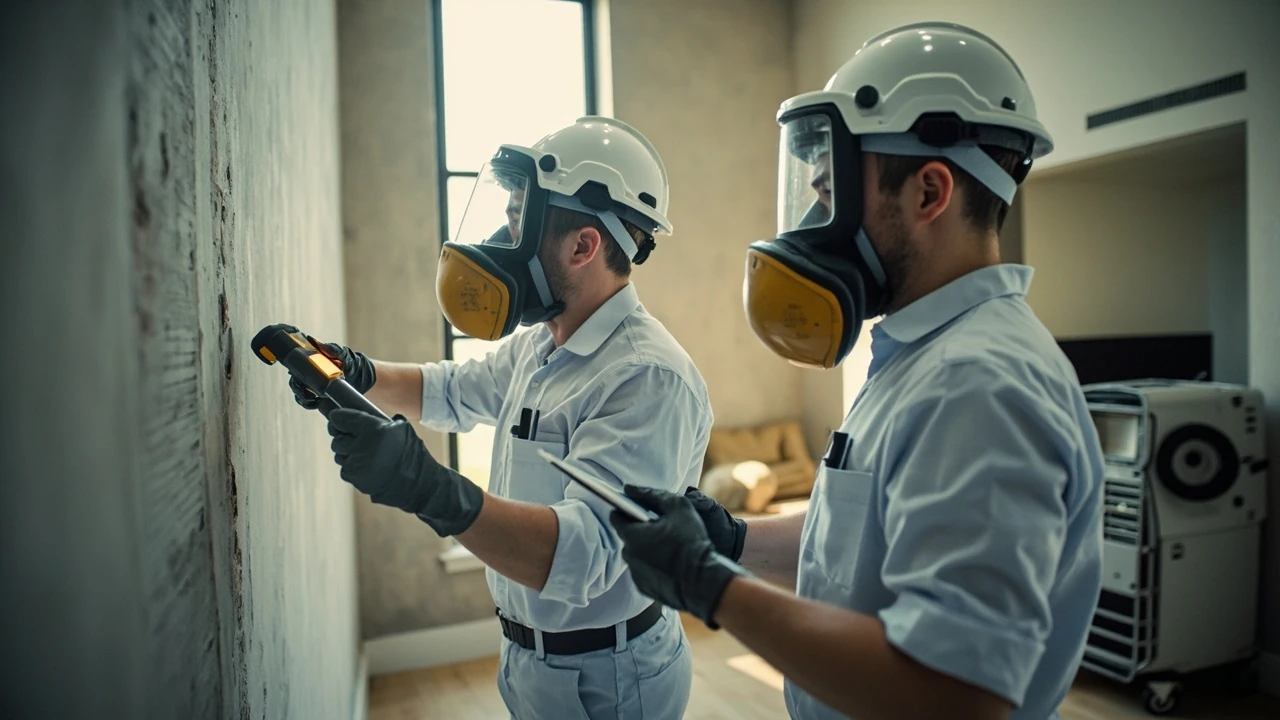
- Source identification. A technician inspects the visible growth and uses moisture meters and sometimes infrared cameras to find the hidden water source: a leaking supply line behind a vanity, a roof flashing failure, capillary wicking from a foundation, or elevated humidity from an unventilated bathroom.
- Containment. Plastic sheeting and negative-pressure air machines isolate the work area so spores do not migrate into clean rooms. Supply and return vents in the zone are sealed.
- Air filtration. HEPA-filtered air scrubbers and HEPA vacuums capture airborne spores during demolition and cleaning. Standard household vacuums are not used because they blow fine particles back into the air.
- Removal of contaminated materials. Porous items that have grown into, like drywall, carpet pad, insulation, and ceiling tiles, are cut out and bagged. Semi-porous materials such as wood framing may be cleaned and sealed rather than removed, depending on the damage level.
- Antimicrobial and antifungal treatment. Remaining structure is treated with products designed to eliminate active colonies and inhibit regrowth. Application of certain products requires a state-issued pesticide applicator license in many U.S. jurisdictions.
- Drying and verification. Dehumidifiers and air movers bring moisture levels back to a dry standard. A clearance inspection, sometimes by an independent industrial hygienist, confirms the work area is back to normal fungal ecology before reconstruction begins.
Reconstruction, the act of replacing drywall, painting, and reinstalling trim, is often handled by the same company but is technically a separate scope. Some homeowners split that work between the remediation firm and their own contractor to keep the bid focused on cleaning and drying.
How mold remediation companies price their work
Most mold remediation companies price by the square footage of the affected area, with surcharges for the severity of the growth and the type of materials involved. Industry surveys and contractor disclosures from recent years place typical residential jobs in a wide range, because the variables multiply quickly. The table below summarizes the price bands a homeowner is likely to see in the United States, using a current public survey as a reference point rather than a single contractor quote.
| Job size | Approximate affected area | Typical price range (USD) | What usually drives the cost |
|---|---|---|---|
| Small localized job | Under 10 sq ft, often a single wall or ceiling patch | $500 – $1,500 | Single material, easy access, short containment |
| Mid-size job | 10 – 30 sq ft, often a bathroom or basement corner | $1,500 – $3,500 | Containment, multiple material types, drying equipment rental period |
| Large residential job | 30 – 100 sq ft, often a basement or attic section | $3,500 – $8,000 | Demolition, several days of equipment, possible antimicrobial application |
| Whole-room or whole-floor job | Over 100 sq ft or multiple rooms | $8,000 – $20,000+ | Extensive demolition, structural drying, licensed antimicrobial applicator, clearance testing |
Several add-ons change the bottom line independently of square footage. Independent clearance testing by an industrial hygienist usually runs $300 to $800, depending on the number of samples. Contents manipulation, the act of moving and storing furniture, documents, and personal items while the work area is contained, is often billed as a separate line. So is reconstruction. A bid that covers demolition and cleaning but stops at the bare studs is not the same price as a bid that returns the room to a paint-ready state.
Homeowners should also expect the visit itself, the inspection and written scope, to carry a fee from serious firms. Free inspections are common, but a paid inspection with a documented scope of work and a fixed price carries more weight when negotiating with an insurance carrier or comparing competing bids.
Credentials and standards that separate professionals from the rest
The mold industry is lightly regulated in most U.S. states, which is exactly why credentials matter. A homeowner cannot rely on a business license alone to evaluate a contractor. The following list covers the credentials that are widely recognized across the United States and are worth checking before any contract is signed.
- IICRC Applied Microbial Remediation Technician (AMRT). The Institute of Inspection Cleaning and Restoration Certification is the main trade body for restoration work. AMRT is the specific designation for technicians who handle mold.
- IICRC Water Damage Restoration Technician (WRT). Mold and water are linked, and a crew that understands moisture mapping, drying goals, and dehumidification is better equipped to prevent regrowth.
- State pesticide or antimicrobial applicator license. Many states require a license to apply antimicrobial products used in mold remediation. Ask to see the license and confirm it covers the category of product being used.
- General liability and pollution liability insurance. General liability covers property damage, but pollution liability is the policy that responds to claims related to the spread of contaminants during remediation. Restoration work without it is a real exposure for the homeowner.
- Independent third-party clearance. Some firms employ their own hygienist to sign off on the job; others hire an independent inspector. Either is acceptable, but independence reduces the obvious conflict of interest.
Membership in a national franchise network, such as SERVPRO, Restoration Builders, or PuroClean, is not a credential on its own, but the network usually enforces baseline training, insurance, and equipment standards. Independent local firms can be equally qualified; the proof is the paperwork, not the brand name. For an example of how a national network presents its process, the SERVPRO mold remediation service description walks through containment, HEPA filtration, antimicrobial treatment, and material removal in roughly the order most professionals follow.
Questions to ask before signing a mold remediation contract
Two bids for the same visible stain can differ by thousands of dollars, and the gap usually comes down to scope and method, not profit. The questions below are designed to make those differences visible before any money changes hands.
- Who performs the initial inspection, and is the resulting written scope of work free, paid, or credited against the job?
- What is the moisture source, and how do you plan to address it so the mold does not return after the cleaning?
- Which materials are scheduled for removal, and which are scheduled for cleaning and sealing?
- What containment will you install, and for how long will the air scrubbers run?
- What antimicrobial products do you intend to apply, and do you hold a state license for that product category?
- Who performs the clearance inspection at the end, and is that person independent of the remediation crew?
- Is the bid a firm price, a not-to-exceed price, or a time-and-materials estimate?
- Does your general liability policy include pollution coverage for the work being performed?
A serious contractor will answer these questions in writing. A vague answer to any of them, especially around containment, licensing, or clearance, is a signal to keep looking.
Red flags that often point to the wrong contractor
The mold remediation industry attracts a steady share of opportunistic operators, particularly after regional weather events when demand spikes. Knowing the common warning signs saves a homeowner from a poor outcome and a wasted insurance claim.
| Warning sign | Why it matters |
|---|---|
| Pressure to sign a contract during the first visit | Legitimate firms expect to compete on scope and price, not on urgency |
| No moisture mapping or source identification | Cleaning visible mold without addressing the water source guarantees regrowth |
| Quote based only on square footage, with no material list | Hides whether expensive demolition is included or billed later |
| Refusal to share product labels or applicator license | Untrained application of antimicrobials can be ineffective or unsafe |
| No mention of containment or HEPA filtration | Spreads spores to the rest of the home during the work |
| Cash discount or no written contract | Removes the paper trail an insurance carrier will require |
| Guarantee that mold will never return | No remediation firm can honestly make that promise once a building has had a moisture event |
None of these signs is automatically disqualifying on its own, but two or three together should push the search toward another firm.
Insurance, documentation, and how mold claims usually work
Standard homeowners insurance treats mold as a secondary issue. For additional context, If the mold growth was caused by a sudden and accidental water event, such as a burst pipe or a failed water heater, the underlying water damage is often covered and a portion of the remediation is too. If the mold resulted from long-term neglect, a chronic leak, or high humidity that the homeowner should have addressed, coverage is usually denied.
The practical effect is that documentation decides the outcome of a claim. Photos of the source leak, the visible growth, and any damaged contents should be taken the same day. The contractor’s scope of work, the moisture readings, and the final clearance report all become part of the file. Mold remediation companies that work regularly with insurance carriers will often use the same forms and software as adjusters, which speeds up approval and reduces back-and-forth.
For commercial properties, the picture changes again. Business interruption, lost inventory, and the cost of relocating operations during drying can dwarf the cleaning bill. A commercial remediation firm will usually produce a timeline that maps the work to business hours, tenant access, and any regulatory reporting required by the local health department or building code office.
How to compare two or more bids fairly
Once three bids are on the table, the cheapest is rarely the best and the most expensive is not automatically the most thorough. The table below shows how to align two bids against the same checklist so the comparison becomes meaningful.
| Line item | Bid A | Bid B |
|---|---|---|
| Inspection and written scope | Included or separately priced | Included or separately priced |
| Moisture source identification | Method and equipment used | Method and equipment used |
| Containment (plastic, negative pressure) | Yes / No / Days | Yes / No / Days |
| HEPA air filtration duration | Days on site | Days on site |
| Materials removed (with quantities) | Listed by location and square footage | Listed by location and square footage |
| Antimicrobial treatment and licensing | Product name, license number | Product name, license number |
| Structural drying plan | Equipment type and target moisture content | Equipment type and target moisture content |
| Clearance inspection | In-house or third-party hygienist | In-house or third-party hygienist |
| Reconstruction scope | Included, excluded, or separated | Included, excluded, or separated |
| Warranty on the work performed | Length and what it covers | Length and what it covers |
If a bid is silent on one of these line items, the homeowner should assume it is not included and ask for a written answer. A two-page proposal that lists equipment, materials, and clearance in plain language is almost always a better bet than a glossy brochure with a single bottom-line number.
What to expect during and after the work
For most residential jobs, the active work takes two to five days. Day one is usually setup: containment, equipment placement, and removal of unsalvageable materials. Days two and three are cleaning, antimicrobial application, and drying. A final day is often reserved for the clearance inspection and the start of reconstruction. Larger jobs, especially those that involve multiple rooms or a basement, can run two to three weeks once structural drying is included.
During the work, the homeowner should expect noise from air scrubbers and dehumidifiers running around the clock, a strong smell from the antimicrobial products for the first 24 hours, and limited access to the work area. The remediation company should provide a written daily update with moisture readings, especially during the drying phase. After clearance, reconstruction can begin, and the work area returns to a paint-ready state over the following days or weeks.
For background on the underlying biology and why damp indoor environments need fast attention, the Wikipedia article on indoor mold covers how spores spread, which materials support growth, and what public health agencies recommend for prevention. The page is a useful sanity check on any contractor claim that sounds too dramatic or too dismissive.
Preventing the next call to a mold remediation company
Remediation is the response, not the prevention. Most calls to mold remediation companies are the result of a moisture problem that could have been caught earlier. A simple post-remediation routine goes a long way toward keeping the next contractor visit years away instead of months.
- Keep indoor relative humidity below 50 percent, measured with a cheap digital hygrometer in the most humid room.
- Run the bathroom and kitchen exhaust fans during and for 20 minutes after showers and cooking.
- Inspect plumbing supply lines, water heater, washing machine hoses, and refrigerator icemaker lines once a year for slow leaks.
- Clear the condensate drain on the air handler or mini-split every few months; a clogged drain pan is a frequent source of hidden mold.
- Address any roof or foundation leak within a week, including the drying phase, not just the visible repair.
- After any water event, even a small one, dry the affected area within 24 to 48 hours. Carpet pad and drywall that stay wet longer than that are already candidates for removal.
None of these steps are exotic, and most of them are already habits of careful homeowners. The reason to list them is that mold grows predictably when the basics slip, and a single ignored supply line can produce a remediation bill in the thousands.
Finding mold remediation companies in your area
Searching locally will return a mix of national franchises, regional restoration companies, and small independent operators. A reasonable shortlist usually comes from two sources: an insurance carrier’s preferred vendor list, if a claim is involved, and a personal referral from a contractor, a property manager, or a neighbor who has been through the same job. The third-party review sites are noisy for this trade, but they can confirm that a company actually answers the phone and finishes jobs on the timeline it quotes.
For homeowners planning a remodel at the same time as a remediation, a related read on the kitchen side of a renovation is the site’s guide to hiring a kitchen remodeler. The decision-making process is similar: confirm credentials, compare written scopes, and keep reconstruction as a separate line so the bid for cleaning and drying stays clean. If the project is part of broader property work, a recent post on boiler service and what homeowners need to know is a useful reminder that moisture problems often start with the mechanical systems rather than the structure itself.
Frequently asked questions
How do mold remediation companies differ from general cleaning contractors?
Mold remediation companies are trained and equipped for the specific sequence of containment, HEPA filtration, source identification, material removal, antimicrobial application, and clearance. General cleaning contractors usually lack negative-pressure equipment, antimicrobial applicator licensing, and the moisture-mapping instruments that a true remediation requires. The difference shows up in the long-term result: a cleaning contractor may bleach a stain and leave the colony intact behind the wall.
How long does a typical residential mold remediation job take?
Small localized jobs often finish in two to three days. Mid-size jobs, such as a bathroom or basement corner, take three to five days. Whole-room or whole-floor jobs, especially those that involve structural drying, can take two to three weeks. The schedule depends on the materials removed, the drying equipment needed, and whether reconstruction is part of the same contract.
Is mold remediation covered by homeowners insurance?
Coverage depends on the cause. If the mold resulted from a sudden and accidental water event, like a burst pipe, a portion of the remediation is often covered along with the underlying water damage. If the mold came from long-term moisture, neglect, or a leak the homeowner should have fixed, coverage is usually denied. Documentation of the source and the timeline is the deciding factor in nearly every claim.
Do mold remediation companies need to be licensed?
Licensing varies by state. Many states require a license to apply antimicrobial or antifungal products, but not all states require a specific contractor license for the cleaning and demolition work itself. The IICRC AMRT credential and a state antimicrobial applicator license are the two most widely recognized qualifications, and a serious firm will produce both on request.
Can I stay in the house during mold remediation?
For small jobs in a single contained area, many homeowners stay in the house with the affected room sealed off and the HVAC system isolated. For larger jobs, especially those that involve the HVAC system itself, the family is usually relocated until clearance. The remediation firm should specify the safe zones and the work hours before the job begins.
What is a clearance inspection and who performs it?
A clearance inspection is a final check that the work area is back to a normal fungal ecology. It can be performed by an independent industrial hygienist, a third-party mold testing firm, or in some cases the remediation company’s own qualified inspector. Independence reduces the obvious conflict of interest, and many insurance carriers specifically require an independent report.
How can I tell if a mold remediation company is legitimate?
Ask for the IICRC AMRT credentials of the lead technician, the state antimicrobial applicator license, proof of general liability and pollution liability insurance, a written scope of work, and the name of the inspector who will perform the clearance. A legitimate firm answers all of these in writing and does not pressure a quick signature.
What is the difference between mold remediation and mold removal?
Mold removal suggests every spore is gone, which is not realistic in a built environment. Mold remediation means bringing spore levels back to a normal range, removing contaminated materials that cannot be cleaned, and fixing the moisture source so the growth does not return. The term remediation is the accurate one for the work most companies actually perform.
Are antimicrobial treatments necessary after mold removal?
For most jobs, yes. After the contaminated material is removed and the structure is cleaned, an antimicrobial or antifungal treatment is applied to inhibit regrowth on the remaining surfaces. The product category is regulated, and a state applicator license is required in many states. The contractor should be able to name the product and show the license on request.
How do I keep mold from coming back after remediation?
Address the moisture source first, then control indoor humidity below 50 percent, run bathroom and kitchen exhaust fans during and after moisture-producing activities, inspect plumbing annually, and dry any water event within 24 to 48 hours. A post-remediation visit from the contractor is also useful, especially for larger jobs, to confirm that drying goals were met and the area is holding stable.
Leave a Reply