


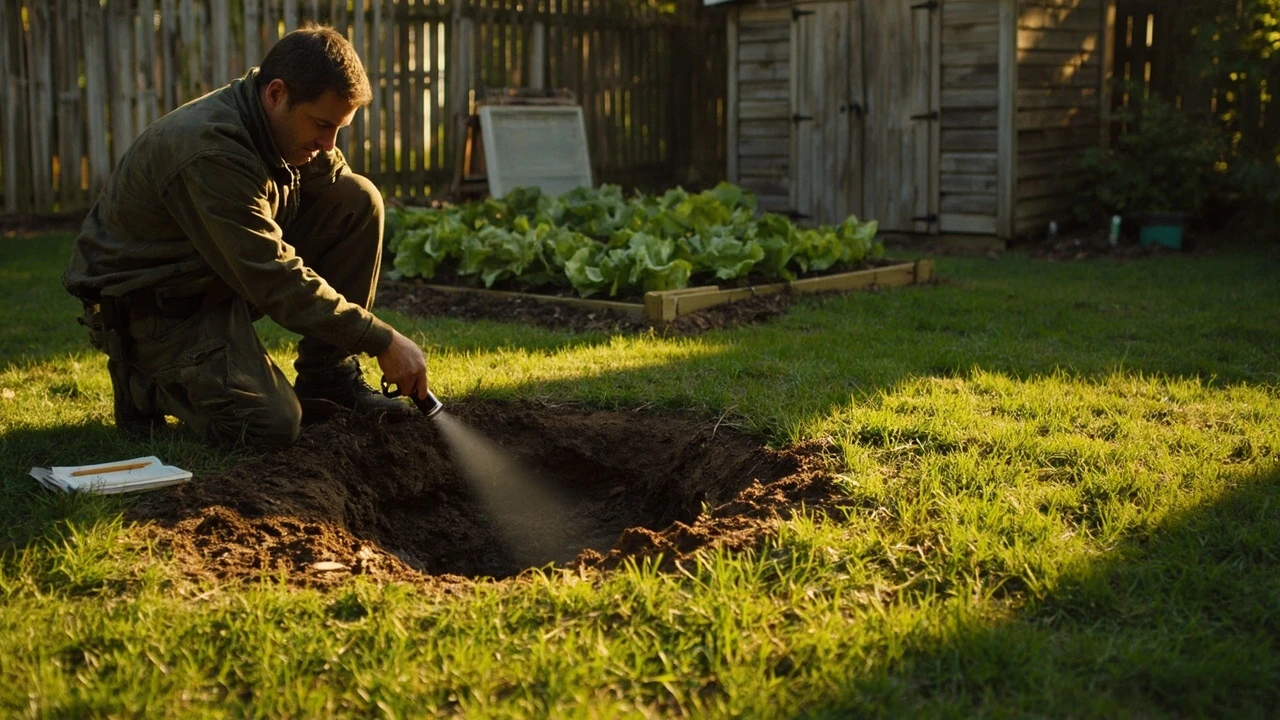
Groundhog removal
A groundhog can hollow out a yard faster than most homeowners expect. Their burrows commonly run 2 to 5 feet deep and stretch 25 to 30 feet long, with multiple entrances and chambers used for nesting, food storage, and hibernation. When a tunnel like that opens up under a shed, a patio, or a garden, the visible damage is only the part you can see. The real concern is the empty space beneath the surface that quietly undermines soil, roots, and structure. That is why groundhog removal is less about chasing one animal and more about closing the structural problem the animal created.
Homeowners usually reach the point of searching for help after a few weeks of escalating evidence. A fresh mound of soil appears next to the air conditioning unit. The lettuce row is gone. The dog refuses to walk near the back fence. By that point, a single burrow is rarely a single burrow. Groundhogs build networks, and a single family group can occupy several entrances across a small property.
This article covers what a homeowner needs to handle that situation sensibly: how to confirm the animal is actually a groundhog, what risks the burrows pose, which methods actually work, what professional service looks like, and how to keep the animal from coming back once the hole is sealed.
What a groundhog is and why one becomes a problem
Groundhogs (Marmota monax) are also called woodchucks. They are large ground squirrels, typically 16 to 26 inches long including a bushy tail, and they can weigh anywhere from about 5 to 14 pounds depending on the season. They are herbivores, active during the day, and one of the few true hibernators in North America, sleeping through much of the winter in deep, lined chambers.
The biology matters because it shapes the damage pattern. A groundhog needs a deep, stable burrow to survive winter and to raise young in late spring. That burrow is engineered, not improvised, and the engineering is exactly what causes problems for anything built above it.
Burrow behavior that drives property damage
Groundhog burrows are not simple holes. A single burrow system can reach depths of 2 to 5 feet and extend 25 to 30 feet in length, often with multiple entrances, side tunnels, and separate chambers for nesting, food storage, and waste. The entrances are usually about 10 to 12 inches wide and are marked by a fan-shaped mound of fresh, loose soil.
That scale is what separates a groundhog from a chipmunk, a mole, or a vole. Moles leave small ridges and push up volcano-shaped mounds. Chipmunk holes are smaller, usually under 3 inches, and rarely have a visible mound. A groundhog hole is large enough to lose a shoe in, and the soil around it looks freshly excavated because it was, that morning.
Seasonal patterns homeowners should expect
Groundhogs are most visible in two windows. In early spring, males emerge from hibernation and begin scouting for territory and mates, which is when fresh mounds first appear. In midsummer, juveniles disperse from the natal burrow and look for their own dens, which is when a single problem often becomes a multi-hole problem on the same property. By late fall, activity drops sharply as animals settle in for hibernation, but the burrow itself remains and is waiting for the next occupant next spring.
Signs that point to a groundhog and not something else
Misidentification is common, and it leads homeowners to spend time and money on the wrong fix. A perimeter inspection before any removal work starts will save both.
What to look for on the ground
- Large, single mound of soil with a wide hole at one edge. The hole is the giveaway: roughly 10 to 12 inches across, shaped like a low arch, and surrounded by loose, fresh soil the animal pushed out as it dug.
- Multiple entrances spaced across the yard. A single animal may maintain two or three entrances; a breeding pair can have more. If you find two or three wide holes within a 30-foot radius, you are looking at a network, not an accident.
- Chewed vegetation at the entrance. Groundhogs crop grass and low plants right at the hole, leaving a small bare ring of clipped stems.
- Distinctive tracks and droppings. Front feet have four toes with visible claw marks; droppings are oblong, dark, and usually found near the entrance on a flat stone or bare patch the animal uses as a latrine.
What you are probably not dealing with
Moles create raised ridges in the lawn and small conical mounds without a visible entrance. Voles leave surface runways through grass and chew bark at the base of shrubs. Skunks and raccoons dig in search of grubs, leaving shallow, ragged divots rather than engineered tunnel systems. If the visible damage is small, scattered divots in the turf with no central hole, the fix is different. If the damage is a wide, arched hole with a soil fan, treat the situation as a groundhog problem from the start.
Risks a burrow creates for people, pets, and property
Groundhogs themselves are not aggressive animals. They are large wild rodents with claws, and any wild animal cornered will defend itself. The bigger risks are structural, ecological, and medical, and they are the reason groundhog removal is rarely a wait-and-see situation.
Structural and yard risks
Burrows weaken the soil that supports patios, walkways, shed floors, and the concrete pads beneath air conditioners and generators. A 5-foot-deep tunnel under a 4-inch concrete pad can leave the slab suspended on air at the thinnest point. Over a season, the unsupported section cracks and settles. The same mechanism causes fence posts to lean, retaining walls to bulge, and small outbuildings to develop soft, springy floors as the soil under them disappears into voids.
Lawn, garden, and landscape risks
Groundhogs eat a wide range of garden plants, and they eat a lot of them. A single adult can consume a substantial volume of vegetation per day during the growing season, which is why a small backyard garden often disappears row by row. Burrowing near shrubs and young trees also severs roots, which causes decline that homeowners often misdiagnose as drought stress or disease. Wildlife operators working across Northern and Central California regularly see this pattern in groundhog removal jobs that start with a “mystery” dying shrub and end at a tunnel running under the root ball.
Risks to pets
Dogs that investigate burrows can be bitten or scratched, particularly if the dog is curious and the animal is cornered. A bite from any wild mammal warrants a call to a veterinarian and, depending on local public health guidance, a report to animal control. Because groundhogs can carry rabies, a bite is a medical and regulatory matter, not a household one.
Rabies and public health
Although confirmed rabies cases in groundhogs are rare, they do occur, and because groundhogs are rodents, the disease is uncommon but not negligible. A groundhog that behaves unusually, showing aggression, confusion, or an unusual lack of fear around people and pets, should be treated as a potential rabies vector. A homeowner should not attempt to trap or approach that animal directly. Calling a licensed wildlife professional is the correct response, both for safety and for documentation.
Methods used in groundhog removal and how well each one works
Not every method sold online is actually effective. The table below summarizes the common approaches, what they do well, and where they fall short.
| Method | What it does | Strengths | Limitations |
|---|---|---|---|
| Live cage trapping by a licensed professional | Sets a large, reinforced cage at the active burrow entrance and relocates the animal per state rules | Most reliable single method when the active burrow is correctly identified; allows for relocation under permit | Requires correct timing (active entrance only), a permit in many states, and skill to avoid trapping non-target animals |
| Exclusion and habitat modification | Seals burrow entrances after the animal is removed and removes the cover that attracted it in the first place | Provides long-term prevention; addresses the reason the animal chose the property | Does not by itself remove an animal already in residence; sealing an active burrow can trap or kill the animal and is restricted in some jurisdictions |
| Buried wildlife fencing | Installs a heavy-gauge wire fence with the bottom buried or bent outward 12 to 18 inches below grade around gardens or yards | Strong long-term deterrent; works well for protecting specific garden beds or vulnerable areas | Cost and labor are higher than surface solutions; not appropriate for entire large yards |
| Repellents (castor oil, predator urine, commercial sprays) | Aims to make the area smell or taste unpleasant to groundhogs | Low cost and easy to apply; can reduce casual grazing in gardens | Rarely effective at removing an animal already living on the property; needs frequent reapplication and is often ignored once the animal has a deep burrow |
| Flooding the burrow | Fills the burrow with water from a hose | Sometimes promoted online as a cheap DIY fix | Largely ineffective on a burrow that is 25 to 30 feet long with multiple chambers; can cause collapse, can kill the animal underground, and is discouraged by wildlife professionals |
| Gas or smoke products marketed to homeowners | Releases a product into the burrow to drive the animal out | Available over the counter in some areas | Effectiveness varies; many states restrict or require a license for these products; results are inconsistent and do not address the cause of the infestation |
Comparing common groundhog removal approaches at a glance
The second table reframes the same options by who is best suited to use them. This is often the most useful cut for a homeowner deciding between calling a professional and handling the work on their own.
| Approach | Typical cost band | Best for | Typical turnaround | Homeowner-friendly |
|---|---|---|---|---|
| Live cage trapping by a licensed wildlife operator | Moderate, often quoted per burrow | Active burrows on residential lots, especially near structures | 1 to 3 days for a single active entrance; longer for networks | No, requires a license in many states |
| DIY live trapping (where legal) | Low, plus equipment rental or purchase | Single fresh burrow on a property with no structures overhead | 1 to 5 days depending on animal activity | Yes, with patience and proper trap size |
| Professional exclusion and buried fencing | Higher, scope-driven | Recurring problems, gardens, and high-pressure properties | 1 to 3 days for installation; protection lasts years | Partial; design and burial are best left to a crew |
| Repellents and habitat change only | Low | Mild pressure on a rural edge or as a complement to trapping | Ongoing; needs reapplication through the season | Yes, as a supporting step |
| Flooding or consumer gas products | Very low | Almost never; rarely recommended by professionals | Unpredictable | Technically yes, but ineffective and often restricted |
How to decide between DIY and a professional
For homeowners, the choice usually comes down to three things: state law, the scale of the problem, and tolerance for risk.
When DIY can be a reasonable option
Some states allow landowners to live-trap certain wildlife, including groundhogs, on their own property, often under specific seasonal rules. In those jurisdictions, a homeowner who is comfortable with large live traps, patient enough to monitor the trap multiple times a day, and able to follow relocation rules may handle a single fresh burrow without outside help. The work is not complicated, but it is slow, and a missed check can mean a trapped animal sitting in the sun with no water.
When a licensed wildlife professional is the better choice
A professional makes sense when the burrow network covers a large area, when the burrow is under or near a structure, when the homeowner is not sure which burrow is currently active, or when local law requires a license for the method being considered. Wildlife operators have the equipment, the species-specific experience, and the disposal or relocation path that DIY attempts usually lack. They also know how to identify the active entrance, which is the single most important step in a successful removal.
Cost factors to plan around
Groundhog removal pricing depends on the number of active burrows, the property layout, and whether exclusion work is included. Many operators offer a free on-site inspection that produces a written quote. The cost is not standardized nationally, and homeowners should expect the quote to reflect the actual work rather than a flat fee that ignores property differences. Get the quote in writing, ask what is included (active entrance identification, trapping, exclusion, follow-up checks), and ask about a warranty or re-service policy if the animal returns within a defined window.
A practical step-by-step approach to a real problem
The sequence below is what a careful homeowner or wildlife operator typically follows, from the first sign of trouble through prevention.
- Inspect and document. Walk the perimeter and mark every burrow entrance with a flag, stake, or photo with a dated timestamp. Note which entrances have fresh soil and which look old. The fresh one is the active one.
- Identify the active burrow. Loosely plug a few suspected entrances with crumpled newspaper or a light plug of soil. Whichever plug is pushed out the next morning is the active entrance the animal is using.
- Set or schedule a trap at the active entrance only. Place a large live cage trap directly in the line of the burrow opening, with the door facing the hole. Bait with a fruit or vegetable that matches what the animal is already eating in your garden.
- Monitor the trap. Check the trap in the morning and again in the evening. Releasing a non-target animal quickly is part of doing the job correctly, not a sign of failure.
- Confirm the burrow is empty before sealing. Once the animal is removed, plug the entrance loosely again and wait 24 to 48 hours. If the plug is undisturbed, the burrow is empty and can be sealed.
- Seal the entrances with a durable material. Use hardware cloth, concrete, or a heavy wire mesh packed with soil. A light plug of leaves or a single shovel of dirt will be pushed out by the next animal that passes through.
- Modify the habitat to remove the reason the animal came. Mow tall grass, clear brush piles, and remove the woodpile that gave the groundhog a safe route from cover to burrow.
- Install fencing if pressure is ongoing. For gardens, a buried L-footer or a 3-foot fence with the bottom bent outward and buried 12 inches will stop most groundhogs. For an entire yard, professional wildlife fencing is more practical.
Prevention: the part most homeowners skip and later regret
Trapping solves the animal that is there. Prevention solves the next one. Skipping prevention on a property that has already been attractive to groundhogs usually means trapping the same yard again next spring.
Habitat changes that actually deter groundhogs
- Keep grass short. Tall grass is cover from predators. A short, well-mowed lawn exposes the animal during its approach and discourages denning.
- Clear brush and woodpiles. Anything that creates a 3-foot-tall, dense corridor between the property edge and the house is a groundhog highway.
- Remove the food that brought the animal in. Fence off vegetable gardens, remove fallen fruit, and clean up bird seed that drops beneath feeders.
- Block the access under structures. Skirts of hardware cloth around sheds, decks, and porch openings eliminate the sheltered spots that make a property feel like a den site.
When to call a professional for prevention work
Exclusion and fencing work is most cost-effective when it is planned once, not redone after a second infestation. A wildlife professional who offers a written exclusion plan will typically look at three things: the active pressure on the property, the structural openings that need to be closed, and the boundary work that will keep new animals out. A good plan treats the property as a system rather than as a single burrow.
Common mistakes that make the problem worse
Most failed groundhog removal jobs share the same handful of causes. Knowing them in advance is the easiest way to avoid paying twice for the same outcome.
- Sealing a burrow that is still active. This can trap the animal, which is both a welfare issue and, in many jurisdictions, a violation of wildlife handling rules.
- Trapping at the wrong entrance. Setting a trap at an old, inactive hole is a reliable way to catch raccoons, skunks, or stray cats instead of the target animal.
- Using a small trap. Groundhogs are large. A trap rated for raccoons is usually the right size; a trap marketed for squirrels is not.
- Stopping at removal. Removing the animal without sealing the burrow and modifying the habitat invites the next animal in, often within weeks.
- Assuming repellents alone will solve the problem. Repellents have a role as a small nudge around a garden, but they do not displace an animal with a deep, established den.
Regulatory notes worth checking before you start
Wildlife handling is regulated at the state level, and rules differ. Several states treat groundhogs as a furbearer or as a protected nongame species, which affects what methods a homeowner can use, what permits are required, and where a trapped animal can be released. Local ordinances can add extra restrictions, particularly in suburbs with leash laws, noise rules, or discharge restrictions that affect some deterrent products. A quick call to the state wildlife agency or a check of its website takes less time than a fine, and a licensed wildlife operator will already know the local rules.
Frequently asked questions
How do I know I have a groundhog and not a mole or a gopher?
Look at the hole. A mole pushes up small conical mounds without a visible opening and tunnels just under the surface, leaving raised ridges in the lawn. A pocket gopher leaves a plug of soil in the hole rather than a fan-shaped mound and works mostly underground. A groundhog leaves a wide, arched hole (about 10 to 12 inches) with a visible mound of fresh soil pushed to one side, and the hole leads to a deep burrow with side chambers.
Is groundhog removal something I can legally do myself?
It depends on the state. Many states allow a property owner to live-trap certain wildlife on their own land under seasonal rules and with required relocation practices. Other states require a license for the methods involved, particularly when exclusion or gas products are used. The state wildlife agency website is the most reliable place to confirm the rules that apply where you live.
What does a groundhog removal service typically cost?
Pricing varies with the number of active burrows, the property size, and whether exclusion work is included. Most operators begin with a free on-site inspection and provide a written quote based on the specific situation rather than a flat fee. A good quote spells out what is included: active burrow identification, trapping, exclusion, and any re-service warranty.
How long does the removal process take?
For a single active burrow, the trap is usually set within a day of the inspection and the animal is removed within 24 to 72 hours if activity is normal. Larger networks with multiple entrances and juveniles present can take longer. The exclusion and prevention phase runs another day or two after the burrow is confirmed empty.
Are repellents a substitute for trapping?
No. Repellents can reduce grazing on a specific plant or push an animal away from a small area, but they do not reliably remove an animal that already has a deep burrow on the property. They are best used as part of a broader plan that includes trapping, exclusion, and habitat changes.
Is it safe to approach a groundhog?
Generally, no. Groundhogs are wild animals and can bite or scratch if they feel cornered, particularly a female with young near a burrow. A groundhog that behaves unusually aggressive, confused, or unafraid of people and pets should be treated as a potential rabies vector and handled by a licensed professional.
What do I do with the burrow after the animal is gone?
Wait 24 to 48 hours after removal, then plug the entrance loosely and confirm nothing pushes it back out. Once the burrow is empty, seal it with a durable material such as hardware cloth packed with soil, or with concrete for entrances under slabs and structures. Fill and regrade the area so the surface is even and water drains away from the site.
Will one removal solve the problem permanently?
It can, if the burrow is sealed and the habitat that attracted the animal in the first place is addressed. On properties with ongoing pressure from adjacent fields, wooded lots, or farms, an annual inspection and a maintenance plan are usually needed to stay ahead of new arrivals. Fencing around gardens or vulnerable areas is a strong complement to a one-time removal.
Can groundhogs damage a foundation?
Yes. A burrow that runs 2 to 5 feet deep under a slab, a footing, or a block wall can leave the soil beneath those structures unsupported. Over time, the unsupported section settles and cracks. The risk is highest for shallow foundations, outbuildings, and any structure with a dirt floor such as a shed.
What time of year is best for groundhog removal?
Late spring through early fall, when animals are active above ground and not hibernating. The earliest window after spring emergence is often the easiest in terms of fewer juveniles in the burrow, but the work is also effective through summer. Removal in late fall or winter is generally not practical because the animal is hibernating and not moving through the burrow in a way that allows trapping.
A short checklist before you make the call
Before scheduling a removal, take 10 minutes with a notepad and answer four questions. How many burrow entrances can you find, and where are they? Which ones look fresh, with loose soil pushed out within the last day or two? Are any of the burrows under a structure or against a foundation? Have you seen the animal, and at what time of day? Those answers will let a wildlife operator arrive prepared rather than spend the first visit on basic scouting, and they will shorten the path from inspection to a sealed, empty burrow.
If you would rather hand the inspection and the planning to a specialist, licensed wildlife professionals who handle groundhog removal typically start with a free property assessment, identify the active entrance, and give you a written plan that covers removal, exclusion, and prevention. That same written plan is what separates a one-visit fix from a recurring spring project.
Leave a Reply