


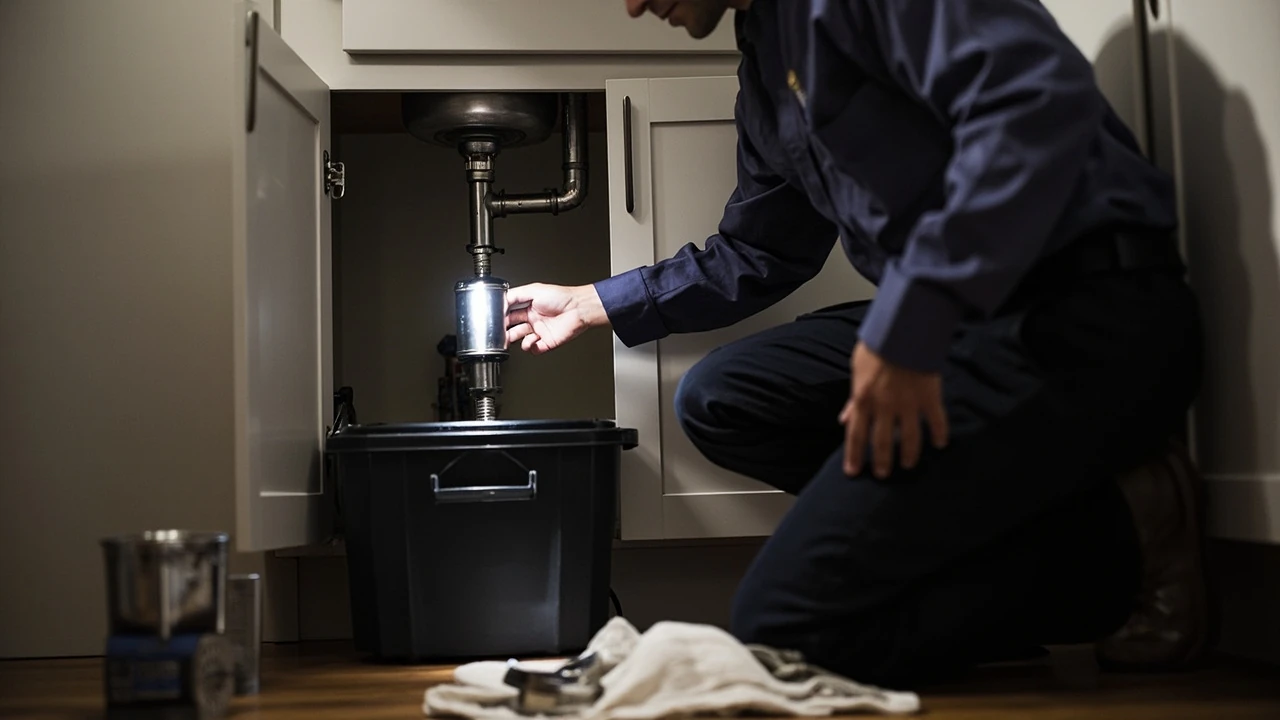
Drain clearing services: what they actually do and when to call
Water that used to vanish in a few seconds now sits in the basin, swirling slowly before it finally gurgles away. The shower turns into a shallow pool during a normal morning routine, and a faint sour smell rises from the floor drain in the laundry room. At that point, plunging feels like a reasonable fix, and a bottle of drain gel from the hardware store feels like a faster one, yet the problem tends to come back within days. That is the situation most homeowners are in when they start looking for professional drain clearing services, and it is also the point where the right decision can prevent a small annoyance from turning into water damage or a sewage backup.
This guide explains what professional drain clearing services actually do, how a technician decides between a simple cable machine and a more thorough method, what signs point to a problem deeper than a single fixture, and how to think about cost, prevention, and follow-through. It is written for a homeowner who wants to make a calm, informed call rather than chase the symptom with another chemical bottle.
What drain clearing services actually cover
The phrase “drain clearing services” gets used for several different jobs, and homeowners are often surprised by how broad the scope can be. In practice, a residential drain clearing visit usually includes some combination of the following.
- Diagnosis of a single slow or backed-up fixture, such as a kitchen sink, bathroom sink, tub, shower, or floor drain
- Mechanical clearing of an internal branch line with a drum machine, sectional cable, or hand auger
- Removal of localized obstructions like hair, soap scum, food solids, or small foreign objects
- Clearing of a main building drain or house trap when several fixtures are affected at once
- Basic verification, such as running water through the line after clearing, to confirm flow has returned
- Honest recommendations when the symptoms point to a larger issue, such as a broken pipe, root intrusion, or a failed trap
What drain clearing services usually do not include is full pipe replacement, trenchless sewer line repair, water damage restoration, or major excavation. A good technician will explain the boundary clearly: clearing restores flow through an existing pipe, while repair or replacement addresses a pipe that is damaged, collapsed, or fundamentally undersized for the home. If a clearing visit turns into a longer conversation about the condition of the line itself, that is a signal to ask for a camera inspection before approving any larger work.
The most common signs that a professional is the right next step
Not every slow drain needs a service call. A single hair clog in a shower, a bit of food stuck in a P-trap, or a slow bathroom sink after a holiday weekend can often be handled with a simple tool. The cases below are the ones where a homeowner typically saves time and money by calling a professional rather than fighting the symptom.
| Sign | What it usually means | Why a pro is useful |
|---|---|---|
| One fixture drains slowly but the rest of the home is normal | Likely a localized clog in the trap or branch line | A cable machine can clear it fully without damaging the trap or pushing the clog deeper |
| Several fixtures are slow at the same time | Possible blockage in a shared branch or the main building drain | Mainline work is heavier and needs a larger machine, proper technique, and a second set of hands |
| Water rises in a tub or floor drain when a nearby fixture is used | Shared line is partially blocked downstream of both fixtures | Wrong clearing technique can push waste back into the home; the line needs a measured approach |
| Gurgling from a drain or toilet after other fixtures run | Air is being pulled past a partial blockage | The location of the clog matters; a pro can isolate the section instead of guessing |
| Persistent sour or rotten smell from a drain that still flows | Buildup on the pipe wall or a dry trap | Mechanical cleaning reaches biofilm that gel treatments cannot dissolve |
| Backups that return within days of clearing | The blockage is being missed, or the line has a structural issue | A camera inspection can confirm whether the pipe is round and clean or cracked, offset, or rooted |
The first two rows describe the cases where a service call pays for itself quickly. The last two are the cases where a homeowner often spends more in the long run by trying to solve the problem with another bottle of drain opener, because the underlying cause is structural rather than a soft clog.
What a professional technician actually does on the visit
A good drain clearing visit follows a recognizable rhythm, even if the exact equipment changes from house to house. Knowing the rhythm helps a homeowner ask better questions and judge whether the work was thorough.
- Brief interview. The technician asks which fixtures are affected, when the problem started, and whether anything was recently added to the system, like a new disposal, a washing machine, or a bathroom remodel.
- Fixture check. The affected fixture is run to see how it actually behaves. A slow sink that fills and then slowly empties tells a different story than a sink that does not empty at all, and that difference changes the tool choice.
- Trap and branch line work. For a single fixture, the technician often removes and checks the P-trap, then runs a small drum machine or hand auger through the branch line. The goal is to break the clog into pieces small enough to flow away, not to push it deeper.
- Mainline work when needed. If several fixtures are involved, the technician usually clears through a cleanout, often near the foundation or outside, with a larger sectional or drum machine sized for the main line.
- Verification. The line is run at full flow for several minutes, and the technician checks other fixtures in the home to confirm the shared portion is clear.
- Honest read on the pipe. If flow returns but the pipe sounded rough, or if the cable came back with mud, scale, or roots, the technician explains what that means and whether a camera inspection is worth scheduling.
A visit that ends at step five is a straightforward clearing. A visit that needs step six is not a failure, it is the technician being honest about what was found. A camera inspection is a separate, usually short appointment with its own cost, and it produces a recording that the homeowner can keep and use to compare quotes if a repair is recommended later.
Tools a technician is likely to bring, and what each one is for
The tool a technician chooses is a clue to the kind of clog they suspect. Understanding the basic set helps a homeowner interpret what is happening on site.
| Tool | Typical use | Best suited for | Not ideal for |
|---|---|---|---|
| Hand auger (plumber’s snake) | Short, manual cable | Hair clogs in a tub or shower, small obstructions within a few feet of the fixture | Long branch lines, mainline blockages, dense root masses |
| Small drum machine | Motorized cable, 1/4″ to 3/8″ | Single bathroom or kitchen branch lines, soap and hair buildup | Heavy root intrusion, severe scale in cast iron |
| Sectional cable machine | Larger motorized cables added in sections | Main building drain, longer runs, tougher blockages | Fragile older pipes that cannot handle aggressive cutter heads |
| Hydro jet | High-pressure water through a specialized nozzle | Grease-heavy kitchen lines, sludge in long horizontal runs, recurring soft clogs | Broken or collapsed pipes, where pressure would cause damage |
| Camera and locator | Push-rod camera with a signal transmitter | Verifying pipe condition, locating a break or offset, confirming a clearing worked | Standing water the camera cannot push through, fully collapsed lines |
| Enzyme or bio treatment | Biological cleaner added after clearing | Maintenance on kitchen lines with slow grease buildup | Emergency backups, where time is the priority |
The most common residential clearing is a small drum machine for a single fixture. The most common residential conversation is whether a hydro jet is worth the extra cost for a kitchen line that keeps clogging every few months. Hydro jetting is more expensive per visit but often longer lasting on grease-heavy lines, which is why some homeowners choose it for known problem lines and a standard cable clearing for everything else.
How a technician decides what kind of clog it is
Two blockages can look identical from the kitchen but require very different responses. A technician is trained to read the small clues that point toward one type of clog rather than another.
- Soft, recent clogs smell sour, build up over a few days, and respond well to a small cable or a hand auger. They are usually hair, food, or soap.
- Grease-related clogs happen in kitchen lines, often after a big cooking event, and tend to return quickly because the pipe wall is coated. A larger cable followed by a jet or a bio treatment is more durable.
- Root intrusions show up as a mainline problem in older homes with clay or cast iron sewer laterals, especially near trees. The cable often comes back with dark, stringy material, and the clog returns within weeks unless the line is repaired or replaced.
- Scale and mineral buildup is a cast iron problem, common in homes from the mid-20th century. The cable sounds rough going through the pipe and returns with rust-colored grit. Clearing helps, but a camera inspection is the right next step.
- Foreign objects are a common cause of sudden, total backups in homes with small children, including toys, wipes, and dental floss. A technician can usually hook and retrieve them without further work if the cable reaches them.
None of these conclusions are guaranteed by the symptom alone, which is why a careful technician checks the line with water before declaring the job done and explains the findings rather than simply leaving.
What professional drain clearing services cost, in general terms
Pricing varies by region, time of day, and the type of clog, so any specific number can be misleading. The structure of the bill is more useful than a single dollar figure.
- Service call or diagnostic fee. A flat fee that covers the trip and the diagnosis, often applied toward the clearing if the homeowner proceeds with the work.
- Clearing by fixture. A single bathroom or kitchen sink is usually the lower end of the range, because the run is short and the equipment is smaller.
- Mainline clearing. Higher than a single fixture, because the equipment is larger, the work is heavier, and the visit is longer.
- After-hours, weekend, or holiday surcharges. Many companies charge more for evenings and weekends, when the call is most often an emergency.
- Camera inspection. Usually a separate line item, sometimes bundled with a mainline clearing if both are needed.
- Hydro jetting. Priced higher than a standard cable clearing, often quoted per drain or per linear foot, depending on the company.
A reasonable approach is to ask, before the visit, how the company structures its charges, what the diagnostic fee covers, and whether the technician will explain options on site before doing any additional work. The cheapest visit is not always the best value, because a clearing that misses the real problem will produce a second visit within weeks.
What a homeowner can do before the technician arrives
A few small steps can make the visit faster, safer, and less expensive, especially if the home is on a slab or the cleanout is hard to find.
- Stop using the affected fixtures. Running more water into a slow line turns a clearing job into a cleanup job.
- Clear under the sink. Remove cleaning supplies, trash bins, and anything else that would slow down access to the P-trap.
- Locate the main cleanout if you can. It is usually a capped white or black pipe, often outside a foundation wall, in a basement, or in a utility area. The technician will appreciate not having to search.
- Note every affected fixture. A short list, even a note on a phone, helps the technician decide whether the problem is local or shared.
- Skip another bottle of drain opener. Caustic chemicals sit in the trap and expose the technician to burns and fumes. If a chemical product has already been used, mention it before the visit.
- Move vehicles if the cleanout is in a driveway or near a curb. This is easy to forget and expensive if a tow truck ends up being part of the visit.
None of these steps are required, but each one removes a small friction from a visit that is already stressful.
What drain clearing services do not fix
Clearing restores flow through an existing pipe. It does not repair a pipe that is broken, collapsed, or undersized, and it does not solve problems that come from outside the drain system. Homeowners often expect clearing to fix more than it can, and that mismatch is where disappointment starts.
- A broken or offset pipe will keep catching debris no matter how thoroughly it is cleared. A camera inspection is the only reliable way to confirm this.
- A sagging belly in a sewer line holds water and solids even when the line is open. The fix is usually a spot repair or replacement of the affected section.
- A failed septic system can look like a drain problem at the house. Clearing the building drain does not address the tank or the drain field.
- A venting problem can slow drains without any clog at all. The fix is on the roof or in the vent stack, not in the drain.
- A water heater or pressure issue can look like a slow drain if the home has a shared recirculation loop. That is a different trade entirely.
If a technician finishes a clearing and the symptom is still there, the next step is usually a camera inspection and a conversation about what was found, not a stronger chemical and a second clearing.
How to compare two drain clearing service quotes without losing your place
It is common to get two or three quotes for the same problem, and they can look very different on paper. A short, calm comparison usually lands on a small number of points.
- Scope. Does the quote cover the same fixtures and lines, or is one quote for a single sink and the other for a mainline?
- Method. Is one a standard cable clearing and the other a hydro jet, and is the difference appropriate for the clog you actually have?
- Camera inspection. Is it included, offered as an option, or quoted only if the technician recommends it on site?
- Warranty. Will the company return within a stated period if the same line backs up again, and is there a cost for that return visit?
- After-hours policy. Is the quote a flat rate or a higher rate because the visit is in the evening, on a weekend, or on a holiday?
- Replacement language. If a quote includes language about replacement or “if we find X, we will do Y,” read it carefully and ask for the price of that work before the visit, not after.
Two quotes that look very different often describe two different jobs. The right comparison is the one that lines up scope, method, and warranty, then compares price on equal terms.
Prevention that is actually supported by the physics of a drain
Most drain problems are easier to prevent than to fix, and the prevention that works is unglamorous. It is built around keeping certain things out of the pipes and giving the line enough hot water to stay clean.
- Use a hair catcher in showers and tubs. This is the single most effective change for bathroom drains, because hair is the most common cause of recurring bathroom clogs.
- Keep grease out of kitchen drains. Wipe pans with a paper towel before washing, and send liquid oil to a container, not the sink. Hot water and dish soap help, but they do not cancel grease.
- Run hot water after each kitchen use. A 30-second flush helps move soap and food residue past the trap.
- Avoid “flushable” wipes. Despite the label, most do not break down fast enough to move through a residential branch line.
- Use the disposal correctly. Feed small amounts with running water, avoid fibrous foods like celery and corn husks, and never use the disposal as a second trash can.
- Schedule periodic maintenance on known problem lines. For kitchen lines that clog every few months, a yearly cable or jet clearing is often cheaper than the third emergency visit of the year.
None of these steps eliminate the need for a service call forever. They reduce the frequency, and they make the calls that do happen easier, because the line is cleaner when the technician arrives.
How drain clearing services fit into a broader home maintenance plan
Drain work is part of a home’s plumbing system, which is part of a larger set of mechanical systems that all need periodic attention. A drain that keeps clogging can be a symptom of a system that has been ignored for a while, and a single visit is sometimes the moment when a homeowner decides to take a wider view. For a sense of how plumbing and mechanical systems are approached together in a residential setting, a look at this overview of residential boiler service is a useful comparison: the same logic of inspection, clearing, and honest follow-up applies to drains as to heating equipment.
It is also worth noting that a drain problem can show up at the same time as another home issue, and the two are sometimes confused. A washing machine that backs up into a nearby floor drain is a drain problem, while a washing machine that leaks from a hose is a hose problem. Sorting those out before calling is the kind of small preparation that makes a service visit more productive. Homeowners who keep a running list of small home issues, the way they would for basic diagnostics like a failing car battery, often find that drain questions get answered faster too, because the technician is not starting from zero.
When the problem is bigger than a clearing, and what to do next
There are three situations where a clearing visit is only the first appointment. Knowing them in advance helps a homeowner plan time and budget rather than making a fast decision under stress.
- The line keeps clogging within a few weeks. The cause is almost always structural, and a camera inspection is the right next step. The recording is the homeowner’s leverage when comparing repair quotes.
- The technician brings back roots or scale. Roots mean the line has at least one opening to the outside. Scale means the pipe wall is rough. Both can be managed for a while with maintenance, but a longer-term plan is worth discussing.
- The clog is in the main line and the home has a slab foundation. Access is harder, the run is longer, and a spot repair, if needed, is a bigger project. Knowing this in advance helps the homeowner choose between a standard clearing and a more thorough first visit.
A reputable drain clearing service will be direct about which situation applies, will not push a repair on the spot, and will produce a recording or written description of what was found. If a company refuses to provide either, that is a reason to get a second opinion before any larger work is approved.
What to expect from a quality service company
The drain clearing industry ranges from one-person operations to regional multi-trade companies, and the experience can vary widely. A few markers tend to separate a careful service from a rushed one.
- Clear upfront pricing. The company explains how the visit is billed before the truck is dispatched, and the technician confirms the price before starting any extra work.
- Prepared technicians. The truck carries the equipment for single fixtures, mainlines, and a camera. A company that needs to leave and come back with a different machine has not matched the job to the tools.
- Written findings. After the visit, the homeowner has a clear record of what was cleared, what was found, and what, if anything, is recommended next.
- A real warranty. The company returns for a stated period if the same line backs up, with clear terms for what is and is not covered.
- Honest scope. The technician explains when the problem is outside drain clearing, such as a septic or venting issue, and refers the homeowner to the right trade rather than billing for the wrong work.
These markers are not a guarantee of low cost, but they are a strong indicator that the visit will produce a real answer, not just a temporarily clear sink.
A short homeowner checklist for the next slow drain
When a drain slows down, a short, calm sequence of steps usually leads to a better outcome than an immediate grab for the strongest chemical on the shelf.
- Stop using the affected fixtures and any fixtures that share a line with them.
- Try a plunger, not a chemical, on a single slow sink or tub.
- Remove and check the P-trap under a bathroom or kitchen sink if you are comfortable doing so.
- Note whether other fixtures are slow at the same time. If yes, the problem is shared.
- Look for a main cleanout, often near the foundation, in a basement, or outside.
- Call a drain clearing service and describe the pattern, not just the worst fixture.
- Ask about diagnostic fee, clearing price, and whether a camera inspection is included or available on the same visit.
That sequence handles a real share of residential drain issues without a service call, and it sets up a productive visit when one is needed.
Frequently asked questions
What is the difference between drain clearing and drain cleaning?
Drain clearing is the targeted removal of a blockage that is causing a slow or backed-up drain. Drain cleaning is broader, often covering the whole interior surface of a pipe to remove buildup before it becomes a clog. Clearing is what most homeowners need during a service call, while cleaning is what is done as scheduled maintenance on a known problem line.
How long does a typical drain clearing service visit take?
Most single-fixture clearings are completed within an hour once the technician is on site. Mainline clearings, hydro jetting, and visits that turn into a camera inspection take longer. The technician should be able to give a running estimate as the work progresses.
Are chemical drain openers safe to use before a technician arrives?
They are best avoided. Caustic products sit in the trap and can burn the technician, damage finishes, and produce fumes when the cable is run. If a chemical has already been used, tell the technician before the visit so they can plan around it.
Can a drain clear itself over time?
Sometimes a partial clog loosens with normal use, but a true blockage rarely clears on its own. A slow drain that does not return to normal within a day or two is usually a sign that the buildup is beyond what household flow can move.
What is hydro jetting, and is it worth the extra cost?
Hydro jetting uses high-pressure water through a specialized nozzle to scour the inside of a pipe. It is more expensive than a standard cable clearing, but it is often longer lasting on grease-heavy kitchen lines and on long horizontal runs with recurring soft clogs. It is not appropriate for every pipe, which is why a camera inspection often comes first.
How do I know if the clog is in my line or the city’s line?
The cleanout is the dividing line. If water backs up through a fixture or through the cleanout, the problem is in the home’s line. If the issue is in the city lateral between the home and the street, the city’s utility is usually responsible, and a quick call to the local water or sewer department can confirm the boundary.
What should I do if multiple drains are backing up at the same time?
Stop running water in the home and call a drain clearing service. Multiple slow drains at once usually point to a mainline problem, which is heavier work and a good reason to ask for a mainline technician and, if available, a same-visit camera inspection.
Will a drain clearing service fix a smell coming from a drain?
Often, yes. Smells are usually caused by biofilm or trapped organic material on the pipe wall, and mechanical clearing removes the layer that causes the odor. A dry trap, often in a floor drain that has not been used in a while, can also cause smells and is fixed by running water through the drain to refill the trap.
Is it worth paying for a camera inspection on a first visit?
It depends on the home. For a single slow sink in a newer home, a camera inspection is usually unnecessary. For a mainline issue in an older home, a camera inspection is often the most valuable part of the visit, because it confirms whether the pipe is sound or whether a larger repair is on the horizon.
How soon after a clearing can I use the drain again?
Immediately, in most cases. The technician usually runs the line at full flow as the final step. It is reasonable to use the fixture normally, then watch for any sign that the slow drain is returning over the next few days.
Leave a Reply