


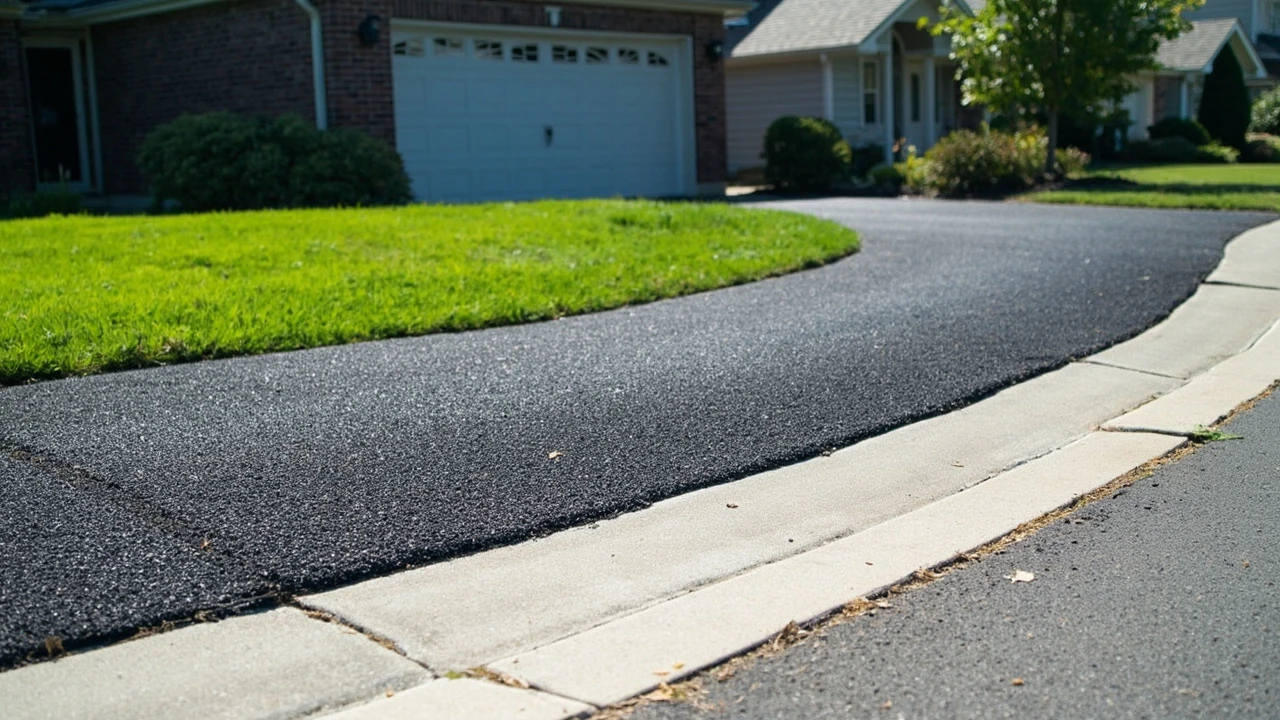
Blacktop driveway: what it is and how it performs
A blacktop driveway is a residential paved surface made from hot-mix or warm-mix asphalt, laid over a prepared aggregate base and compacted to a dense finish. The term blacktop is the everyday name for the same material used on most public roads, and it has become shorthand for a flexible, dark-colored pavement that handles vehicle traffic, winter weather, and routine household use without the rigidity of poured concrete. For most homeowners, a blacktop driveway is a long-term surface investment, not a one-time project, and the difference between a driveway that ages gracefully and one that fails early usually comes down to what is under the asphalt, how the water leaves the surface, and how the surface is treated over time.
Asphalt is produced by combining mineral aggregate, such as crushed stone, gravel, and sand, with an asphalt binder that binds the mixture into a workable, placeable material. The combined mix is produced and installed hot so it can be properly shaped and compacted before cooling, which is why professional installations usually require a coordinated crew with a paver and rollers. Once cooled, the material hardens into a continuous, slightly flexible pavement layer that distributes vehicle loads across the base below it.
For a homeowner evaluating options, the practical value of a blacktop driveway sits in a few characteristics that come up again and again across site conditions, climates, and budgets. The table below summarizes the working properties of a properly installed residential blacktop surface.
| Property | Typical residential performance |
|---|---|
| Material type | Hot-mix or warm-mix asphalt over compacted aggregate base |
| Surface color | Dark gray to black, fading to softer gray as the surface oxidizes |
| Flexibility | Flexible, absorbs seasonal ground movement better than rigid pavement |
| Typical service life | About 20 to 25 years, with maintenance extending life toward 25 to 30 years |
| Time to drive on new surface | Several days for full vehicle use, depending on temperature and conditions |
| Common repairs | Crack filling, patching, sealcoating, and overlays for worn surfaces |
| Cold-climate behavior | Performs well in freeze-thaw cycles when base and drainage are correct |
None of those numbers are guarantees for a specific property. Soil type, base thickness, drainage, traffic, sun exposure, and maintenance all change how a real driveway ages. The point of the table is to anchor expectations so planning conversations, contractor estimates, and maintenance decisions can be compared in concrete terms rather than in generalities.
What a blacktop driveway is actually made of
What you see on the surface is the last step of a layered system. The visible asphalt is roughly 2 to 3 inches of compacted material on a typical residential installation, and it relies on a thicker, often invisible base of compacted aggregate to do most of the structural work. When the base is right, the asphalt layer spreads vehicle loads over a wider area and flexes slightly with seasonal ground movement. When the base is thin, soft, or poorly drained, the same surface can show settlement, cracking, and potholes long before the asphalt itself has aged out.
The asphalt layer itself is a mix of aggregate and binder. The aggregate provides the structural skeleton, and the binder holds the aggregate together and seals it against water. The proportions of each, the size of the aggregate, and the type of binder all change the performance of the finished surface. Most residential installations use a dense-graded mix designed for the expected traffic and climate, applied at a compacted thickness appropriate for the weight of passenger vehicles and the occasional heavier load.
Two asphalt categories come up often in homeowner discussions:
- Hot-mix asphalt is produced and placed hot, which is the standard for permanent driveways and roads because it can be properly placed, shaped, and compacted before it cools.
- Cold-mix asphalt is a softer mix more often used for temporary or small repairs, especially when weather conditions are not suitable for permanent hot-mix paving, such as off-season pothole patching.
Cold-mix is useful as a repair material but is not a substitute for a properly installed hot-mix driveway. The visual surface may look similar at first, but the long-term performance, compaction, and resistance to vehicle loads are different.
How a blacktop driveway is installed
A quality installation is a sequence of decisions, not a single event. The crew’s work on paving day is usually the shortest part of the project, and the site preparation that precedes it is what determines whether the finished surface holds up.
- Site visit and estimate. The contractor walks the property, looks at the existing surface or bare ground, checks drainage patterns, and asks how the driveway is used. A reliable estimate cannot be produced from square footage alone because base condition, access, and drainage all change the scope.
- Excavation and removal. Old pavement, unsuitable soil, and organic material are removed down to a depth that allows room for the new base and asphalt layers. The depth depends on soil type and expected loads, but residential projects usually excavate several inches below the planned finished surface.
- Subgrade correction. Soft spots, organic material, and unstable fill are addressed so the soil below the base is uniform and capable of supporting the new pavement. Skipping this step is one of the most common reasons driveways settle prematurely.
- Aggregate base. Crushed stone or gravel is placed, graded, and compacted in lifts. The base is the structural layer that distributes vehicle loads and provides drainage. A thicker, well-compacted base extends pavement life in nearly every climate.
- Grading and drainage. The base is shaped so water runs off the surface rather than pooling near the garage, foundation, or low spots. Drainage corrections are easier during installation than after the asphalt is down.
- Asphalt placement. Hot-mix asphalt is delivered, placed with a paver, and compacted with rollers before it cools. Compaction is what gives the surface its density and strength, and proper timing is critical in cool weather.
- Edges and transitions. Edges along lawns, walks, garage floors, and the street are finished and compacted carefully because they tend to be the first areas to deteriorate under traffic and weather.
- Cure and use. Fresh asphalt is too soft for regular vehicle traffic immediately. Foot traffic is often possible the next day, but vehicles should be kept off the new surface for several days, with timing adjusted for temperature and project conditions.
That sequence is the difference between a driveway that quietly does its job for two decades and one that needs constant repair. Homeowners rarely see the base work in detail after it is covered, which is exactly why it is worth asking contractors what goes under the surface, not just what is going on top of it.
How long a blacktop driveway should last
A professionally installed blacktop driveway typically lasts about 20 to 25 years. With regular maintenance and favorable site conditions, service life can extend toward 25 to 30 years. Those ranges are working estimates rather than promises, and the actual lifespan on a given property depends on factors that vary widely from one site to the next.
Five drivers do most of the work in determining how a blacktop surface ages:
- Base preparation. A thick, well-compacted aggregate base over a stable subgrade is the single biggest contributor to long service life.
- Drainage. Water that sits on or under the pavement shortens life. Correct grading and functional drainage reduce cracking, settling, and frost damage.
- Traffic and use. A driveway that sees two passenger vehicles behaves differently from one that regularly supports heavier loads, trailers, or delivery trucks.
- Climate and exposure. Freeze-thaw cycles, intense sun, road salt, and standing water all change how a surface wears.
- Maintenance. Timely crack sealing, patching, and sealcoating keep small problems from spreading through the pavement structure.
When homeowners see premature failure, the cause is usually traceable to one of those five areas rather than to the asphalt itself. A surface installed over an unstable base can look fine for a year or two and then begin to settle, crack, or develop potholes even though the asphalt mix was correct. That is why a careful site evaluation often matters more than a brand name on the paver.
Blacktop driveway vs concrete: how the two compare
Concrete and blacktop can both produce a functional driveway, but they behave differently in cold weather, require different maintenance, and carry different cost and appearance profiles. Choosing between them is a matter of matching the material to the site, the climate, and the homeowner’s tolerance for ongoing care.
| Factor | Blacktop driveway | Concrete driveway |
|---|---|---|
| Surface character | Flexible, dark, slightly soft when warm | Rigid, light, hard surface |
| Cold-climate behavior | Handles freeze-thaw well when installed over a proper base | Can scale, spall, and crack from de-icing salts and freeze-thaw |
| Typical service life | About 20 to 25 years with maintenance | Often longer in mild climates, but repairs are more involved |
| Initial cost | Generally lower than concrete | Generally higher than blacktop |
| Maintenance pattern | Routine sealing and crack repair | Less frequent sealing, but repairs are more disruptive |
| Appearance options | Dark, uniform surface, simpler visual profile | Can be colored, stamped, or finished for visual variety |
| Repair approach | Localized crack filling, patching, and overlays | Section replacement or full-depth repairs for damage |
For a deeper walkthrough of how a residential asphalt project is actually planned and priced, the detailed asphalt driveway guide for homeowners covers the same sequence of decisions in more detail. The local climate, soil, and drainage conditions on a given property remain the deciding factors regardless of which guide a homeowner reads.
For homes in regions with cold winters, regular freeze-thaw cycles, and a need for cost-conscious installation, a blacktop driveway is often the more practical default. For homeowners who prefer a lighter, more decorative surface and are willing to accept higher upfront cost and more involved repairs, concrete can be a reasonable alternative. The wrong choice is usually the one that ignores site conditions, drainage, and the realistic maintenance budget.
Repair or replace: how to decide
Not every aging blacktop surface needs to be torn out and replaced. The first decision is whether the problem is limited to the surface layer or extends into the base. Surface problems can often be addressed with repair or an overlay, while structural problems usually point toward full-depth work.
A few practical checks help frame the decision:
- Crack pattern. A few isolated cracks that can be filled and sealed are usually repairable. A web of interconnected cracks, alligator-style cracking, or cracks that have widened and settled often indicate base failure.
- Potholes and soft spots. A handful of small potholes can be patched. Repeated potholes in the same area, especially after repair, usually point to drainage or base problems underneath.
- Standing water. If water sits on the surface long after rain or snowmelt, grading may be off even if the asphalt itself is intact. Resurfacing without correcting the grade usually repeats the problem.
- Edge condition. Crumbling edges can be rebuilt, but edges that have lost support because the base has washed out often need a larger scope of work.
- Age relative to condition. A 10-year-old surface with isolated cracking is usually a maintenance candidate. A 25-year-old surface with widespread cracking may be near the end of its useful life even after repairs.
Repairs make sense when the surrounding pavement is structurally sound and the damage is limited. Overlays place a new layer of asphalt over an existing surface after the old surface is repaired and cleaned, and they are a useful middle option when the base is good but the surface has oxidized, roughened, or raveled. Replacement is the right call when the base has failed or the existing surface is too thin and distressed to support another layer.
Maintaining a blacktop driveway through the year
Maintenance for a blacktop driveway is mostly about keeping water out, keeping the surface flexible, and addressing small problems before they spread. None of the individual tasks are difficult, and the cumulative effect of consistent care is what extends a driveway’s service life by several years.
A practical seasonal rhythm looks like this:
- Spring. Sweep or rinse off winter sand, salt, and grit. Inspect for new cracks, edge damage, and areas where water is pooling. Fill small cracks before they widen with seasonal movement.
- Summer. Watch for new surface wear, especially in driveways that see heavy summer use. Sealcoating is typically scheduled in warm, dry weather and is appropriate on surfaces that have cured and weathered enough to accept a sealer.
- Fall. Clear leaves and organic debris so they do not stain the surface or trap moisture. Address any remaining crack sealing before freeze-thaw begins.
- Winter. Use snow plows with rubber edges or proper blade height to avoid scraping the surface. Choose de-icing products carefully, since some materials are harder on asphalt than others.
Sealcoating is often misunderstood. A sealer is a protective coating applied over the surface of an existing blacktop driveway, not a repair material for cracks and structural damage. It helps slow oxidation, improves water resistance, and refreshes the dark color, but it will not fix a failed base. Applied at the right intervals and on the right surfaces, it is a useful part of a maintenance plan. Applied over a damaged surface as a cosmetic fix, it can briefly hide problems that are still actively developing underneath.
What to ask before hiring a paving contractor
The quality of a blacktop driveway is set long before paving day, and the questions a homeowner asks during the estimate phase usually determine what shows up in the finished product. A few questions that consistently produce useful answers:
- What will the base look like? Ask about the depth of the aggregate base, the type of aggregate, and how it will be compacted. Vague answers are a signal to ask follow-up questions.
- How will drainage be handled? The contractor should be able to describe how the finished surface will move water away from the garage, the foundation, and any low spots.
- What thickness of asphalt will be placed after compaction? Residential installations are commonly 2 to 3 inches of compacted asphalt over the base. The figure should be specified, not estimated.
- What mix will be used? A reputable contractor should be able to describe the mix in plain terms and explain why it fits the site and traffic.
- What is included in the estimate? Line-item estimates make it easier to compare bids and to understand whether preparation work, removal of old pavement, or drainage corrections are part of the scope.
- What timing is recommended before vehicle use? The answer should be specific to the season, the project, and the conditions. A general “drive on it when you want” is not a good sign.
- What warranty or follow-up is offered? Warranties vary widely. A clear description of what is covered, for how long, and under what conditions is more useful than a number on its own.
For broader project context, the homeowner-facing remodeling checklist described in kitchen remodeler hiring guidance for 2026 reinforces the same idea: clear scope, written details, and realistic expectations protect the project long after the crew leaves. The same logic applies to a blacktop driveway, where the work that matters most is the work that gets covered up.
Cost drivers a homeowner should understand
A blacktop driveway price is shaped by site conditions more than by surface area. Two driveways of the same square footage can have very different costs because what is under the ground, how water is handled, and how accessible the property is to paving equipment all change the scope. Understanding the main cost drivers makes it easier to interpret estimates and to see where differences between bids are coming from.
| Cost driver | Why it changes the price |
|---|---|
| Existing surface removal | Tearing out and disposing of old pavement adds labor, equipment time, and disposal cost. |
| Subgrade condition | Soft, organic, or unstable soil requires correction before the base is placed, which adds excavation and material. |
| Base depth and material | A thicker aggregate base costs more in material and compaction time, but also extends pavement life. |
| Thickness of asphalt | Compacted asphalt thickness is a major material cost driver and should be specified in the estimate. |
| Drainage corrections | Adding or correcting drainage, regrading, or installing underdrains adds scope but prevents future problems. |
| Access and layout | Long, narrow, steep, or hard-to-reach driveways slow production and increase labor cost. |
| Season and timing | Paving in cold or wet weather is harder to schedule, and some projects are best deferred to favorable conditions. |
Planning a blacktop driveway project in 2026
Planning a blacktop driveway project in 2026 is less about chasing trends and more about matching the right scope to the property. Most homeowners who are happy with their driveways a decade later made three decisions well: they addressed base and drainage before paving, they chose a reputable contractor with a clear scope of work, and they committed to a small, predictable maintenance routine.
A simple planning sequence helps bring the project into focus:
- Define the use case. Daily vehicles, occasional trailers, and recreational use all change the recommended base and asphalt thickness.
- Walk the site after rain. Where water goes now is where it will go after paving unless the grade is corrected. Note pooling, soft spots, and edges that already show wear.
- Set a realistic budget for preparation. The visible asphalt is only part of the cost. Base work, drainage, and removal of old material are usually where budgets are made or lost.
- Get more than one written estimate. Compare scope, base depth, asphalt thickness after compaction, and drainage approach, not just total price.
- Schedule for suitable weather. Paving is best done in dry conditions with temperatures that allow proper compaction. Rushing a project into poor weather usually costs more later.
- Plan the first year of care. Crack checks, gentle cleaning, and a realistic sealcoating plan keep a new driveway on track for its full service life.
Homeowners who are weighing a larger property upgrade alongside a new driveway often find that the same project-planning discipline applies elsewhere. The framing used in guides such as residential moving company hiring guidance for 2026 reinforces how much a clear scope, a credible contractor, and realistic expectations shape the outcome, whether the project is a driveway, a move, or a remodel.
Frequently asked questions
What is the difference between blacktop and asphalt?
In residential use, blacktop and asphalt usually refer to the same material, a mix of aggregate and asphalt binder laid hot and compacted. Some contractors use blacktop to describe residential surface mixes and asphalt to describe deeper or road-grade work, but the underlying material is the same family of pavement.
How long does a blacktop driveway take to cure before driving on it?
Foot traffic is often possible within a day, but vehicles should stay off a fresh surface for several days, with longer times in cool weather. Crews usually provide project-specific guidance based on temperature, thickness, and the conditions on the day of installation.
How long does a blacktop driveway last?
A professionally installed blacktop driveway typically lasts about 20 to 25 years, and can extend toward 25 to 30 years with consistent maintenance. Base preparation, drainage, traffic, and climate all influence how a specific driveway ages.
Do blacktop driveways need to be sealed?
Sealcoating is a useful protective step on a surface that has cured and weathered enough to accept a sealer, and it helps slow oxidation and water intrusion. It is not a repair for cracks or structural problems, and it should be applied on a schedule that fits the surface, not on a fixed calendar.
Can a blacktop driveway be installed in cold weather?
Cold weather complicates paving because hot-mix asphalt cools quickly and is harder to compact properly. Many contractors prefer warm, dry conditions for full installations and use cold-mix only for small, temporary repairs during off-season work.
How do I know if my driveway needs repair or full replacement?
Surface cracking, isolated potholes, and faded color usually point to repair or an overlay. Widespread cracking, settled areas, and repeated pothole formation in the same spots often point to base failure, which is better addressed with replacement or full-depth reconstruction.
Is a blacktop driveway cheaper than concrete?
Blacktop is generally less expensive to install than concrete. The cost difference comes from materials, installation time, and finishing. Concrete may last longer in some climates, but repairs on concrete are usually more involved than the routine maintenance a blacktop surface requires.
Will a new blacktop driveway crack?
Some surface cracking is normal as the pavement weathers and ages, especially in climates with strong seasonal movement. A few small cracks that can be sealed on a normal maintenance cycle are expected. Widespread or rapidly widening cracking is usually a base or drainage issue that needs to be addressed.
What is the best time of year to install a blacktop driveway?
Late spring through early fall is the most reliable paving window in most regions, with warm temperatures and dry conditions supporting proper placement and compaction. The exact timing depends on local climate and how the contractor schedules crews and equipment.
How thick should the asphalt layer be on a residential driveway?
Most residential blacktop driveways use about 2 to 3 inches of compacted asphalt over a properly prepared aggregate base. The right figure depends on soil conditions, expected traffic, and the recommendations of the contractor who has actually walked the site.
Leave a Reply