


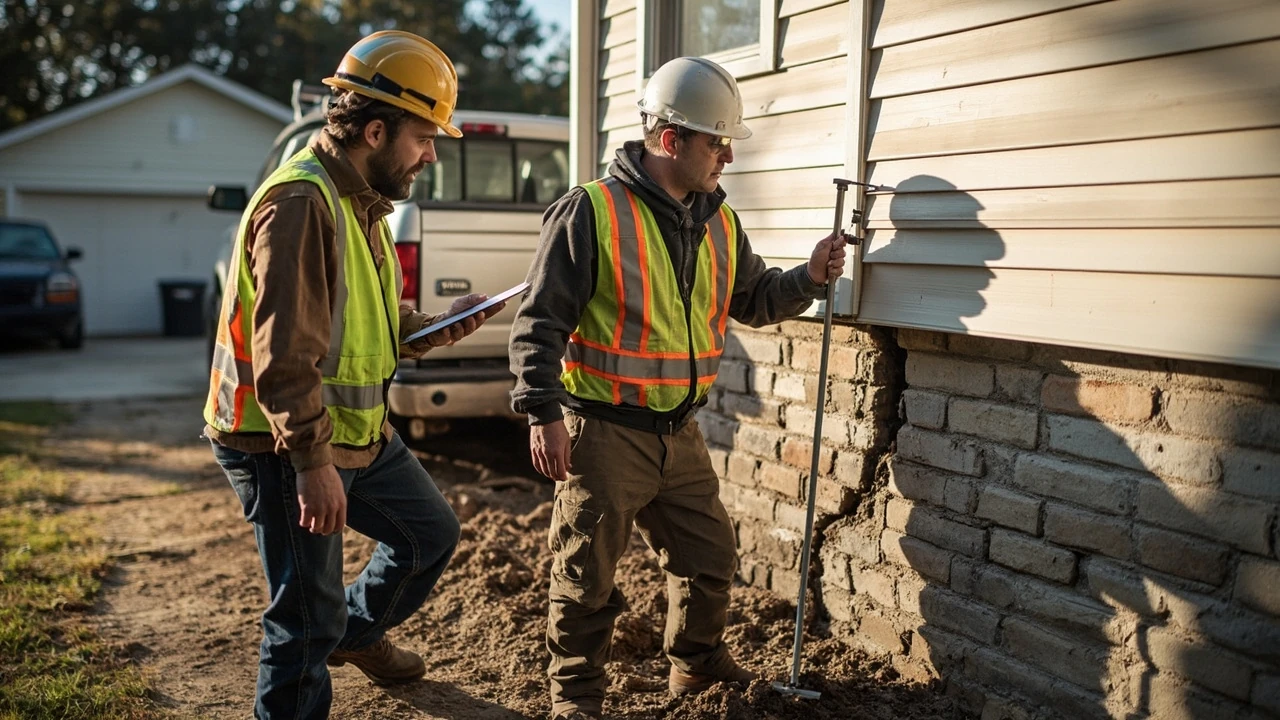
Cantey Foundation Specialists: what they actually do for homeowners
A hairline crack in a living room wall, a door that suddenly starts sticking, a chimney that looks like it is leaning a half inch more than last year. These are the everyday ways foundation trouble first shows up in a house, and they are the kind of calls that Cantey Foundation Specialists handle across much of South Carolina and into parts of neighboring states. The company is based in Camden, SC, and operates as an affiliated dealer for Foundation Supportworks, a national network that designs engineered products for foundation and structural repair.
Homeowners usually find a foundation contractor after a visible symptom appears, not before. By that point, the questions are practical: how bad is it, what does the repair actually involve, what will it cost, and is this crew the right one to do the work. The rest of this page walks through the services, service area, the parent network, the warning signs that justify a call, the inspection process, the common repair methods, the questions worth asking during an estimate, and the limits of evaluating any single contractor.
Where Cantey Foundation Specialists works
Cantey Foundation Specialists is headquartered in Camden, South Carolina, and the bulk of the service area runs through the Midlands, Upstate, and Lowcountry of the state. According to the company’s public listing with Foundation Supportworks, the service area includes major population centers such as Columbia, Greenville, Charleston, Spartanburg, Summerville, Florence, Sumter, Lexington, North Charleston, Aiken, Simpsonville, Mount Pleasant, Greer, Greenwood, West Columbia, and North Augusta, along with a long list of smaller South Carolina communities including Orangeburg, Hartsville, Moncks Corner, Irmo, Laurens, Walterboro, Piedmont, Darlington, and Goose Creek.
The service area also extends beyond South Carolina in selected directions. The company lists Charlotte, North Carolina; Augusta, Georgia; and Birmingham, Alabama, as additional service cities. Three South Carolina markets are called out specifically as focal points on the public profile: Columbia, Rock Hill, and Fort Mill.
What the service area means for scheduling
A wide advertised service area does not automatically mean every ZIP code gets the same response time. Foundation repair work is usually scheduled by route, so a homeowner on the edge of the map may sit a little longer between the initial call and a site visit than someone in the middle of the territory. When timing matters, it is worth asking about current scheduling and whether the company will subcontract or hand the job off to another dealer if their own crew is booked out.
The Foundation Supportworks connection
Cantey Foundation Specialists is an affiliated dealer for Foundation Supportworks, a network that develops engineered foundation repair products and training for independent contractors across the United States. Being a dealer typically means the company has access to a defined set of proprietary systems, installation training, and engineering support from the parent organization.
The relevance for a homeowner is twofold. First, the products used on a job are generally specified and supported by an engineering group rather than invented locally, which is a meaningful quality signal. Second, dealer status does not, by itself, guarantee installation quality, warranty handling, or pricing, because the on-site crew is still the contractor’s own team. A useful way to think about it: the network supplies the design, the products, and the technical playbook; the dealer supplies the people who install them.
What the company actually repairs
The public profile describes a foundation repair contractor that stabilizes foundations and straightens foundation walls, with particular focus on foundation cracks, bowing foundation walls, and doors or windows that have started to stick. In practice, that covers a familiar set of residential problems in the Southeast, where expansive clay soils, seasonal rain cycles, and aging housing stock combine to push foundations around.
Common job types
- Stabilizing settled or sinking foundations using push pier systems and similar underpinning methods.
- Straightening or reinforcing bowing basement walls with wall anchors and related bracing systems.
- Repairing foundation cracks and the related symptoms those cracks create inside the home.
- Addressing sticking doors and windows that trace back to frame distortion caused by foundation movement.
- Inspecting foundations and providing written repair estimates.
Cracks and sticking doors are listed because they are the symptoms homeowners most often notice, not because they are separate repair categories. In most cases the underlying issue is foundation movement, and the visible crack or jammed door is just the surface clue.
Signs a homeowner in the region should pay attention to
Foundation problems rarely appear overnight. The pattern is usually a slow accumulation of small signs that a careful homeowner can pick up on if they know what to look for. None of these signs automatically mean the house needs a major repair, but several of them together usually justify a professional inspection.
Indoor warning signs
- Sticking doors or windows that previously opened smoothly, especially on one side of the house.
- New diagonal cracks at the corners of door and window frames.
- Cracks in drywall, particularly near corners, ceilings, or where walls meet.
- Uneven or visibly sloping floors that can be felt when walking through a room.
- Gaps between the floor and the baseboard, or between the wall and the ceiling.
Outdoor warning signs
- Stair-step cracks in brick or masonry exterior walls.
- A chimney that is pulling away from the house, or visibly leaning.
- Vertical or diagonal cracks in the visible foundation wall, especially wider than a quarter inch.
- Bowing or bulging basement walls when viewed along their length.
- Soil pulling away from the foundation after a long dry spell, or pooling water against the foundation after heavy rain.
The direction of a crack matters as much as its size. Vertical cracks are often related to shrinkage or minor settlement. Horizontal cracks and stair-step cracks in masonry are more often tied to soil pressure or active movement and usually deserve a closer look. A professional inspector can usually sort the cosmetic from the structural in under an hour on site.
How a foundation inspection typically goes
Most foundation repair companies, Cantey included, begin with a free on-site inspection and a written estimate. Knowing what that visit should and should not include helps a homeowner judge whether they got a serious evaluation or a sales pitch.
What a thorough inspection usually covers
- A walk around the exterior of the home to look at the foundation wall, the visible grade, and the landscaping near the foundation.
- A walk through the interior, focusing on the symptoms the homeowner has noticed, plus a check for additional signs in less obvious rooms.
- Measurements of crack width, wall plumb, and floor level, often with simple tools like a tape measure, a level, and sometimes a manometer or zip level for more precise readings.
- A conversation about the home’s history, including the age of the property, prior repairs, drainage changes, and any recent landscaping or construction work nearby.
What the inspector should not do
- Pressure the homeowner to sign a contract on the spot before they have had time to read it.
- Refuse to share the written estimate, the scope of work, or the product specifications in writing.
- Diagnose the entire house from a quick look at one crack without measuring or testing.
A good inspector will also be clear about what is and is not a foundation problem. Many of the indoor symptoms associated with foundation movement can also be caused by framing shrinkage, roof movement, or humidity changes, and a careful contractor will say so rather than treating every crack as a foundation issue.
Common repair methods in the Southeast
Because Cantey is a Foundation Supportworks dealer, the company has access to a defined set of engineered products. The methods below are the standard approaches used across the network for the problems the company describes. Method selection depends on the structure, the soil, and the goal: stop further movement, lift the structure back, or both.
Push pier systems
Push piers are steel pipes driven beneath the foundation until they reach load-bearing soil or bedrock. A bracket connects the pier to the footing, and the system can sometimes be used to lift the foundation back toward its original position. They are typically used where a portion of the house has settled and needs to be stabilized, and they are a common response to cracks and sloping floors tied to settlement.
Wall anchors
Wall anchors are used to stabilize bowing or leaning basement walls. The basic idea is a steel plate on the interior wall connected by a long rod to an anchor buried in the yard outside the wall. Tightening the rod gradually pulls the wall back toward plumb. Wall anchors are most often recommended where soil pressure is pushing a block or concrete wall inward.
Other structural solutions
Depending on the situation, a Foundation Supportworks dealer in South Carolina may also specify helical piers, carbon fiber straps, steel I-beams, or supplemental beam and girder support. The right system depends on the diagnosis, the load, and the access. A homeowner does not need to memorize the differences, but it is reasonable to ask why a particular system is being recommended and what alternatives were considered.
Comparing foundation repair approaches at a glance
The tables below summarize the most common residential foundation repair methods and the practical questions to bring to an estimate. They are general comparisons, not recommendations for any specific home, because soil conditions, foundation type, and the severity of the problem all influence which system fits.
| Method | Typical use case | What it does | Limitations to ask about |
|---|---|---|---|
| Push piers | Settlement of part of the foundation | Transfers load to deeper, stable soil or bedrock; may allow lift | Depth to load-bearing soil varies; lift is not always full recovery |
| Helical piers | Light structures, porches, or where driving force is limited | Screws into stable soil and supports the footing | Requires correct torque reading during install to verify capacity |
| Wall anchors | Bowing basement walls from outside soil pressure | Anchors wall to stable soil outside the foundation | Requires accessible yard for the exterior plate; gradual tightening over time |
| Carbon fiber straps | Hairline or early-stage wall cracking without significant bow | Reinforces wall against further inward movement | Does not straighten a wall that has already bowed significantly |
| Steel I-beams | Walls that are bowing but cannot be accessed from outside | Vertical beam inside the wall resists further inward movement | Does not usually pull the wall back; floor framing impact |
| Topic to cover at the estimate | What a solid answer looks like | What a thin answer sounds like |
|---|---|---|
| Diagnosis and supporting evidence | Measurements, photos, and a written explanation of how the symptoms connect to foundation movement | A verbal impression based on a single glance at one crack |
| Proposed system and why it was chosen | Comparison with at least one alternative system and the reason this one fits the house | “This is what we always install” with no trade-off discussion |
| Scope of work in writing | Itemized estimate with site prep, cleanup, landscaping repair, and any affected plumbing or electrical | A round number with a verbal description and no paperwork |
| Warranty terms | Written period, what is covered, exclusions, and whether the warranty transfers on sale | Verbal promises with no documents to take home |
| Crew and scheduling | Named crew lead, start date in writing, weather policy, and a clear daily plan | “We will be there sometime next week” with no written commitment |
| Insurance and licensing | Proof of general liability and workers’ comp, plus any required local licenses | Vague reassurance without documents |
How to evaluate the company itself
No article can tell a homeowner whether a specific contractor is the right fit for a specific house, because that depends on the diagnosis, the price, the crew, and the homeowner’s own comfort with the plan. What an article can do is provide a checklist for the conversation.
Questions worth asking during the estimate
- What exactly is the diagnosis, and what evidence supports it. Measurements, photos, or instrument readings are more convincing than a verbal impression.
- What system is being proposed, and why this system rather than an alternative. A confident contractor can explain the trade-offs.
- What is and is not included in the written estimate, including site prep, cleanup, landscaping repair, and any plumbing or electrical work that may be affected.
- What the warranty covers, how long it runs, and whether it is transferable if the house is sold.
- Who will actually be on site. Dealer status means the products are network-supplied, but the crew is the local team.
- How long the work will take and whether the homeowner will need to leave the house during the job.
Signals that the estimate is solid
- The inspector measures things rather than just looking.
- The estimate is in writing and itemized, not a single round number with a verbal description.
- The contractor is willing to be compared. They do not pressure a same-day signature or warn that the price will go up tomorrow.
- The company can describe its relationship with the Foundation Supportworks network, the products it installs, and the training its crews have received.
Signals that warrant a second opinion
- The diagnosis is delivered with no measurements and no photos.
- The proposed scope is significantly larger than the visible symptoms would suggest, with no clear explanation.
- The contractor will not provide the written estimate, or will not list the specific products being installed.
- The price is dramatically lower or higher than competing bids for the same scope, with no explanation for the gap.
A second opinion is cheap and fast. Most reputable foundation repair companies will encourage a homeowner to compare bids, and a contractor that resists that comparison is sending a signal worth noticing.
Cost structure in plain terms
Foundation repair pricing varies widely because the scope varies widely. A single push pier for a settling corner is a different job from a full-perimeter pier system combined with wall anchors and interior crack repair. A useful approach is to think in terms of cost drivers rather than ballpark averages, which age quickly and can be misleading.
What drives the price up or down
- The number of piers or anchors installed, which depends on how much of the structure is affected.
- Depth to load-bearing soil, which can change by tens of feet across a single region.
- Access. Tight lots, mature landscaping, and finished basements all add time and labor.
- Whether the work is purely stabilization or includes an attempt to lift the structure back toward level.
- Local permitting, which varies by municipality in South Carolina and the neighboring states.
Homeowners comparing bids should ask each contractor to break the price down by component rather than presenting a single lump sum. That makes it possible to see whether one bid includes work the other skipped, or whether one bid is genuinely cheaper for the same scope.
What a homeowner should prepare before the visit
A little preparation before the inspector arrives makes the visit more productive and the estimate more accurate. None of this is complicated, and most of it is just taking stock of what the home has been doing.
A short pre-visit checklist
- Write down every symptom noticed, with rough dates if possible. Sticking door since last spring, crack appeared after a heavy rain, floor feels sloped near the kitchen, and so on.
- Walk the exterior once and note any visible cracks, separated brick, or pooling water near the foundation.
- Find any existing paperwork on prior foundation work, drainage changes, or significant landscaping that might be relevant.
- Clear access to the basement, crawl space, or any area where the inspector will need to work.
The more concrete the homeowner can be about what has changed and when, the more useful the inspection tends to be. Vague descriptions are harder to diagnose than a dated list of observations.
Limitations of any single contractor evaluation
Even a careful homeowner can only evaluate a contractor based on the conversation, the estimate, and the references that contractor chooses to share. That is a real limitation, and it is worth naming.
Things a contractor evaluation cannot fully answer
- How the crew will actually behave on a long day of physical work in difficult conditions.
- How the company will handle a warranty claim years later, when leadership may have changed.
- Whether the diagnosis is correct, because the homeowner is relying on the contractor’s own inspection to recommend work the contractor will then perform.
Those are the reasons an independent structural engineer is sometimes worth the extra cost, especially for larger scopes. An engineer does not sell repairs, and a written engineering report gives the homeowner a third-party reference point for the contractor’s diagnosis and proposed scope.
How Cantey fits into the broader South Carolina market
South Carolina has a long list of foundation repair contractors, ranging from small local operators to multi-state regional companies. The Foundation Supportworks dealer model is one of the larger national networks in the space, alongside other established networks that also license products and training to regional dealers. Homeowners in Columbia, Greenville, Charleston, and the surrounding cities will usually have several options to choose from, and the right one depends as much on the specific problem and the homeowner’s comfort with the company as on the company name.
For a homeowner in Cantey’s stated service area, the practical path is straightforward: notice the signs, request an inspection, get a written estimate, and compare it against at least one other bid from a company with a comparable reputation. The company being evaluated here is one option, and the public profile on the Foundation Supportworks site is a reasonable starting point for confirming that the contact information, service area, and product lines are current.
Working with the company in practice
After the estimate, if the homeowner decides to move forward, the next steps are usually scheduling, permitting where required, the actual installation, and a follow-up check after the work is done. Each step has small but real choices attached to it.
Scheduling and preparation
- Confirm the start date in writing and ask how weather delays will be handled.
- Ask which areas of the home will be inaccessible during the work and for how long.
- Move vehicles, outdoor furniture, and fragile landscaping items that might be in the way of equipment.
During the work
- Ask the crew lead to walk the scope at the start of the day so the homeowner and the crew share an understanding of the plan.
- Photograph the work as it progresses, especially anything that will be covered up later.
- Confirm the number of piers or anchors actually installed matches the estimate, rather than trusting the final number on the invoice.
After the work
- Walk the home with the crew lead at the end of the job and note any concerns in writing before signing off.
- Keep the warranty documents, the engineered drawing if one was provided, and the final invoice in a safe place.
- Monitor the symptoms that triggered the call. Some improvement is normal; full restoration of every door and window is not always realistic.
Foundation repair is not the kind of project where the homeowner can step away and assume everything went well. A few minutes of attention at the start, the middle, and the end of the job pays for itself many times over.
When foundation work is not the right next step
Not every crack or sticking door calls for foundation work. Some issues are purely cosmetic, some trace to humidity and framing movement, and some are tied to drainage that could be fixed for a small fraction of the cost of a structural repair. A good contractor will say so, and a homeowner should be open to hearing it.
Situations where a different fix may be more appropriate
- Hairline shrinkage cracks in new construction, which are common and usually do not indicate structural movement.
- Sticking doors caused by swollen humidity rather than foundation movement.
- Water in the basement that is a drainage or grading problem, not a foundation problem.
- Old repairs that have already stabilized and do not need to be redone.
If the contractor is recommending major work, the homeowner is entitled to ask whether there is a less invasive option that addresses the underlying cause, even if that option is not the contractor’s own service. Drainage corrections, gutter extensions, and plumbing leak repairs are often part of a complete solution, and they may be performed by a different trade.
Practical reminders before signing anything
- Read the contract, not just the estimate. The contract is the binding document.
- Confirm the scope in writing, including the number of piers, anchors, or other units, with unit pricing for any change orders.
- Ask for proof of insurance and any required local licenses.
- Check that the warranty period, transferability, and exclusions are spelled out rather than described verbally.
- Keep copies of everything, including the engineered drawing if one is provided.
Frequently asked questions
Where is Cantey Foundation Specialists based?
The company is headquartered in Camden, South Carolina, and operates across a wide swath of the state including the Columbia, Greenville, and Charleston regions.
What does Cantey Foundation Specialists specialize in?
The company focuses on stabilizing foundations and straightening foundation walls, with services aimed at foundation cracks, bowing walls, and sticking doors and windows that trace back to foundation movement.
Does the company work outside South Carolina?
Yes. The public service area also includes Charlotte, North Carolina; Augusta, Georgia; and Birmingham, Alabama, in addition to the South Carolina cities and towns listed on the company profile.
Is Cantey a national company or a local one?
It is a local company, based in Camden, SC, that operates as an affiliated dealer for Foundation Supportworks, a national network that designs engineered foundation repair products and training.
Does the company offer free estimates?
Yes. The public profile states that free foundation repair estimates are provided throughout the service area, though homeowners should always confirm the current policy when scheduling.
What kinds of foundation problems does the company address?
Typical projects include settled or sinking foundations, bowing basement walls, foundation cracks, and related interior symptoms such as sticking doors and windows, cracked drywall, and uneven floors.
How can a homeowner tell whether a crack is serious?
Width, direction, and change over time are the main clues. Cracks wider than a quarter inch, horizontal cracks, stair-step cracks in masonry, and any crack that is still growing are all worth a professional inspection.
Should a homeowner get a second opinion before foundation work?
For any scope larger than a minor repair, a second bid and, in some cases, an independent structural engineer’s report are reasonable steps. They make it easier to confirm the diagnosis and to compare scopes and prices.
How long does foundation repair usually take?
Most residential projects take one to several days depending on the number of piers or anchors and site access. The contractor should provide a written schedule before work begins.
Is foundation repair covered by homeowners insurance?
Coverage depends on the cause and the policy. Damage from a covered peril such as a plumbing leak that caused the settlement is more likely to be covered than movement tied to long-term soil conditions, but the homeowner’s insurance agent is the right source for a specific answer.
Leave a Reply