


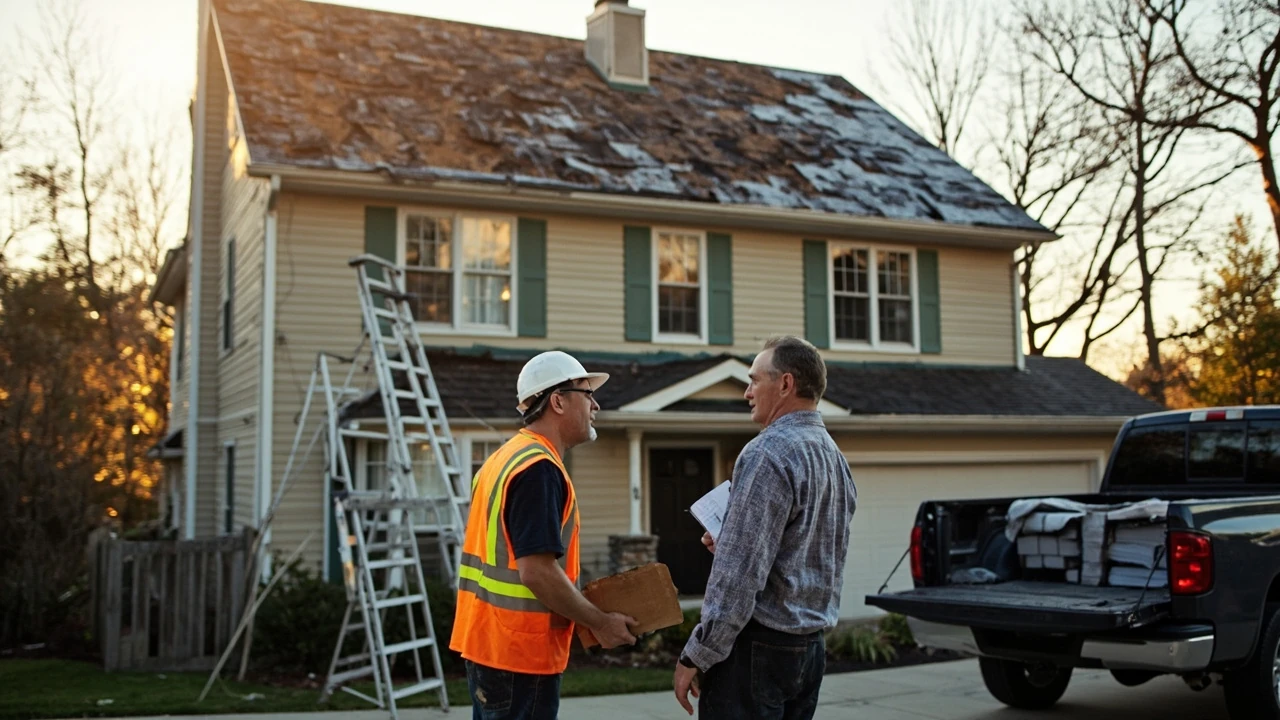
How much does it cost to replace a roof
A full roof replacement on a typical single-family home in the United States usually lands between roughly $9,000 and $20,000, with most homeowners paying somewhere in the $12,000 to $15,000 range when they choose architectural asphalt shingles. That range sounds straightforward until you start collecting actual estimates, and the spread between your lowest and highest bid is often wider than the spread between two completely different cars. The same roof on the same house can be quoted at $11,000 by one contractor and $24,000 by another, both of them honest, because the line items behind the number change more than people expect.
If you are trying to figure out how much does it cost to replace a roof on your own home, the most useful thing you can do is understand what is actually inside the estimate. Price per square foot is a starting point, but the materials, the layers of old roofing that have to come off, the shape of the roof, and the local labor market all push that number up or down. This guide walks through the cost drivers, the realistic price bands for common materials, the line items that often surprise homeowners, and the practical checks that help you compare bids fairly.
What a roof replacement actually includes
A roof replacement is not just a new layer of shingles. On most homes it is a multi-step process that touches the decking, the flashing, the ventilation, and the trim, and each step has its own cost. Knowing the steps makes it easier to see why one bid is higher than another and to spot an estimate that is missing work that will turn into a change order later.
- Permits and tear-off of the existing roof down to the decking
- Inspection and repair or replacement of damaged sheathing (usually charged per sheet of plywood)
- Installation of new underlayment, ice and water shield in vulnerable areas, and drip edge
- Installation of flashing around chimneys, skylights, valleys, and wall transitions
- Installation of the chosen roofing material and its specific starter and ridge components
- Replacement or addition of roof and soffit ventilation to meet current code
- Cleanup, haul-away of debris, and a final magnetic sweep for nails
- Workmanship warranty from the installer and a separate manufacturer warranty on the material
When any of these steps is missing from a written estimate, ask about it. A bid that looks low because it does not include flashing replacement, for example, often ends up matching or exceeding a fuller bid once the missing work is added.
Average roof replacement costs at a glance
The table below summarizes what homeowners typically see in 2026 for a standard single-family roof of about 1,700 to 2,200 square feet of roof surface. Numbers are national ranges based on commonly reported contractor pricing; your local market can sit above or below these bands.
| Material | Typical cost range (installed) | Common lifespan | Best fit |
|---|---|---|---|
| Three-tab asphalt shingles | $7,000 – $12,000 | 15 – 20 years | Budget-focused replacements, rental properties |
| Architectural asphalt shingles | $10,000 – $18,000 | 22 – 30 years | Most U.S. single-family homes |
| Standing seam metal | $18,000 – $35,000 | 40 – 70 years | Long-term owners, regions with heavy snow or wildfire risk |
| Corrugated or ribbed metal panels | $14,000 – $26,000 | 30 – 50 years | Outbuildings, modern farmhouses, budget metal buyers |
| Clay or concrete tile | $22,000 – $45,000 | 50 – 100 years | Mediterranean, Spanish, and Southwestern styles |
| Slate (natural) | $30,000 – $60,000+ | 75 – 150 years | Historic homes, high-end custom builds |
| Synthetic slate or composite | $20,000 – $40,000 | 40 – 60 years | Slate look without the structural cost |
| Wood shake (cedar) | $18,000 – $32,000 | 25 – 40 years | Traditional styles where fire-rated treatments are accepted |
These bands include tear-off of a single existing layer, standard underlayment, new flashing at the penetrations, and a typical crew. They do not include structural repairs, skylight replacement, or premium upgrades such as copper flashing.
Cost per square foot: how the math works
Roofers price most jobs in “squares,” where one square equals 100 square feet of roof surface. When you ask how much does it cost to replace a roof on a per-square-foot basis, you are really asking what the contractor charges for each square, which combines labor, materials, accessories, and overhead for that 100-square-foot section.
| Material | Typical installed cost per square foot | Typical installed cost per square (100 sq ft) |
|---|---|---|
| Three-tab asphalt | $4.00 – $6.50 | $400 – $650 |
| Architectural asphalt | $5.50 – $9.00 | $550 – $900 |
| Standing seam metal | $10.00 – $18.00 | $1,000 – $1,800 |
| Clay or concrete tile | $12.00 – $22.00 | $1,200 – $2,200 |
| Slate (natural) | $16.00 – $30.00 | $1,600 – $3,000 |
| Synthetic composite | $11.00 – $20.00 | $1,100 – $2,000 |
| Wood shake | $9.00 – $16.00 | $900 – $1,600 |
To use this for a quick estimate, measure or estimate the total roof area in square feet, divide by 100 to get squares, and multiply by the per-square cost for your chosen material. A 2,000-square-foot roof at $7 per square foot for architectural shingles lands at roughly $14,000, which is a useful sanity check against contractor bids.
What drives the price up or down
The same shingle on two similar houses can carry very different price tags. The difference usually comes down to a handful of structural and site-specific factors that the contractor has to account for.
- Roof size and pitch: Larger and steeper roofs require more material, more staging time, and often larger crews. A simple 6/12 gable roof is the cheapest shape to replace, while a steep 12/12 roof with multiple dormers and valleys can run 20 to 40 percent more.
- Number of existing layers: A second layer of old shingles underneath the top layer means extra tear-off labor and disposal fees. Some jurisdictions limit how many layers are allowed, which can force a full tear-off even when the homeowner was hoping to save money.
- Decking condition: If the sheathing underneath is soft, rotted, or sagging, it has to be replaced. Contractors usually price this separately per sheet of plywood, so the final number depends on what they find once the old roof is off.
- Flashing and penetration work: Chimneys, skylights, plumbing vents, and wall-to-roof transitions all need new flashing in most cases. Chimney flashing in particular is one of the most common sources of mid-job surprises.
- Access and staging: Homes with limited driveway access, no place for a dumpster, or extensive landscaping often need more manual labor to move debris, which adds cost.
- Regional labor market: The same project can cost noticeably more in a high-cost metro than in a small town, because crew wages, insurance, and overhead all differ.
- Material choice and warranty tier: Within asphalt shingles alone, there is a wide gap between builder-grade three-tab and high-end architectural or designer shingles with enhanced warranties.
- Code and permit requirements: Some jurisdictions now require ice and water shield across the entire roof, not just the eaves, and may enforce specific ventilation standards. Both add to the bill but are not optional.
Material cost breakdown: what you are really paying for
The shingle itself is often the smallest line item on a roof replacement estimate, once you add up the underlayments, flashing, ventilation, and trim. The table below gives a rough split of where the money goes on a typical architectural asphalt shingle job. The exact percentages vary, but the order of magnitude is consistent across most markets.
| Cost component | Approximate share of total project cost |
|---|---|
| Labor (tear-off, install, cleanup) | 35% – 45% |
| Shingles and primary roofing material | 25% – 30% |
| 8% – 12% | |
| Flashing, drip edge, vents | 5% – 10% |
| Permits, disposal, overhead, insurance | 10% – 15% |
Labor is the largest share, which is why the same material list can produce different totals from different contractors. Crew experience, insurance costs, and how many hours they realistically need to finish the job all feed into that number.
How to compare contractor estimates fairly
Two For additional context, bids that look $4,000 apart on paper can represent the same scope of work, or they can represent two very different roofs. The only way to compare them is to make sure the line items actually match, then check what is missing.
- Confirm the exact material, brand, product line, and color for each bid. A “30-year shingle” from one manufacturer is not the same as a “lifetime architectural shingle” from another.
- Check whether the estimate includes full tear-off of the existing layer, or only a re-cover (which is not allowed in many areas and does not address soft decking).
- Look for explicit language on flashing replacement at the chimney, valleys, and wall transitions, not just “new flashing where needed.”
- Ask about ventilation: will the contractor add or replace ridge vent, soffit vent, or box vents to meet current code, and is that cost in the bid?
- Verify who is responsible for sheathing replacement, what the per-sheet cost is, and how payment for additional sheets is handled.
- Compare warranty terms side by side: a longer workmanship warranty from a more established contractor often justifies a higher bid.
- Ask for proof of insurance, workers’ comp, and any local licensing your municipality requires. The lowest bid sometimes comes from an underinsured crew.
Once the line items line up, three bids within roughly 10 to 15 percent of each other are a healthy sign that the market rate is real. A single bid that is far below the others usually means something has been left out.
Common add-ons and upgrade costs
Homeowners are often surprised by line items that show up after the initial estimate. The list below is not universal, but each item is a legitimate cost on many jobs, and knowing them ahead of time helps you budget.
- Replacing bad sheathing: typically $75 to $120 per 4×8 sheet installed
- Chimney flashing rebuild with new step and counterflashing: $400 to $1,200 depending on chimney size
- Skylight replacement (if the existing unit is at the end of its life): $1,000 to $3,000 per skylight
- Adding or upgrading ridge vent and soffit ventilation: $300 to $900 for a typical home
- Installing copper or upgraded flashing at valleys: $500 to $1,500 depending on roof size
- Replacing damaged or rotten fascia and soffit boards: $20 to $40 per linear foot installed
- Gutter and downspout replacement coordinated with the roof job: $6 to $14 per linear foot for aluminum seamless gutters
None of these are hidden fees when they are discussed in advance. The problem is when they appear in a change order on the day the old shingles come off and the homeowner has no leverage to negotiate.
Ways to save without cutting corners
Roof replacement is not a place to chase the absolute lowest number, but there are several practical ways to keep the cost reasonable without compromising the result.
- Get three written bids from established local contractors and compare them line by line, not by total alone.
- Ask about off-season scheduling. Late fall and winter (where weather allows) are sometimes slower for roofers, and a contractor may offer a more competitive price to keep the crew working.
- Choose architectural asphalt shingles unless a specific look or long life justifies premium materials. They are the best balance of cost, weight, and warranty for most U.S. homes.
- Bundle related exterior work, such as gutters or exterior painting, with the roof job to negotiate a better combined price from a contractor who is already mobilized.
- Ask the contractor to handle the permit and include it in the bid so you do not accidentally skip it and create a problem at sale.
- Confirm the cleanup scope in writing, including magnetic nail sweep, so a low bid is not the result of a thinner cleanup.
- Look into manufacturer and utility rebates for reflective shingles, solar-ready underlayments, or impact-rated products in storm-prone regions, which can offset part of the upgrade cost.
What you do not want to do is save by skipping the building permit, reusing old flashing, or letting the contractor skip ice and water shield at the eaves. Each of those decisions tends to fail at the worst possible time.
How long a roof replacement takes
For an average single-family home with architectural asphalt shingles, most roof replacements take one to three working days once the crew is on site, with the first day dedicated to tear-off and dry-in and the second or third day for installation and cleanup. Larger homes, complex roofs, or premium materials such as tile or slate can stretch to a week or more, especially if weather interrupts the schedule. Standing seam metal typically takes longer than asphalt because each panel has to be custom-fabricated and carefully aligned.
Time matters for cost because longer jobs usually mean higher labor cost, more days of a dumpster on the driveway, and more exposure to weather. A well-organized crew that finishes a normal shingle roof in two days is delivering real value even if their total bid is not the cheapest on paper.
When a repair is the smarter move
Not every roof problem needs a full replacement, and understanding the difference can save a homeowner several thousand dollars. The decision is part of answering how much does it cost to replace a roof, because in some cases the honest answer is that you do not need to.
- Localized leaks from failed flashing, a cracked vent boot, or a missing shingle can often be repaired for $300 to $1,200.
- Storm damage confined to one slope of the roof sometimes justifies a partial replacement, with the new section tied into the existing roof on the adjacent slope.
- If the roof is under 15 years old, the shingles are still in production, and the rest of the system is sound, a repair is usually the better call.
- If the roof is past 20 years old, has widespread granule loss, curling shingles, or has been repaired multiple times, a full replacement tends to be more cost-effective over the next decade than another repair.
Most reputable contractors will tell you straight whether a repair is realistic or if you are about to spend good money chasing problems on a roof that is at the end of its life.
Insurance, financing, and tax considerations
A roof replacement is a significant expense, and the way it is paid for can affect the total cost almost as much as the line items on the estimate.
- Homeowners insurance may cover part or all of a roof replacement when damage is caused by a covered peril such as wind, hail, or a fallen tree. Wear and age are usually not covered, and policies often depreciate the payout on an older roof.
- Many roofing contractors are experienced with insurance claims and can meet the adjuster on site. That help is useful but does not change your right to choose your own contractor within the policy rules.
- Financing options include contractor-offered plans, home equity loans or lines of credit, and personal loans. A promotional 0 percent plan from a contractor can make sense only if it is paid off inside the promotional window.
- Energy-efficient upgrades such as reflective shingles or solar-ready underlayments may qualify for a federal Residential Clean Energy Credit in some tax years. Check the current IRS guidance and your tax professional before assuming the credit applies.
- Some states and utilities offer rebates for impact-resistant or cool-roof materials, especially in hurricane or wildfire regions. Your contractor should know the local programs or be able to point you to them.
Keep all documentation, including the signed contract, the material list, and the final paid invoice. These are useful for insurance records, future sale disclosures, and warranty claims.
Frequently asked questions
What is the average cost to replace a roof on a 2,000 square foot home?
For a 2,000-square-foot home with architectural asphalt shingles, the most common price range is roughly $11,000 to $17,000 in 2026, depending on the region, roof complexity, and what is found under the old shingles. A simple gable roof on a single story tends to sit near the low end, while a two-story home with multiple valleys and dormers sits higher.
How much does it cost to replace a roof with architectural shingles?
Installed architectural asphalt shingles typically run $5.50 to $9.00 per square foot in 2026. For a 1,800-square-foot roof, that translates to about $10,000 to $16,000, including tear-off of a single existing layer, new underlayment, and standard flashing.
How much does it cost to replace a roof with metal?
Standing seam metal roofing usually falls between $10 and $18 per square foot installed, so a 2,000-square-foot roof lands in the $20,000 to $36,000 range. Corrugated or ribbed metal panels are usually a step cheaper, often $7 to $12 per square foot installed.
Does homeowners insurance cover roof replacement?
Insurance typically covers a roof replacement when the damage comes from a sudden covered event such as wind, hail, or a fallen tree, and the roof was in reasonable condition beforehand. Wear, age, and neglect are not covered, and most policies factor depreciation into the payout on an older roof.
How long does a new roof last?
Lifespan depends on the material. Three-tab asphalt shingles last 15 to 20 years, architectural asphalt 22 to 30 years, standing seam metal 40 to 70 years, and clay tile or natural slate 50 years or more. Proper ventilation and attic insulation can extend the life of any roofing material.
Can I put new shingles over the old ones?
Some jurisdictions allow a re-cover with a second layer of shingles, but it is rarely the best choice. A re-cover hides the condition of the decking, adds weight, shortens the life of the new shingles, and can complicate future replacement. Most manufacturers also void enhanced warranties on a re-cover.
What time of year is cheapest to replace a roof?
Late fall and winter can be slower for roofing contractors in some regions, which sometimes leads to more competitive pricing. The trade-off is weather risk. In snowy or very wet climates, spring and fall tend to balance good scheduling with reliable weather, while summer is the busiest and often the most expensive time to book.
How do I tell whether I need a repair or a full replacement?
A roof that is under 15 years old, has damage confined to one area, and is otherwise in good shape is usually a repair candidate. A roof that is past 20 years, has widespread granule loss, curling or missing shingles, soft spots, or a history of repeated leaks is usually a better candidate for full replacement. A trustworthy roofer will give you both options and the cost of each.
Are roofing estimates usually free?
Most established roofers provide a free on-site estimate, especially on full replacement projects. Be cautious of anyone who pressures you to sign a contract on the spot without putting the scope of work in writing, and confirm that the estimate is detailed enough to compare against other bids.
How long is a typical workmanship warranty on a new roof?
Workmanship warranties from the installer commonly run 5 to 10 years on asphalt shingle roofs and can be longer on metal or tile. Manufacturer material warranties often run 25 to 50 years, but they are pro-rated and only cover the material itself, not the labor to replace it. Read both documents before signing.
Leave a Reply