


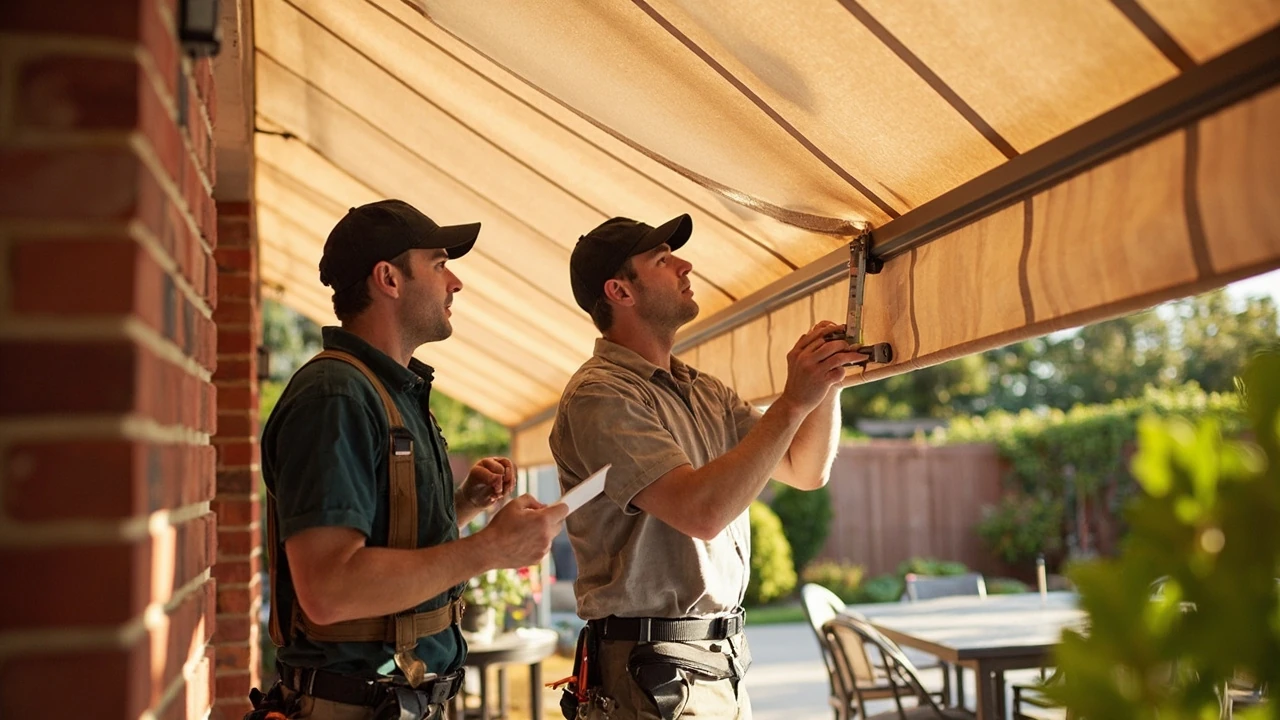
Retractable awning installers
A patio that bakes in late afternoon sun, a deck that becomes unusable every July, a south-facing wall that drives cooling bills through the roof; these are the everyday reasons homeowners start looking for retractable awning installers. The product itself is straightforward, a motorized or manual cassette that rolls out to shade a defined area and rolls back when the weather turns. What separates a satisfying project from an expensive regret is almost entirely the installer: how they measure, what they specify, how they anchor the unit to your specific wall or roof, and what they do when the first storm rolls in.
This guide walks through the decisions that matter before you sign a contract with retractable awning installers. It covers how to read a quote, which questions reveal a careful installer, what the realistic 2026 cost ranges look like, how permits and codes come into play, and how to compare manual, motorized, and smart-hub systems on something other than price. The goal is to help you hire once, hire well, and end up with a shade system you actually use.
What retractable awning installers actually do on a project
The label “installer” covers a wider range of skill than most homeowners expect. Some crews are window-treatment fitters who occasionally add an awning; others are dedicated shade contractors who do nothing but outdoor structures. The difference shows up in the details that determine whether your awning survives its first windstorm and looks good ten years from now.
A professional installation usually runs through four phases:
- Site measurement and substrate check. The installer verifies the mounting surface (wood fascia, brick, stucco, concrete, steel beam, or roof rafter) and decides where the brackets can safely anchor. They also check sun angle, prevailing wind exposure, and clearance for the projected awning.
- Product specification. Width, projection, fabric weight, frame color, motor type, and control system are sized to the location rather than picked from a price sheet.
- Electrical and control planning. Motorized units need a power feed, a switch or remote receiver, and sometimes a wind/sun sensor. A good installer plans this in advance and brings the right parts on the first visit.
- Mounting, commissioning, and handoff. The brackets are anchored with the correct fasteners for the substrate, the fabric is tensioned, the motor limits are set, and you are shown how to operate and care for the system.
If any of these phases gets rushed, the rest of the project usually suffers. Anchoring into rotted fascia, undersizing a motor for a wide projection, or skipping a wind sensor in a breezy yard are all common ways a quote turns into a callback.
How to evaluate retractable awning installers before you get a quote
The cheapest way to avoid a bad hire is to spend an hour qualifying candidates before they ever set foot on your patio. Three filters catch most of the problems: credentials, documentation, and references.
Credentials. Most reputable retractable awning installers hold a state contractor’s license where required, carry general liability insurance, and have manufacturer certifications for at least one of the major awning brands. Manufacturer training matters because the bracket spacing, torque values, and motor wiring for a Sunesta unit are not identical to those of a RetractableAwnings.com or an Eclipse system. Ask which brands the installer is certified to install and how recently the team was trained.
Documentation. A serious contractor provides a written proposal that includes the product line, exact dimensions, fabric type, frame color, motor specs, mounting method, electrical plan, and warranty terms. Vague “awning installation” lines on a generic invoice are a red flag, because they leave you no leverage if the wrong bracket shows up on install day.
References. Ask for two or three addresses of completed projects that match yours in mounting surface and projection length. Drive by if possible. A two-year-old motorized awning that still sits square on its brackets and has clean fabric tells you more than any brochure.
For a regional example, SUNAIR’s Wichita dealer page shows the kind of pre-installation conversation a national brand expects its dealers to have with homeowners, covering both retractable patio awnings and larger pergola-style roof systems before any commitment is made.
What a proper site assessment looks like
When a qualified installer visits your home, the visit is more than a tape-measure walkthrough. Expect them to spend time on the following:
- Substrate identification: tapping the wall, checking for hollow stucco, looking for rebar or conduit behind brick, confirming that a roof mount has rafter access.
- Sun-path analysis: noting which hours of the day the area actually needs shade, and how the shadow shifts through the season.
- Wind exposure: open lots, hilltops, and water-facing patios need higher wind-rated frames, often with a wind sensor that retracts the awning automatically.
- Clearance: awnings need room to drop their projection without hitting railings, doors, or landscaping. Installers should check headroom, walkways, and the swing of any nearby doors.
- Drainage: water that runs off a fully extended awning can splash back onto siding or pool in a low spot. Good installers plan for this, sometimes recommending a pitch adjustment or a rain hood.
If a contractor gives you a written quote without ever climbing a ladder or probing the wall, the proposal is essentially a guess. The guess may be right, but you are paying for the assessment, and skipping it costs the installer time but costs you certainty.
Manual, motorized, and smart retractable awnings compared
The drive system you choose shapes both the budget and the long-term experience. The table below compares the three common options on dimensions that actually matter to a homeowner.
| Feature | Manual crank | Wired motor with remote | Smart-hub motor with sensors |
|---|---|---|---|
| Typical installed cost (2026, mid-range fabric, 12–16 ft width) | Lower than motorized | Mid-range, with electrical run | Highest, plus hub and sensors |
| Daily operation | Hand crank, typically from inside or just outside | Wall switch or remote, one-button retract | App, voice, automation schedules |
| Best for | Small widths, lower budgets, second homes | Most primary residences | Homes with frequent weather changes, accessibility needs, or whole-home automation |
| Wind and sun response | Manual; depends on the user | Optional sensors added on | Built-in wind and sun sensors with auto-retract thresholds |
| Failure mode concerns | Few moving parts; crank gear can wear | Motor and switch; wiring must be sealed at the wall penetration | Hub firmware updates, sensor calibration, network reliability |
| Service life expectancy | Long on the mechanism; fabric life is the limiting factor | Comparable to manual on the frame; motor service is the new variable | Same as wired motor, with added electronics risk |
For most homeowners, a wired motor with a remote sits in the practical middle: easier to use than a crank in a stiff frame, simpler to service than a smart-hub system, and compatible with add-on wind and sun sensors if the location turns out to be exposed. Smart-hub systems earn their premium when the awning is high, wide, or mounted over a door the homeowner cannot easily reach in a sudden storm.
What changes the price: a 2026 cost breakdown
Quotes from retractable awning installers vary widely because the same patio can be shaded by very different products. The table below shows the main drivers and the typical direction each one moves the price. Exact numbers depend on your region, the brand specified, and the mounting complexity, so use this as a way to read a quote rather than as a price list.
| Cost driver | Lower-cost option | Higher-cost option | What it changes for the homeowner |
|---|---|---|---|
| Width and projection | 10 ft wide, 8 ft projection | 20 ft wide, 13 ft projection | Larger frames need stronger brackets and more robust motors |
| Fabric type | Standard solution-dyed acrylic | Woven acrylic, coated PVC, or higher-end technical fabric | Better UV block, longer colorfastness, and cleaner water shedding |
| Frame material and finish | Powder-coated steel | Extruded aluminum with premium finish | Aluminum resists corrosion near pools and coastal air |
| Drive system | Manual crank | Motor with remote | Adds electrical work and a small part of the total for controls |
| Mounting surface | Wood fascia with clear rafter access | Brick, stone veneer, or roof rafter tail with blocking | Harder mounting adds labor and may require specialty anchors |
| Sensors and automation | None | Wind sensor, sun sensor, or smart-home hub | Protects the awning from wind damage and automates daily use |
| Permits and electrical | No new circuit, self-contained motor | Dedicated circuit, GFCI protection, possible permit | Adds electrician coordination and inspection scheduling |
Reading a quote against this list tells you which line item is actually driving the number. A 25% price gap between two proposals usually comes down to one or two of these rows, not a vague difference in “quality.”
Permits, codes, and HOA rules
Retractable awnings are often considered “accessory structures” under local building codes, but enforcement varies. A few rules of thumb help you avoid a stop-work order or an angry letter from the HOA:
- Setback rules. Many municipalities treat awnings like small projections and allow them to extend into side or rear setbacks up to a defined limit. Front-yard projections are usually more restricted.
- Historic and overlay districts. If your home is in a historic district, awnings can require design review even if the structure is removable.
- HOA architectural standards. Color, projection depth, and even the side the awning opens from can be controlled. Submit the proposal before you order the unit.
- Electrical permits. A new dedicated circuit for a motor generally requires a permit and inspection, even where the awning itself does not.
- Wind-rating documentation. Coastal and high-wind jurisdictions may require proof that the awning and its mounting meet a specific wind load.
Your installer should be familiar with the local jurisdiction, but you can also call the building department and ask whether a permit is required for a wall-mounted, retractable awning of the size you are considering. The answer takes five minutes and prevents a project delay later.
Mounting surfaces and what they require
Retractable awning installers spend more time on the bracket than on the fabric, because the bracket is what fails first. Each common mounting surface has its own preferred anchoring method.
Wood fascia or rafter tail. The cleanest case. Lag screws into solid wood, with the installer confirming rafter location rather than guessing from the soffit. This is the most forgiving surface and the most common residential setup.
Brick or stone veneer. The installer needs to hit the structural framing behind the veneer, not just the brick. Sleeve anchors or wedge anchors are used for solid masonry; veneer usually requires a backing block or a special anchor designed for the cavity.
Stucco over wood frame. Stucco is brittle; fasteners must penetrate to the framing without cracking the finish. Installers often pre-drill, use sealant at the penetration, and may recommend a small escutcheon plate to keep water out.
Concrete or CMU. Wedge or sleeve anchors into solid concrete work well. Hollow CMU requires a different anchor type, and the installer should be able to explain which one is in the quote.
Roof or beam mount. For decks without a suitable wall, the awning can be mounted to a header beam or a roof structure. This requires careful planning so the load path runs back to a structural member, not just to the sheathing.
If a contractor cannot explain how they will anchor your specific surface, that is the part of the project to push back on. Mounting is non-negotiable, and the right answer is short and specific.
Questions to ask retractable awning installers before signing
Most homeowners are not shade experts, and that is normal. A good installer expects questions and uses the conversation to set realistic expectations. The list below is enough to surface the issues that drive callbacks, without turning the estimate visit into a deposition.
- Which brands are you certified to install, and how recent is that training?
- How will you anchor to my specific wall, and what is the bracket spacing?
- What wind rating does the specified unit carry, and what sensor do you recommend?
- What is included in the electrical work, and will a licensed electrician handle it?
- Who handles the permit, and what is the inspection path?
- What is the warranty on the frame, the fabric, the motor, and the labor?
- What is the realistic lifespan of the fabric under my sun exposure, and is replacement fabric an option in the future?
- How do you handle service calls if the motor fails during the warranty period?
Answers that are confident and specific are a strong signal. Answers that are vague on the anchoring method, the warranty terms, or the electrical plan are worth another estimate from a different contractor.
Common mistakes homeowners make when hiring retractable awning installers
Patterns repeat across projects. A few pitfalls account for most of the unhappy outcomes:
- Choosing the largest projection that fits the wall, instead of the projection that matches the patio depth. A 13-foot projection over a 9-foot patio wastes money and creates awkward shadow geometry.
- Skipping the wind sensor to save a few hundred dollars. One sudden storm can replace the entire awning.
- Mounting to the fascia board rather than the rafter. The fascia may be 1-inch material with limited holding power, and a wide awning will pull it off the house over time.
- Ignoring the door swing. An awning that blocks a back door, or that the door hits when opening, becomes annoying fast.
- Forgetting the gutter. Awnings installed above a gutter can interfere with downspouts and leaf cleaning.
- Underestimating fabric heat. Dark fabrics look great but radiate heat back toward the seating area. Lighter weaves are usually more comfortable in direct sun.
None of these are deal-breakers on their own, and a thoughtful installer can design around most of them. The mistake is to discover them after the unit is mounted.
How to compare two quotes apples to apples
Once you have two written proposals, line them up on the same grid. Differences in line items are more informative than differences in totals.
| Comparison field | Quote A | Quote B | What to check |
|---|---|---|---|
| Brand and model of awning | Listed | Listed | Same tier or one is clearly lower-spec |
| Frame material and finish | Aluminum, color | Aluminum, color | Match grade and warranty |
| Fabric type and color | Acrylic, color number | Acrylic, color number | UV and weather ratings |
| Drive system | Motorized with remote | Motorized with remote | Same motor brand, same wind/sun sensor option |
| Mounting method and fasteners | Specified | Specified | Same anchors for the substrate, same bracket spacing |
| Electrical work | Included, with permit | By others, no permit | Who is responsible, and is the work licensed and inspected |
| Warranty: frame, fabric, motor, labor | Stated in years | Stated in years | Labor warranty is often the most variable line |
| Timeline and payment schedule | Deposit, balance on completion | Same or different | Avoid large deposits before materials arrive |
When the totals are far apart, one of these rows is almost always the reason. A higher quote is not automatically better, but it should be transparently better, with the upgrade visible in the spec sheet.
Maintenance expectations after the install
Retractable awnings are not zero-maintenance, but they are close. A quick seasonal routine keeps the fabric clean, the motor healthy, and the warranty intact.
- Brush off debris monthly during heavy-leaf seasons. Pine needles and oak tassels can stain the fabric if left in place.
- Hose the fabric gently a few times a year. Avoid pressure washers, which can force water past the seams.
- Retract the awning during sustained winds, even with a sensor installed. Sensors are a safety net, not a substitute for paying attention.
- Inspect the mounting brackets annually for rust, loose fasteners, or sealant failure at wall penetrations.
- Test the motor’s limits twice a year; the open and close positions drift over time, and a quick reset extends fabric life.
- Keep a small repair kit for minor fabric scuffs. Most manufacturers ship touch-up kits matched to the fabric color.
Installers who offer a yearly checkup tend to be the same ones whose projects look good after a decade. Ask whether a maintenance plan is available, and what it includes.
Warranty terms worth reading twice
Awning warranties vary more than the marketing suggests. Read the fine print on three points before you sign.
First, distinguish the frame warranty from the fabric warranty. Frame warranties often run 5 to 15 years, while fabric warranties may run 5 to 12 years and frequently exclude fade in high-UV locations. Second, look at the motor warranty, which is often shorter than the frame and is sometimes pro-rated after year two. Third, identify the labor warranty. A 5-year parts warranty with only a 1-year labor warranty means you pay for the service visit after the first year even if the part is replaced free.
Also check the wind clause. Many warranties exclude damage above a stated wind speed, and the threshold is sometimes lower than the unit’s actual wind rating. Knowing the threshold in advance keeps you from voiding the warranty accidentally.
When to skip the project, and when to push forward
Not every patio is a good candidate for a retractable awning. The honest call is to walk away when:
- The wall cannot be anchored safely without major reframing, and a roof mount is structurally awkward.
- The wind exposure is high enough that a stationary structure would be a better use of the budget.
- Local rules or HOA standards are likely to require removal within a few years, leaving no realistic payback.
- The intended use is a three-season room with heat control, where a more permanent structure is the right product.
On the other hand, push forward when the patio is genuinely used in midday and late afternoon, when the home is a long-term hold, when there is a clean mounting surface, and when the budget supports a motor and a wind sensor. In those cases, a properly installed retractable awning pays back quickly in comfort, in lower indoor cooling load, and in usable outdoor square footage.
Frequently asked questions
How long does a retractable awning installation take?
For a straightforward wall mount on wood or masonry, the physical installation is usually a half-day to a full day once the product is on site. Add time for electrical work and any required inspections if the unit is motorized. The whole project, from signed contract to first use, typically runs two to six weeks depending on manufacturing lead time and the installer’s queue.
What is the difference between a retractable awning and a fixed awning?
A retractable awning rolls into a housing when not in use, so the fabric is protected from weather and the home’s exterior is largely unchanged on days the awning is not needed. A fixed awning is a permanent structure that shades the same area every day of the year and has to be built to handle every season at once. Retractable systems cost more per square foot but offer more control.
Do retractable awning installers handle electrical work themselves?
Some do, many do not. In most jurisdictions the electrical hookup for a motorized awning must be performed or supervised by a licensed electrician, and the work may need a permit and inspection. Confirm who is doing the electrical work in writing, and ask to see the license.
How do wind sensors protect the awning?
A wind sensor mounted near the unit measures vibration or wind speed. When a programmed threshold is exceeded, the sensor sends a signal that automatically retracts the awning. This reduces the chance of fabric tears or frame damage during sudden gusts, especially when no one is home to retract the awning manually.
Can an awning be added to a stucco or brick wall?
Yes, but the mounting method has to be matched to the substrate. Brick and stone require anchors that reach the structural framing or use sleeve anchors sized to the masonry. Stucco needs careful sealing at the fastener penetration. A qualified installer will explain the plan before drilling.
How long does the fabric last?
Most solution-dyed acrylic fabrics last 8 to 12 years in average sun exposure before significant fade or wear, with longer life in milder climates. Darker colors and south-facing exposures reduce lifespan. Many manufacturers sell replacement fabric so the frame can be reused, which is a meaningful long-term cost advantage.
What happens if the awning gets caught in a storm?
If a wind sensor is installed and working, the awning retracts before damage occurs. Without a sensor, the homeowner has to remember to retract the unit. In either case, the most important step is to keep the awning dry before rolling it in for long storage, because a wet fabric rolled up for weeks can develop mildew.
Are permits required for retractable awnings?
It depends on the municipality and the mounting location. Some jurisdictions treat a wall-mounted retractable awning as a minor projection and do not require a permit, while others require one, especially if electrical work is involved. A quick call to the local building department is the most reliable check.
Can retractable awnings be used in light rain?
Most are designed to handle light rain when set to a moderate pitch, which lets water run off instead of pooling. Heavy rain, sustained rain, or rain combined with wind is a reason to retract. The awning’s pitch is set during installation and can be adjusted if the existing slope is wrong.
Is it worth paying more for a smart-hub motor?
For homeowners who already use a smart-home platform and want scheduled shade, sun-based automation, or voice control, the upgrade pays off in daily convenience. For most other homes, a standard motor with a remote and a separate wind sensor delivers the same protection at a lower cost. Decide based on how you actually expect to use the awning, not on the feature list.
Leave a Reply