

Chimney inspection: what homeowners actually learn from a pro visit
A chimney inspection is the closest thing a homeowner gets to an honest readout on whether the fireplace and flue are safe to use for another season. Most people only call when something is already wrong: smoke rolling back into the room, a damper that sticks, a faint smell of last winter that never quite went away, or a crack someone noticed during a repaint. By the time a chimney professional leaves, the homeowner usually has a much clearer answer to three quieter questions that have been sitting in the back of their mind for years. Is the structure actually sound, what kind of buildup is up inside the flue, and is it cheaper to repair or to stop using the fireplace altogether.
What follows is a practical, plain-English walkthrough of what a chimney inspection covers, how the three professional levels differ, what the inspector is actually looking for at each one, and how to turn the findings into a real decision about repairs, cleaning, or retirement of the system. It is written for a homeowner who is not in the trade and who wants to know what they are paying for before the truck pulls up.
What a chimney inspection really is
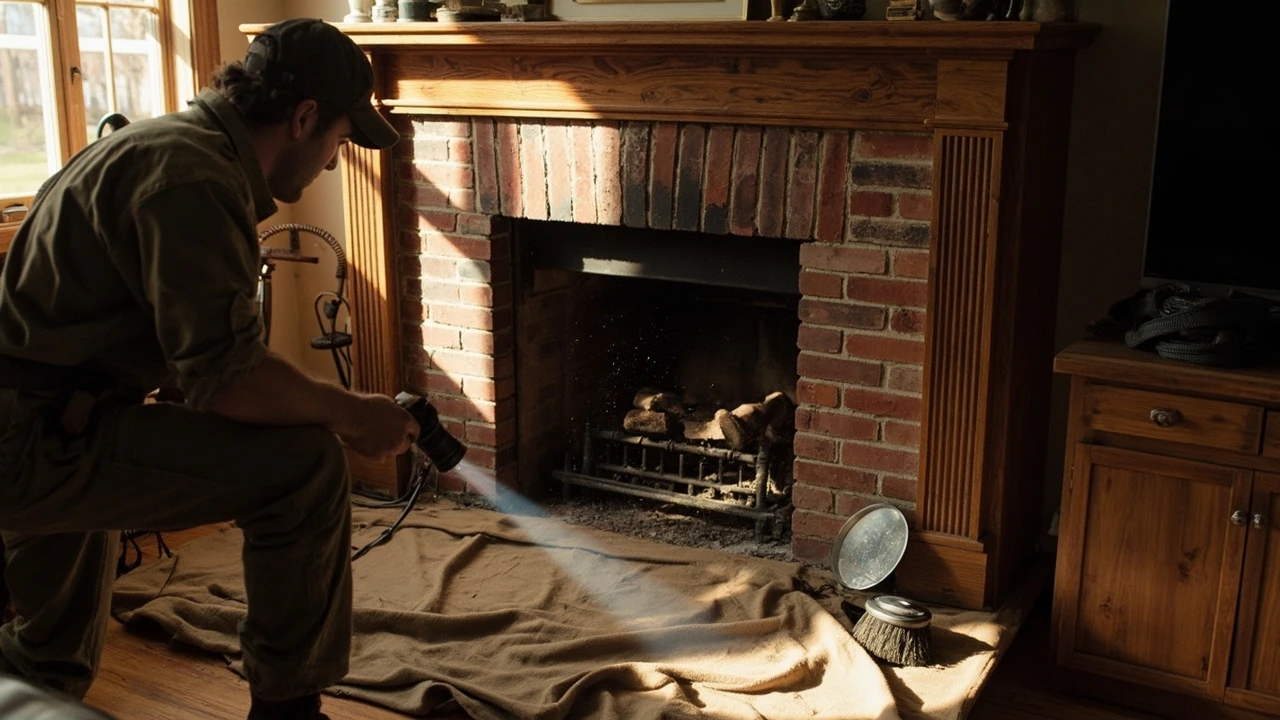
In everyday language, people use “chimney inspection” and “chimney sweep” almost interchangeably. In the trade they are different jobs that often happen in the same visit. A sweep removes creosote, soot, and debris from accessible surfaces. An inspection is an assessment of condition and safety, and the inspector uses what they see to decide whether the system is fit for continued use, needs a specific repair, or needs to be taken out of service.
The National Fire Protection Association standard that governs this work is NFPA 211, the standard for chimneys, fireplaces, vents, and solid fuel-burning appliances, which provides useful background for this point. The most recent editions organize inspections into three levels, and the level the inspector recommends depends on the situation: a routine annual check, a change in fuel or appliance, a real estate transaction, or a specific event like a chimney fire, a lightning strike, or a new owner moving in.
For most homeowners, the first question is not which level to book. It is whether the fireplace is safe to light. The inspector’s job is to answer that question with evidence, photos, and a written report, and to separate cosmetic issues from structural and safety issues. A good inspection report distinguishes between a missing cap that can wait two months, a hairline crown crack that needs sealing, and a flue liner that has failed and needs replacement before the system is used again.
The three inspection levels in plain English
The level system is not a marketing tool. Each level has a defined scope, and the cost, time, and equipment involved scale up sharply as the level rises. Understanding the levels makes it much harder to be oversold, and it also tells you what to expect when the inspector arrives.
| Level | When it is appropriate | What gets checked | What the inspector needs |
|---|---|---|---|
| Level 1 | Annual maintenance with continued use of the same appliance and fuel, no changes to the system, no performance problems | Accessible portions of the chimney exterior and interior, basic appliance connection, clearances, and a check for obvious creosote or obstruction | Standard tools, flashlight, basic mirror, often combined with a routine sweep |
| Level 2 | Sale or transfer of a property, change of fuel or appliance type, a malfunction or external event that could have damaged the chimney, or a new owner taking over without a service history | Everything in Level 1, plus accessible attic, crawlspace, and basement portions, and a video scan of the interior of the flue from top to bottom | Specialized video camera designed for chimneys, often a pole camera or a winch camera dropped from the top |
| Level 3 | Hidden damage is suspected that a Level 2 cannot expose, typically after a chimney fire, a seismic event, lightning strike, or when a Level 2 reveals a serious defect | Concealed areas of the chimney and surrounding structure, which can require opening walls, removing portions of a chimney crown, or dismantling sections to reach the problem | Light demolition tools, sometimes a second technician, and a clear scope-of-work agreement because parts of the home will be opened up |
Most homeowners will only ever book a Level 1 or Level 2. Level 3 is rare and is almost always triggered by something specific, not by an annual check. If a company pushes a Level 3 on a routine visit, it is reasonable to ask which finding justified it before any destructive work begins.
What an inspector is actually looking for
A good inspection reads the chimney the way a mechanic reads a car during a pre-purchase inspection. The inspector is not just looking for creosote. They are looking for any condition that can cause a house fire, a carbon monoxide problem, a structural failure, or a preventable repair bill. The list below groups the most common findings into the categories a homeowner is likely to see on a report.
- Creosote type, thickness, and location, especially glazed or shiny creosote that signals heavy use or restricted airflow.
- Cracked, missing, or shifted flue tiles in a masonry chimney, or dents, bulges, and corrosion in a metal flue.
- Damper condition, including a damper that will not fully open, a damper that is rusted through, or a top-mount damper whose cable has frayed.
- Chimney crown condition, including hairline cracks, open mortar joints, and missing or loose chimney caps.
- Flashing and counter-flashing at the roofline, where most chimney leaks actually start.
- Clearances to combustibles in the attic, around the chimney at the roof, and at the smoke chamber above the firebox.
- Animal intrusion evidence, including nests, droppings, feathers, or scratching sounds reported by the homeowner.
- Moisture staining, efflorescence on masonry, and spalling brick faces that point to long-term water damage.
Not every finding is urgent. A light dusting of soot is normal. A quarter-inch of creosote in a frequently used flue is not. The inspector’s report should be specific enough that a homeowner can tell the difference without having to call back and ask.
Warning signs that justify booking sooner than the annual visit
Annual checks are the baseline for a chimney that is in regular use, but certain symptoms should push a homeowner to call in the off-season rather than wait for a fall appointment. The list below covers the most common ones. Any one of them is enough on its own.
- Smoke entering the room when the fireplace is lit, instead of going up the flue.
- A strong, lingering smell of burned wood or creosote that does not go away after the fire is out.
- Visible dark or sticky flakes around the firebox, in the ash, or on the hearth.
- White staining on the outside bricks, which is efflorescence and a sign of moisture moving through the masonry.
- Loose brick, a tilting cap, or a piece of mortar on the roof below the chimney.
- Animal sounds, scratching, or droppings in the firebox, especially in spring.
- A damper that suddenly becomes hard to move, or one that does not seat fully when closed.
- Water in the firebox, even small amounts, after rain.
Smoke rolling back into the room deserves a special note. It is the most common visible sign of a problem that can escalate quickly, because it usually means the flue is restricted, the damper is closed or partially closed, or the house is under enough negative pressure that the fireplace is competing with bathroom fans, kitchen hoods, and the clothes dryer for air. In a working fireplace, a smoke-back event is a “stop using it until it has been looked at” situation, not something to test again the next evening.
Wood-burning vs gas fireplace: what changes during the inspection
It is a common assumption that a gas fireplace barely needs any attention. Gas burns cleaner than wood and produces far less creosote, but the chimney and vent system still need an annual safety check. The failure modes are just different.
| Aspect | Wood-burning fireplace | Gas fireplace (vented) |
|---|---|---|
| Primary fire risk | Creosote ignition inside the flue | Cracked heat exchanger, failed seal at the glass front, or a blocked vent |
| Maintenance focus | Creosote level, damper, flue tile condition, and crown | Burner, pilot, gas connections, glass seal, and the full vent path from the firebox to the cap |
| Typical “skip” symptom | Smoke smell in a warm room or visible creosote flakes | Faint gas odor when the fireplace is on, or a yellow lazy flame instead of a tight blue one |
| Annual cost band | Higher, especially for masonry systems | Lower, but the appliance-specific service is still required |
The practical takeaway is that an annual check should not be skipped just because the appliance is gas. The annual service is what catches the small leak at a fitting, the slow draft problem caused by a bird’s nest at the cap, or the cracked glass seal that lets combustion byproducts into the room rather than up the vent. The report from a gas fireplace inspection should still walk the full vent path, not just check the burner.
What a clean inspection report looks like
A useful report is more than a single line that says “chimney is fine.” It should let a homeowner understand what the inspector did, what they found, and what the recommendation is. Most reputable inspectors use a standardized form, but the content below is what a thorough report should cover regardless of formatting.
- Inspector name, certification number, and date of visit.
- System description, including chimney material, fuel type, and the appliance being vented.
- Level of inspection performed and the reason that level was selected.
- Photographs of accessible areas before and after cleaning, plus a still image or video from any internal camera scan.
- Findings, each with a location and a recommendation.
- Clear list of items that are safe to defer versus items that should be addressed before the system is used again.
- Estimated service life of key components, such as the crown, the cap, and the flue liner.
If a report arrives without photos, or with findings that read like a sales pitch for a specific product, it is reasonable to ask for clarification. A good inspector is usually happy to walk a homeowner through the photos by phone.
How to prepare the home for the visit
A small amount of prep makes the inspection faster, cheaper, and more useful. None of it is complicated. The list below is the version an inspector would give a homeowner the day before the appointment.
- Stop using the fireplace for at least 12 to 24 hours before the visit, so the firebox is cool and safe to work around.
- Clear the area immediately in front of the fireplace, including rugs, baskets, and the wood stack if it blocks access.
- Move cars or other obstacles away from the driveway if the inspector will be working on the roof.
- Make sure pets are secured in a different room, both for their safety and to keep the work area clear.
- Tell the inspector about any prior issues, even small ones, so the visit can focus on the right areas.
- Have a working flashlight and a charged phone available in case the inspector needs to show findings inside the flue on a screen.
Roof access is the one that surprises homeowners most. Many inspectors will want to view the chimney from above. If a roof section is unsafe to walk, or the cap is on a steep pitch, the inspector may move a Level 1 to a Level 2 with a camera scan from below. It is worth mentioning roof conditions in advance so the inspector can bring the right gear.
How often a chimney should be inspected
The one-year rule is the most common baseline. For a working wood-burning fireplace used through a normal heating season, an annual inspection combined with a sweep as needed is the standard recommendation. For a gas fireplace used as a visual feature a few times a week, an annual check on the vent path and the appliance itself is still the right cadence.
There are a few situations that justify more frequent checks. A chimney that has had a previous chimney fire should be on a shorter cycle for the first two to three years after the event. A new homeowner without a service history is well served by a Level 2 even if the previous owner claimed annual maintenance. A property used as a short-term rental, where guests operate the fireplace without training, benefits from an annual check plus a mid-season visual look. A chimney on a property with large overhanging trees, or one that has had animal intrusion before, often needs an extra visit after the first hard freeze in fall to clear a fresh nest.
The flip side is also worth saying out loud. A chimney that is not used at all does not need an annual safety inspection, but it should still be visually checked every couple of years for a missing cap, an open flue, animal entry, or a leaning stack, because those are problems that can damage the rest of the house regardless of whether the fireplace is lit.
Inspection vs cleaning: how the two are billed
It is normal to see the inspection and the cleaning itemized on the same invoice, but they are separate services. The inspection is the assessment, and the cleaning is the labor that physically removes creosote, soot, and debris. A Level 1 inspection is often bundled with a basic sweep at a flat rate. A Level 2 inspection that requires a camera scan is usually billed separately because of the equipment time and the extra reporting work.
It is also common for the inspector to flag a repair that can be completed in the same visit, such as a cap replacement or a damper repair. A reputable company will quote that repair on the spot but will not pressure a homeowner into authorizing it before they have had a chance to think it over. If the report says the system is safe to use as is, the homeowner can defer the cosmetic or non-safety items to a planned maintenance window.
Red flags during the inspection visit
Most inspectors do careful, evidence-based work. A few do not. The list below is a short, practical filter for spotting a less rigorous visit.
- No camera scan was performed at a Level 2 inspection, but the report still claims the flue was inspected internally.
- The inspector refused to go on the roof, or never asked, and there is no equivalent explanation in the report.
- No photos were provided, or the photos in the report are stock images rather than the homeowner’s own chimney.
- The report is a single line, or the recommendations are vague, with no separation between safety and cosmetic items.
- The inspector pushes a full liner replacement on a chimney that has no documented reason for one.
- Quoted prices are dramatically out of line with local norms, or pressure to authorize the work before the inspector leaves the driveway.
None of these are proof of a problem on their own, but together they suggest the inspection was not as thorough as the invoice implied. A second opinion is a normal and reasonable step before authorizing a major repair.
Deciding what to do with the findings
Once the report is in hand, the homeowner is the one who decides what gets done. The simplest framework is to sort each finding into one of three buckets, and to handle each bucket on its own timeline.
| Bucket | What goes here | Typical timeline |
|---|---|---|
| Use only after repair | Cracked flue tile, failed liner, missing cap with water entry, active gas leak, or any finding that the inspector flags as a stop-use item | Address before the next fire, often within days to a few weeks |
| Plan to repair this season | Crown sealing, flashing work, damper replacement, a top-seal damper upgrade, or a missing spark arrestor | Schedule during the off-season to avoid peak pricing |
| Monitor and revisit | Light surface creosote, hairline mortar cracks above the roofline, minor spalling on a north face, or any purely cosmetic item | Recheck at the next annual visit, or sooner if conditions change |
This is also the right time to ask the inspector a few direct questions. How long would the system last as is, is the recommended repair a one-time fix or a recurring cost, and would a different appliance or fuel type change the answer. The inspector’s answers, written into the report, give the homeowner something to refer back to during the next maintenance cycle.
Working with the inspector for a real estate transaction
For a sale or purchase, the inspection is one of the few moments when the home’s chimney is formally documented. A Level 2 is the right level for a transaction, because the inspector cannot assume the seller’s maintenance records are accurate. The buyer’s report should walk the full flue on camera, photograph the crown and cap, and call out any clearances that do not meet current code.
The seller’s perspective is different. A pre-listing inspection, paid for by the seller a few weeks before the home goes on the market, lets the seller fix small items ahead of time and avoid a renegotiation over a cap or a damper that would have taken an hour to address. It is one of the lower-cost steps a seller can take to keep a transaction clean.
Where inspection stops and remodeling starts
There is a natural limit to what a routine inspection covers. It is a condition and safety assessment, not a design consultation. If a homeowner is considering a full hearth renovation, a new insert, a switch from wood to gas, or a change to a different fuel type, the inspector’s report becomes the input, not the output. Those are project conversations, and they are worth taking to a remodeler who can translate the inspection findings into a real scope of work. Homeowners thinking about a broader update to the room around the fireplace may want to look at a practical roundup of fireplace mantel ideas that make the whole room feel finished as a starting point for the design side, while the inspection takes care of the safety side.
For a homeowner who is also looking at the rest of the home systems, the same annual mindset applies to other appliances. A practical look at what a boiler service covers and when it makes sense to schedule one sits naturally next to a chimney inspection in a fall maintenance plan, especially in homes where the boiler shares the same chimney run.
What a homeowner should take away
A chimney inspection is most useful when the homeowner arrives with a little context. Knowing the level that is appropriate, the warning signs that justify a sooner visit, the difference between wood and gas systems, and the way a clean report is structured turns a service call into a real conversation. The inspector still does the technical work, but the homeowner is the one who decides what the findings mean for the home, the budget, and the next heating season.
The single most useful habit is to keep the report from each year and to compare it to the one before. Trends in creosote level, crown condition, and damper wear are easier to read across several years than from a single visit. A good inspector will reference last year’s report on arrival if it is on file, and that small continuity is often what turns an annual maintenance line item into a real long-term plan for the fireplace.
Frequently asked questions
How long does a chimney inspection take?
A Level 1 inspection combined with a routine sweep usually takes 45 to 90 minutes for a standard residential fireplace. A Level 2 inspection with a full camera scan runs closer to 90 minutes to two hours, including setup and report time. Level 3 inspections are scheduled jobs and can take most of a day because of the access work involved.
Do inspectors need to come inside, or can they just check from the roof?
An inspection that only looks at the chimney from the roof is a partial inspection at best. The firebox, the damper, the smoke chamber, the connection between the appliance and the flue, and the visible interior masonry are all things that can only be assessed from inside. A Level 1 or Level 2 visit should always include indoor time.
Is a chimney inspection required for a home sale?
It is not a legal requirement in most jurisdictions, but lenders and buyers often request one as a condition of the sale, and a Level 2 is the accepted standard for real estate transactions. Skipping it is one of the more common ways buyers inherit a hidden repair bill.
Can a homeowner do their own chimney inspection?
A homeowner can do a useful visual check of the cap, the crown, the firebox, and the obvious exterior masonry, and that kind of self-check is worth doing once or twice a year. It is not a substitute for a professional inspection because the interior of the flue, the clearances, and the structural condition of the stack are not visible without the right equipment.
What is the difference between a chimney inspection and a chimney sweep?
A sweep is the physical cleaning of accessible creosote, soot, and debris. An inspection is the assessment of condition and safety. Many companies offer both as a single visit, but the inspection part is what determines whether the system is safe to use, and it is the part that produces a written report.
How much does a chimney inspection cost?
Pricing varies by region and by level. A Level 1 inspection is often the lower-cost part of a routine sweep visit, while a Level 2 with a camera scan and a written report is typically billed at a higher flat rate because of the equipment and the reporting time. A Level 3 is essentially a scoped project. Homeowners should ask for the inspection portion of the bill to be itemized separately from any cleaning or repair work.
Do gas fireplaces really need an annual inspection?
Yes. Gas fireplaces produce less creosote than wood, but the vent path, the gas connections, the glass-front seal, and the chimney cap still need a yearly check. The failure modes are different from wood, but the annual cadence is the same. A good example of how a gas fireplace check is scoped can be seen in a professional chimney inspection service that walks the full vent path as part of its standard visit, which provides useful background for this point.
What should a homeowner do if the inspector recommends a repair they cannot afford right away?
Ask the inspector to separate the report into “must address before use,” “plan to address this season,” and “monitor.” If the “must address” list is empty, the system is generally safe to keep using while a budget is built. If the “must address” list is not empty, the fireplace should stay off until the work is done, and that includes asking the inspector whether there is a temporary measure, such as a cap or a damper lock, that can buy a little time.
Can a chimney inspection find a problem in the attic or behind a wall?
A Level 2 inspection looks at accessible attic, crawlspace, and basement portions of the chimney, which catches most framing and clearance issues. A Level 3 inspection is the one that opens up concealed areas, and it is reserved for situations where a Level 2 has already revealed a serious concern that cannot be exposed without light demolition.
Is it worth getting a chimney inspection on a fireplace that is never used?
It is worth a visual check every couple of years even if the fireplace is never lit. A missing cap, an open flue, a cracked crown, or animal entry can damage the rest of the house regardless of use, and a short visual visit is enough to catch those. The cost is small compared with the cost of repairing water damage or animal damage that was allowed to develop.
Leave a Reply