


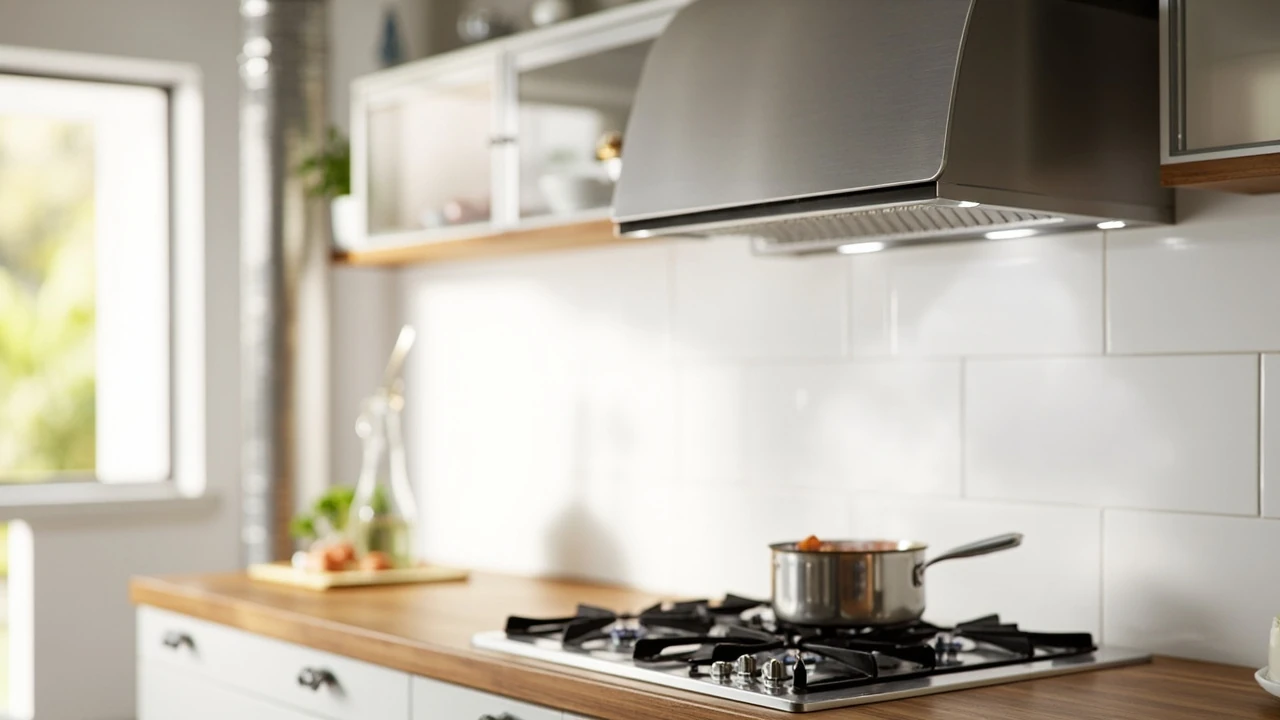
Exhaust fan dapur: what it does and why kitchens need one
A working kitchen gets hot, greasy, and steamy within minutes of turning on a burner. The air over a stovetop can reach uncomfortable temperatures, the moisture from boiling water condenses on walls and cabinets, and fine droplets of cooking oil drift through the room. An exhaust fan dapur is the device that captures that hot, oily, humid air right at the cooktop, routes it through a duct, and pushes it outside. In doing so, it also pulls fresh replacement air into the room, which keeps the cook comfortable and protects the rest of the house from lingering smells and moisture damage.
In commercial kitchens this is mandatory because staff cook for hours in tight spaces, and the buildup of combustion gases, carbon monoxide, and grease aerosols is a real health hazard. The same logic applies at home, just at a smaller scale. A home cook who sears meat, fries, or uses a gas range several times a day is exposed to the same particulate matter and volatile compounds, only in a more breathable environment. A properly selected exhaust fan dapur reduces that exposure, keeps walls and ceilings clean, and prevents the musty smell that often shows up in kitchens without real ventilation.
How an exhaust fan dapur actually moves air
The basic mechanism is simple but worth understanding, because the parts drive every decision about size, noise, and installation. Air is drawn through a metal hood or capture area positioned a short distance above the burners. A centrifugal blower, the motor-and-fan unit at the heart of the system, accelerates that air and pushes it through sheet-metal ducting to an exterior wall or roof cap. As contaminated air leaves, a slight negative pressure develops in the kitchen, and makeup air enters through cracks, vents, or a dedicated inlet to replace it.
Two physical effects are doing the work:
- Capture velocity. Air has to move fast enough at the burner level to overcome the natural rise of hot gases. Industry guidance for residential hoods targets roughly 50 to 100 feet per minute across the capture area, which is why simply opening a window rarely works: the air is not aimed at the source.
- Static pressure. The blower has to overcome the resistance of filters, ducting bends, and the outlet cap. Every extra turn in the ducting reduces the airflow that the same fan can deliver, which is one reason short, straight duct runs always outperform long, twisty ones.
That is also why the same nominal fan rated for a 1,500 CFM “free air” test bench might only deliver 900 CFM in a real kitchen with three elbows and a long horizontal run. The real-world number depends on the installed ducting, not the brochure.
Choosing the right type of exhaust fan dapur
The term covers a wide range of products, from small recirculating filters to large commercial canopy hoods. Picking the right one starts with honest answers to a few questions about how the kitchen is used.
Ducted vs. recirculating
A ducted exhaust fan dapur vents contaminated air to the outside. A recirculating unit pulls air through a charcoal filter and blows it back into the room. Recirculating hoods are easier to install because no ductwork is required, but they only remove odors, not heat, moisture, or combustion gases. For a serious cooking setup, especially anything with a gas range, ducted ventilation is the safer and more effective choice.
Under-cabinet, wall-chimney, island, and downdraft
The form factor is set by the kitchen layout:
- Under-cabinet hoods slide in beneath a cabinet above the range. They are compact, common in apartments, and usually the most affordable ducted option.
- Wall-chimney hoods mount on the wall with a visible vertical duct cover. They offer larger capture areas and more powerful blowers.
- Island hoods hang from the ceiling over a cooktop placed on an island. They need a strong blower because capture is harder with open space on all sides.
- Downdraft units rise from the countertop behind the range. They are useful when an overhead hood is impossible, but capture efficiency is generally lower, so they need a more powerful blower to compensate.
Residential vs. commercial
Home-rated hoods are designed for intermittent use, lighter cooking loads, and quieter operation. Commercial canopy hoods are built for continuous duty, grease-laden air, and high temperatures. Using a residential hood in a small commercial kitchen is a common code violation and a fire risk. The reverse is also a poor idea: a commercial hood in a home kitchen is loud, large, and unnecessary.
Sizing an exhaust fan dapur for the space
Sizing is the step most homeowners skip and most regrets start with. A hood that is too small simply cannot keep up; a hood that is too powerful can feel drafty, roar like a jet, and pull conditioned air out of the house faster than the HVAC system can replace it. The goal is to match airflow to the actual cooking load.
Calculate the airflow target
The standard rule of thumb in residential ventilation is to achieve a certain number of air changes per hour (ACH) for the kitchen. For a typical home kitchen, designers usually target 10 to 15 ACH. The math is straightforward:
- Measure the kitchen floor area in square feet.
- Multiply by ceiling height in feet to get the kitchen volume in cubic feet.
- Multiply volume by the desired ACH value, then divide by 60 to get cubic feet per minute (CFM).
For a 12 by 12 foot kitchen with an 8 foot ceiling, that is 1,152 cubic feet of space. At 15 ACH, the target is roughly 290 CFM before duct losses. In practice, most residential hoods in this size kitchen are rated between 300 and 400 CFM, which is a comfortable margin.
Account for duct losses
Once the air leaves the blower, it has to travel through ducting, filters, and a wall or roof cap. Each component reduces the effective airflow. A useful way to think about it is to compare the nominal rating against the installed performance.
| Ducting configuration | Typical airflow loss | Implication |
|---|---|---|
| Straight 10 ft run, rigid metal duct, wall cap with damper | 10 to 15 percent | Small loss; rated CFM is a fair estimate |
| Two 90 degree elbows, 15 ft run, roof cap | 25 to 35 percent | Choose a fan rated 30 percent above target |
| Flexible aluminum ducting, three elbows, 20 ft run | 40 to 50 percent | Use rigid metal ducting or oversize the blower |
| Recirculating with charcoal filter | 50 percent or more, plus no fresh air delivered | Only suitable for light cooking in tight spaces |
Match capture area to the cooktop
Airflow alone is not enough. The capture area should be at least as wide as the cooktop, and ideally 3 inches wider on each side, so that pans placed at the edges still sit under the hood. For a 30 inch range, that means a 30 to 36 inch hood. For a 36 inch range, a 36 to 42 inch hood. If the range is on an island, oversize the hood by another 6 inches because capture is harder without walls helping direct the airflow.
Common mistakes that undermine an exhaust fan dapur
Many installations look correct but fail to perform. The problems usually trace back to a handful of recurring mistakes.
- Using flexible ducting because it is easy to install. Flexible ducting creates turbulence and sags over time, both of which reduce airflow. Rigid metal ducting is always preferable for runs longer than a few feet.
- Mounting the hood too high. Most manufacturers specify a 24 to 30 inch gap between the cooktop surface and the bottom of the hood for gas ranges, and 20 to 24 inches for electric. Above that range, capture efficiency drops sharply.
- Routing the duct through an unconditioned attic without insulation. Warm, moist air condenses inside the duct in winter, drips back down, and damages the hood. Insulated ducting in cold spaces prevents this.
- Discharging into a soffit or attic. Venting must terminate outside the building envelope. Pushing air into an attic or between joists invites mold, moisture damage, and fire risk.
- Skipping makeup air. In tightly sealed modern homes, a powerful exhaust fan dapur can pull cold air in through every gap in the building, including the furnace flue. Building codes in many jurisdictions require a dedicated makeup air inlet for hoods rated above a certain CFM threshold.
Noise, controls, and features that matter
A hood that runs at full speed whenever it is on rarely gets used, which defeats the purpose. Noise is therefore a practical concern, not a luxury one.
Hood noise is rated in sones, a perceptual scale where 1 sone is roughly the noise of a quiet refrigerator and 6 sones is a noisy restaurant. For a residential kitchen, a hood rated at 1 to 3 sones on its highest setting is comfortable for most conversations. Anything above 6 sones will be avoided by the household, which means the hood is functionally useless.
Beyond the sone rating, useful features include:
- Variable speed blower, with at least three settings, so the hood can run low and quiet during simmering and high only when needed.
- Heat sensors that ramp the blower up automatically when a hot pan is detected.
- Delay-off timers that keep the fan running for 5 to 15 minutes after cooking, clearing residual smoke and grease aerosols.
- Dishwasher-safe metal baffle filters, which are easier to clean than mesh filters and last longer.
- LED lighting, which is bright, cool, and energy efficient compared with incandescent bulbs that used to ship in older hoods.
Installation basics for a ducted exhaust fan dapur
Installation ranges from a straightforward one-day project to a multi-trade job that touches carpentry, electrical, and sometimes roofing. The work breaks into a few clear stages.
Plan the duct path
The shortest path to an exterior wall or roof is almost always the best. Each extra foot of ducting and each extra elbow costs airflow. Plan the route before buying the hood, because the required CFM and the available duct space are linked decisions.
Mount the hood
Most under-cabinet and chimney hoods come with a mounting template. The hood must be secured into structural blocking in the wall or ceiling, not just into drywall or thin cabinet backs. A loaded hood with ducting attached is heavier than it looks, and an insecure mount will eventually sag and pull away from the wall.
Wire the hood
Residential hoods typically run on a 120 volt dedicated circuit, often shared with a microwave. If the home does not have an appropriate circuit in the right location, an electrician can usually add one in a few hours. Commercial hoods and very high CFM residential units may require 240 volt wiring, which is a more involved install.
Connect the ducting
Rigid metal ducting is sealed with aluminum tape, not screws, which can snag grease and create turbulence. The duct should slope slightly back toward the hood if any horizontal section is in an unheated space, so that any condensation drains back to a collection point rather than toward the exterior cap.
Install the exterior cap
The cap is the part that actually blocks rain, snow, and pests while letting air leave. A backdraft damper inside the cap prevents cold air from coming in when the fan is off. The cap should sit on a slight downward slope so water runs off, and the surrounding wall or roof penetration should be flashed and sealed against moisture.
Maintenance that keeps the system working
An exhaust fan dapur does not need much attention, but the small amount it does need is easy to forget. A simple schedule is enough.
| Task | Frequency | What to do |
|---|---|---|
| Clean grease filters | Every 1 to 3 months, depending on cooking | Soak metal baffle or mesh filters in hot soapy water or run them through a dishwasher |
| Wipe down hood exterior | Weekly | Use a degreaser safe for the hood finish; stainless steel needs a non-abrasive cleaner to avoid scratches |
| Check the exterior cap | Twice a year | Clear any debris, nests, or grease buildup; confirm the damper moves freely |
| Replace charcoal filter (recirculating only) | Every 6 to 12 months | Follow the manufacturer’s instructions; a saturated filter loses effectiveness quickly |
| Inspect duct joints | Yearly | Look for separated seams, sagging duct, or signs of grease leakage; reseal with aluminum tape if needed |
Reading product specifications without getting misled
Specifications on retail sites are written to sell, not to inform. A few specific numbers are worth checking before any purchase.
- Real CFM at installed static pressure, not just the headline free-air number. Manufacturers that publish performance curves with CFM plotted against static pressure in inches of water column are being more transparent than those that only list a single CFM figure.
- Sone rating at each speed, not just the lowest setting. A hood that is quiet at 200 CFM but loud at 400 CFM is only useful at one speed.
- Filter type and cleaning method. Baffle filters are sturdier and easier to clean than thin mesh filters, which can rust and clog.
- Duct size. A 6 inch round duct is common, but 8 inch or 10 inch ducts move more air with less velocity, which means quieter operation. The duct size at the hood should match the planned ducting.
- Warranty and parts availability. Blowers fail eventually, and a hood with a five-year warranty on the motor and a stocked parts list is easier to live with than one with a one-year warranty and no service network.
How this connects to a home renovation project
Ventilation is one of the items that tends to get cut from a kitchen remodel because the cost is not as visible as new cabinets or countertops. In practice, an exhaust fan dapur that is undersized or poorly ducted will undermine the rest of the renovation. Grease will deposit on freshly painted walls, moisture will warp new cabinet doors, and the cook will quietly stop using the hood because it never worked well in the first place. If the project also involves a range replacement, it is a good moment to check whether the existing duct path is long enough, whether the new hood will fit, and whether the electrical circuit needs upgrading. A few extra hours of planning during the remodel is far cheaper than opening walls later.
For homeowners who are deciding whether to bring in a professional for the install, the line is fairly clear. A simple under-cabinet ducted hood with a short, straight duct run to an exterior wall is a competent DIY project. A chimney hood, an island installation, a roof penetration, or any run that requires structural changes is better handled by a licensed contractor with kitchen experience. Mistakes in those cases tend to be expensive to undo.
Frequently asked questions
How much airflow do I really need for a home kitchen?
For a typical home kitchen of 100 to 200 square feet, a ducted hood rated between 300 and 600 CFM is usually enough, assuming a reasonably short and straight duct run. Smaller kitchens can do with less, while kitchens with high-output gas ranges or frequent frying benefit from more.
Can I vent an exhaust fan dapur into the attic?
No. Attics are part of the building envelope, and venting warm, moist, grease-laden air into them leads to mold, rot, and a fire risk from grease accumulation. Vents must terminate outdoors through a wall or roof cap.
What is the difference between CFM and sones?
CFM measures how much air the fan moves. Sones measure how loud the fan sounds at a given speed. A good exhaust fan dapur moves enough air at a low enough sone rating to be used in normal conversation while cooking.
How high should the hood sit above the cooktop?
For gas ranges, the bottom of the hood should be 24 to 30 inches above the cooking surface. For electric or induction ranges, 20 to 24 inches is typical. Going higher than the recommended range significantly reduces capture efficiency.
Are recirculating hoods ever a good idea?
Recirculating hoods can make sense where ductwork is impossible, such as some interior kitchens in apartments. They are not a substitute for proper ducted ventilation when the cooking load is heavy, and they do not remove heat or moisture.
Do I need a makeup air inlet?
In tightly sealed newer homes, a powerful exhaust fan dapur can depressurize the house and pull air from the furnace flue or other unintended sources. Many codes require a makeup air inlet for hoods above 400 to 600 CFM. Even where it is not required, one is a good idea in cold climates.
How often do I need to clean the filters?
Filters should be checked monthly and cleaned when grease buildup is visible. Heavy cooking may require monthly cleaning; light cooking can stretch it to every two or three months. A clogged filter reduces airflow and increases fire risk.
Is flexible ducting acceptable?
Flexible aluminum ducting is acceptable for short connections between a rigid trunk and the hood, but it should not be used for the main run. Rigid metal ducting delivers more airflow, is easier to clean, and lasts longer.
What is the right duct size for a residential hood?
Most residential hoods use 6 inch round ducting, but 8 inch ducting reduces air velocity and noise, which can be worth the larger wall opening. The duct size at the hood should match the planned duct run.
Can a microwave with a built-in hood replace a real exhaust fan dapur?
Over-the-range microwaves do move some air, but their blowers are usually 200 to 300 CFM, and the capture area is small. They are better treated as a supplement to or backup for a proper hood, especially in kitchens with serious cooking loads.
For a deeper look at how kitchen ventilation fits into a broader remodel, the practical planning guide on hiring a kitchen remodeler walks through the order in which ventilation decisions usually come up. Homeowners weighing the full scope of a renovation may also want to compare priorities across the project, including the way an exhaust fan dapur and adjacent interior systems shape the finished space.
Leave a Reply