


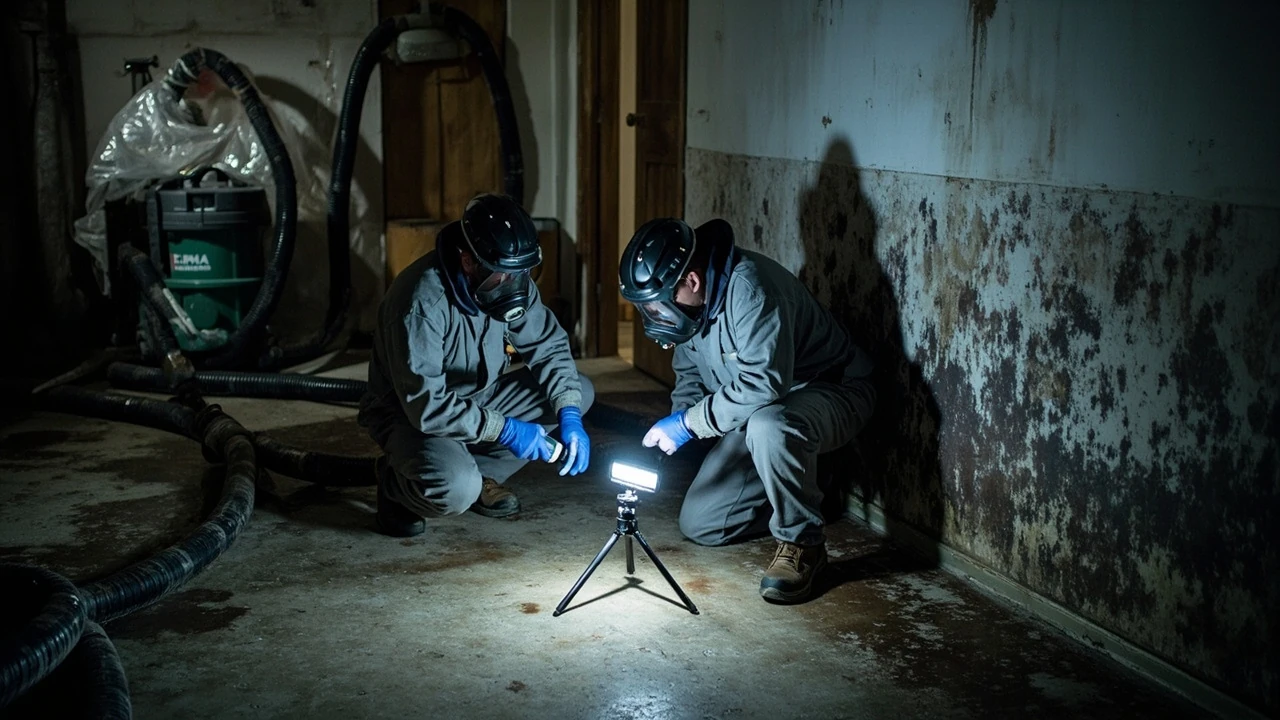
Mold remediation experts: what they actually do and how to hire the right one
A musty odor in a closed bedroom, a dark bloom spreading along a baseboard after a slow pipe leak, or a paper-thin patch of black growth on the back of a closet wall are the kinds of small signals that send homeowners searching for mold remediation experts. The label covers a wide range of work, from a one-room surface cleanup handled by a handyman with a bottle of fungicide to a full containment-and-removal project run by a certified crew in white suits and respirators. Knowing the difference matters, because the cheaper option can leave moisture inside the wall cavity and the problem simply returns, while an oversold scope can mean paying for demolition the home does not need.
This guide walks through what a qualified mold remediation project looks like, who counts as a true professional, what the work should and should not include, and how to evaluate a company before signing anything. It is written for a homeowner dealing with a visible mold issue, a persistent smell, or a recent water loss that has not fully dried out, and who wants to make a calm, informed decision rather than an urgent one based on a single phone quote.
What “mold remediation” actually means
In everyday speech, mold cleanup, mold removal, and mold remediation are often used interchangeably. In practice, the trade uses remediation to describe the full process of returning a contaminated indoor environment to a normal, dry, clean condition, and removal to describe the specific step of taking moldy materials out of the building. A crew that only sprays a stain on drywall has not remediated anything; the colony and the water feeding it are still there.
The industry standard, the ANSI-approved IICRC S520, frames remediation as a sequence of decisions and actions, not a single product application. The standard describes assessing the contamination, locating and correcting the moisture source, containing the work area, removing contaminated porous materials that cannot be cleaned, cleaning salvageable surfaces, drying the structure, and verifying that the space is back to normal conditions. The IICRC S520 standard is the reference document for professional microbial remediation work in the United States.
For the homeowner, the practical takeaway is simple. A real mold remediation project answers three questions: where is the moisture coming from, what is contaminated, and what has to be removed versus cleaned. If a contractor cannot explain those three points for your specific job, the work is unlikely to meet the standard.
When calling mold remediation experts makes sense
Not every spot of mold needs a professional. A small patch on a bathroom caulk line, on a shower curtain, or on a windowsill in a room that has just been identified as overly humid is often manageable with detergent, drying, and a change in ventilation. The decision to bring in experts usually depends on the size of the affected area, the location, and the underlying moisture problem.
| Situation | Typical homeowner response | When professionals are usually needed |
|---|---|---|
| Small surface patch under 10 square feet on a hard, non-porous surface | Clean with detergent, dry the area, fix the moisture source | If the area is larger, on drywall or ceiling tile, or keeps returning |
| Visible mold after a known water leak (burst pipe, dishwasher, roof) | Document, dry the area quickly, watch for regrowth | If materials stayed wet more than 24-48 hours, or the area exceeds a few square feet |
| Persistent musty odor with no visible growth | Check humidity, look behind furniture and under carpets | Odors often point to hidden growth inside walls, HVAC, or crawl spaces |
| Visible growth on drywall, insulation, subfloor, or carpet | Do not disturb; spores spread easily | Porous materials usually need to be removed by a contained crew |
| Respiratory symptoms that ease when the person leaves the home | Treat the home as the variable | Symptomatic occupants, infants, elderly, or immunocompromised residents are a reason to escalate quickly |
| Sewage backup with visible growth | Treat as a Category 3 water loss | Combined sewage and mold requires specialized containment and PPE |
The U.S. Environmental Protection Agency also notes that if mold covers a large area, has reappeared after cleaning, or is the result of contaminated HVAC or sewage, professional remediation is the appropriate response. The For additional context, EPA’s mold resource page provides a general overview that lines up with the situations above.
One practical rule of thumb used by many inspectors is that visible growth on porous materials, such as drywall paper, ceiling tiles, insulation, carpet padding, and unsealed wood, is essentially never cleaned successfully. Those materials are removed and replaced. Hard, non-porous surfaces such as tile, glass, metal, and sealed concrete can usually be cleaned, HEPA-vacuumed, and wiped with a detergent solution.
The actual workflow of a professional mold job
A competent crew follows a recognizable sequence. The names vary between companies, but the underlying steps map closely to the IICRC S520 framework. Understanding this sequence helps you compare quotes and spot the ones that skip steps to keep the price low.
- Inspection and moisture mapping. The crew walks the space, takes moisture readings at multiple points with a pin or pinless meter, and may use a thermal camera to look for cold spots that signal wet cavities. The goal is to find how far the water has spread, not just where the mold is visible.
- Moisture source correction. A plumber, roofer, or general contractor may be called in to fix the leak, failed flashing, or humidity problem. Without this step, mold returns.
- Containment. The work area is sealed off with plastic sheeting and a zipper door, and a HEPA air scrubber pulls air through a filter to keep spores from drifting into the rest of the home. Negative pressure is set up with a blower exhausting to the outside.
- Removal of contaminated porous materials. Drywall is cut out in measured sections, carpet and pad are pulled, and any insulation that stayed wet is bagged and discarded. The cut lines are usually made a foot or two beyond the visible growth to catch the leading edge of the colony.
- Cleaning of salvageable materials. Exposed framing, subfloor, and hard surfaces are HEPA-vacuumed, then wiped or scrubbed. Some crews apply an antimicrobial to the cleaned structure, though the standard treats that as optional, not a substitute for cleaning.
- Drying. Commercial air movers and dehumidifiers are placed, and the space is monitored until moisture readings return to normal dry standards for the material and the region.
- Verification. Either the company’s own project manager or an independent industrial hygienist checks the work visually and may take air or surface samples to confirm that spore counts are back to typical background levels.
- Reconstruction. Drywall is closed up, trim is replaced, and the space is returned to its pre-loss condition. Some remediation companies do this in-house; others hand it off to a general contractor.
A company that only quotes steps 1 and 4, or that promises to “kill mold” with a fog or spray and skip the removal of wet drywall, is selling a different service than remediation. The IICRC S520 standard is the reference most U.S. remediators are expected to follow, and a copy of it is worth skimming before any project.
What credentials and standards to look for
There is no single national mold remediation license in the United States. Instead, the industry relies on a layered set of certifications, manufacturer training, and state or local contractor licensing. A homeowner should expect at least the items below from a serious company.
| Credential or document | What it signals | How to verify |
|---|---|---|
| IICRC certification (AMRT, WRT, or ASD) | Technician has training in microbial remediation, water damage, or structural drying | Ask for the technician’s certificate number and look it up on the IICRC registry |
| State or local contractor license | The company is registered to do construction-type work in your jurisdiction | Check your state licensing board; some states treat remediation as general contracting |
| General liability and pollution liability insurance | Covers accidental damage and contamination claims during the project | Ask for a certificate of insurance with your address listed as the certificate holder |
| Written scope of work | Defines which materials will be removed, what will be cleaned, and the containment plan | Should be specific to your home, not a generic template |
| Third-party clearance testing option | An independent hygienist confirms the job is done, not the same company that did the work | Confirm the lab is independent and accredited, such as AIHA-LAP |
| References for similar projects | Experience with the same kind of loss (crawl space, attic, basement, post-flood) | Ask for addresses and recent client contacts in your area |
It is also reasonable to ask which standards the company follows. The most commonly cited are the IICRC S520 for microbial remediation and S500 for water damage, plus EPA and OSHA worker-safety guidance for handling contaminated materials. A contractor who names these documents off the top is a better bet than one who only talks about a proprietary product.
Questions to ask before signing a contract
The first phone call is mostly about scheduling and rough pricing, but the on-site visit is where the real evaluation happens. A short, targeted list of questions produces surprisingly useful answers, because the way a contractor responds is often more informative than the words themselves.
- What do you think caused the moisture, and how will you make sure it is fixed before you close the wall back up?
- How will you decide where to cut the drywall, and how far past the visible mold do you plan to remove?
- Will the work area be under negative pressure with a HEPA air scrubber running, and where will the air exhaust?
- Who handles the third-party clearance test, and what lab will they use?
- What is the timeline from start of work to clearance, and what depends on the weather or the building?
- Are your technicians IICRC certified, and can I see current certificates for the lead tech on my job?
- What does the warranty cover, and for how long?
- Do you carry pollution liability coverage in addition to general liability?
A company that answers these directly, in plain language, and is willing to put the answers in writing is operating at a different level than one that brushes them off.
How pricing actually works
Mold remediation is priced by the scope, not by the square foot in isolation. Three factors drive the number more than anything else: the area affected, the materials involved, and the access. A small closet job with one wall of drywall and no HVAC involvement might be in the low four figures. A basement that has been wet for weeks, with contaminated carpet, drywall, and built-in shelving, can run into five figures before reconstruction.
| Project type | Typical scope | What usually drives the price |
|---|---|---|
| Localized bathroom or laundry room loss | 10-30 square feet of drywall, no HVAC | Containment setup, single day of labor, dehumidifier rental |
| Single room after a known leak | 30-100 square feet, possibly subfloor involvement | Moisture mapping, drying equipment for several days, third-party testing |
| Whole-basement or crawl space project | Several hundred square feet, often with framing and insulation | Demolition time, multiple air scrubbers, longer drying, debris disposal |
| HVAC or attic system with mold in ductwork or on insulation | System-wide cleaning or partial duct replacement | HVAC access, duct sealing, possible system replacement if insulation is lined |
| Post-flood or sewage job with growth | Category 3 conditions plus fungal growth | Full PPE, regulated disposal, layered containment, longer clearance process |
A detailed quote should break out containment, demolition, cleaning, drying equipment, and clearance as separate lines. A single lump sum with no detail is hard to compare and harder to negotiate if the scope changes. Most reputable remediators also have a clear change-order process for the moment they cut into a wall and find more damage than expected.
Be cautious about two pricing patterns. The first is a very low ballpark that turns out to cover only the spray-and-wipe visit, with any cutting or containment billed as extra. The second is a high-pressure “insurance preferred” pitch that pushes you to sign before the adjuster has seen the loss. Both are signs to slow down and get a second opinion.
What mold remediation experts will not do
Some things fall outside a normal remediation project, and understanding the boundaries prevents both disappointment and overspending.
- They do not certify the home as “mold free.” No one can, because mold spores are present in every indoor and outdoor environment. The goal is to return spore levels to typical background and to eliminate the conditions that fueled growth.
- They do not replace a general contractor for unrelated defects. If the drywall is cracked because the house has settled, that is a different project.
- They do not guarantee that mold will never return. They can, however, guarantee that the moisture problem is addressed and that the work meets the relevant standard.
- They do not typically handle hazardous materials other than mold, such as lead paint or asbestos. Those require separate licensed contractors, and sometimes both trades work in sequence on the same wall opening.
This is also a useful place to mention that the word toxic in the phrase “toxic black mold” is not a technical category. The U.S. Centers for Disease Control and Prevention notes that any mold growth indoors is a sign of a moisture problem, and that color alone is not a reliable way to judge risk. The relevant variable is the individual’s sensitivity, the extent of the growth, and the duration of exposure.
Preventing mold after the remediation is done
Once the work is finished, the cheapest insurance against a second visit is keeping the building dry. That sounds obvious, but many recurrences come from the same patterns that caused the original loss.
- Keep indoor relative humidity between roughly 30 and 50 percent. A basic hygrometer at $10 to $20 makes this visible.
- Run bath and kitchen ventilation fans long enough to clear the moisture, not just the smell. Twenty to thirty minutes after showering is a reasonable default.
- Address plumbing leaks within 24 to 48 hours. Drywall that stays wet for longer than that often cannot be saved.
- Direct downspouts away from the foundation and keep the grade sloping away from the house by at least six inches over the first ten feet.
- Service the HVAC system annually, including the condensate line and the drip pan. A clogged condensate drain is a frequent source of ceiling mold.
- In basements and crawl spaces, consider a dehumidifier sized for the square footage and empty or drain it on a schedule.
These are not expensive changes. They are habits and small upgrades that protect the larger investment the remediation project represents.
Red flags when comparing companies
The mold industry has a wide quality range, partly because the entry barrier is low and partly because homeowners are often making decisions under stress. A few patterns are worth treating as warning signs.
- Pressure to sign today. Mold is rarely a same-day emergency that justifies skipping due diligence.
- No moisture readings or thermal imaging. A scope that is not based on data is a guess.
- Refusal to name a standard. If a company cannot point to the IICRC S520 or a comparable reference, the work plan is ungrounded.
- Cash-only discounts or unusually low deposits. Legitimate contractors are used to insurance paperwork and credit card payments.
- No certificate of insurance. Pollution liability is the policy that matters most for this trade.
- Reluctance to allow third-party clearance testing. A company confident in its work welcomes an independent check.
The companies that welcome questions, provide written scopes, and show up with a moisture meter and a thermal camera are usually the same companies that finish the job without surprises.
Frequently asked questions
How do I know if I need mold remediation experts or if I can clean it myself?
Small surface patches on hard, non-porous materials in a dry area can usually be handled with detergent, drying, and a fix to the underlying moisture source. Larger areas, any growth on drywall, carpet, or insulation, recurring mold, or mold linked to contaminated HVAC or sewage are situations where a professional crew with containment and PPE is the safer and more thorough option. The U.S. EPA’s mold guidance is a useful reference for sizing up a project on your own.
What does a typical mold remediation project cost?
Costs vary widely by region and scope. A small, contained job in a single room can land in the low four figures, while a basement or whole-home project that includes demolition, drying, and third-party testing often runs into the mid to high four figures or more. The reliable signal is not the number itself but how clearly the company explains what is and is not included in the quote.
How long does the whole process take?
From the first inspection to the final clearance test, a typical single-room project takes about a week, with three to five days of on-site work and a couple of days for drying and sampling. Larger projects can run two to four weeks. Reconstruction after remediation adds time depending on the trades involved and the materials on order.
Do mold remediation experts need to come inside my home to give a real quote?
Yes. A serious estimate is based on moisture readings, visual inspection of affected and adjacent areas, and an understanding of how the space is built. A quote given over the phone from a single photo is a rough range at best, and is rarely reliable enough to sign a contract against.
Will my homeowner’s insurance cover mold remediation?
It depends on the cause. Many policies cover mold when it is the result of a sudden, covered water loss, such as a burst pipe, and exclude it when it is the result of a long-term maintenance issue, such as a roof that has leaked for years. The company and your adjuster can help you document the cause, but the policy language controls the outcome.
Is it safe to stay in the home during remediation?
Often yes, as long as the work area is properly contained and the HVAC is managed during the project. For larger projects, or for households with infants, elderly residents, or anyone who is immunocompromised, staying elsewhere during demolition and the first drying day is a reasonable precaution. The remediator should be able to walk you through the containment plan and what stays live during the work.
What is third-party clearance testing and is it worth it?
It is a post-remediation inspection, often including air or surface samples, performed by an industrial hygienist who is not affiliated with the remediation company. It is the most objective confirmation that spore levels are back to typical background and the project is complete. For projects over a few thousand dollars, it is worth the additional cost.
Can mold come back after a professional remediation?
If the moisture source is fully corrected and the building is kept dry, recurrence is uncommon. The most common reasons for a return are a missed leak inside a wall, an unaddressed humidity problem, or a new water event. That is why a clear moisture correction plan is as important as the cleanup itself.
Are there any certifications that actually matter?
There is no single national mold license, but the IICRC certifications (AMRT for microbial remediation, WRT for water damage, ASD for applied structural drying) are the most widely recognized. State or local contractor licensing is required in most jurisdictions. Manufacturer-specific training, such as for dehumidifiers or air scrubbers, is a plus but not a substitute for the IICRC foundation.
What should I do in the first 24 hours after I notice mold?
Stop the moisture source if you can, increase ventilation without blowing air across the moldy area, avoid disturbing the growth, and call a remediation company for an inspection. Do not paint over it, do not apply bleach to porous surfaces, and do not run a household fan through the contaminated area. Those steps spread spores and make the eventual cleanup more expensive.
Leave a Reply