


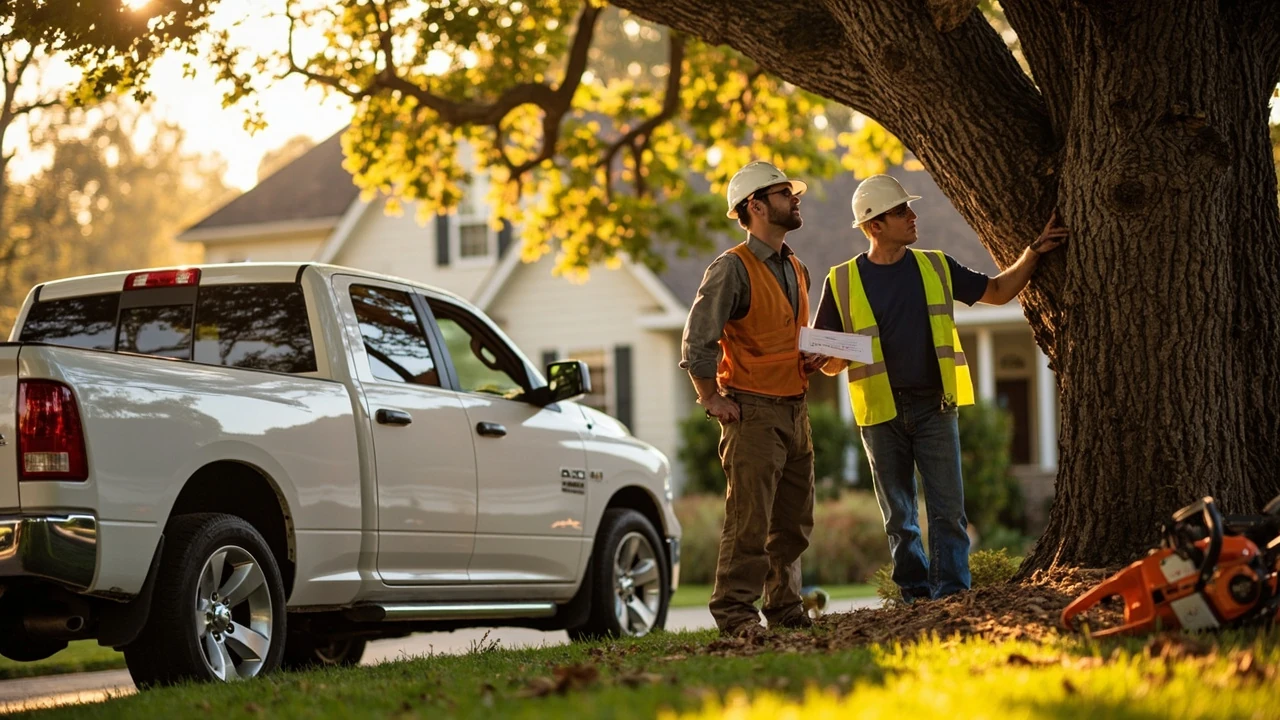
Cost of tree removal: what homeowners actually pay
A 60-foot oak leaning toward a garage roof is not a job you can price from a single national average. One homeowner in suburban Houston may pay a few hundred dollars to drop a small, open-access maple, while a neighbor with a storm-split pine hovering over a power line can see a quote that runs into four figures. The spread between those two jobs is exactly why the cost of tree removal deserves a closer look than a flat estimate.
Tree removal pricing is built from a small number of variables that any reputable company will walk through before giving you a number: the tree itself, where it sits on the lot, what is around it, and what you want done with the leftover wood and stump. Once you understand how each of those variables moves the price, you can read a quote with confidence and spot the line items that are worth pushing back on.
What the typical cost of tree removal looks like
Most professional removals on private residential property fall within a broad range because every tree is a different combination of height, density, and access. According to a guide published by Amplify, the cost of removing a tree can run from roughly $150 for a small, easy-to-reach tree to more than $2,000 for large, complex removals, with a typical range of about $700 to $1,000 for an average job.
That range is a useful starting point, but it hides a lot of detail. Two trees of the same height can produce very different quotes if one is a softwood maple in an open front yard and the other is a dense hardwood crowded between a fence and a detached garage. Treat the average as a midpoint, not a quote.
How size drives the cost of tree removal
Tree size is usually the first thing a climber or estimator looks at, because height and trunk diameter translate directly into time, equipment, and risk. Short trees with thin trunks can be felled in one cut from the ground, while tall trees require a climber, a rigging system, and a ground crew to lower sections safely.
As a rough guide, residential removals tend to be grouped into size bands:
- Small trees under 30 feet: often the entry point for residential pricing, typically the lower end of a quoted range, and the easiest jobs for a ground crew to handle without climbing gear.
- Medium trees 30 to 60 feet: the heart of the average range, usually requiring a climber, a chainsaw, and a rigging setup to lower limbs without damaging nearby structures.
- Large trees 60 to 80 feet: more equipment, more crew hours, and tighter control over where each section lands. Quotes rise quickly once a tree passes 60 feet.
- Very large trees over 80 feet: often the most expensive residential jobs, sometimes requiring a bucket truck, multiple climbers, and a much longer work day.
Diameter matters as much as height. A fat, old cottonwood at 50 feet can be harder to remove than a tall but slender pine, because heavier sections put more stress on ropes and require more cuts to manage safely.
Tree health and the cost of tree removal
A healthy tree is not always the cheaper one to remove. Dense, living wood is heavier and harder to cut than punky or partially decayed wood, so a vigorous specimen can actually take more labor per section. On the other hand, a tree that is dead, diseased, or hollowed out can be unpredictable, with branches that snap early or a trunk that shifts in unexpected ways once weight is removed.
Either condition can raise the cost of tree removal, just for different reasons. Diseased or unstable trees often require extra precautions to keep the crew and the surrounding property safe, and the estimator will usually flag that risk in the quote. If a tree has been struck by lightning or is leaning after a storm, expect the price to reflect that instability even if the height is modest.
Location and access factors that change the price
Where the tree sits on your property often shifts the price more than the species does. An open front yard with room for a chipper truck and a clear drop zone is the cheapest setting. A tight backyard, a sloped lot, a fenced side yard, or a tree threaded between a house and a power line is a different kind of job.
Proximity to structures and utilities
Trees that are close to homes, garages, fences, driveways, sheds, or overhead wires require more careful rigging, more control over each cut, and sometimes a second ground spotter. The closer the tree is to anything you do not want damaged, the more time the crew will spend setting up, and the higher the cost of tree removal will be.
When a tree is touching or hovering over a power line, the job may require coordination with the local utility, a planned outage, or a line-clearance crew with specialized training. That coordination is not free, and it can add a meaningful step to the bill.
Hard-to-reach trees
Trees on steep slopes, in fenced backyards without gate access, or behind landscaping features often need smaller equipment, more manual work, or a longer carry path for debris. Each of those slows the crew down. A tree that would take two hours in an open lot can stretch to a full day when the chipper has to be parked at the curb and every branch has to be carried by hand.
Emergency removals and after-hours work
Storm damage does not wait for business hours, and neither do the companies that respond to it. Emergency tree removal, especially for trees that are actively threatening a structure or blocking a driveway, is priced for urgency. Amplify’s guide notes that emergency work commonly falls in a range of about $500 to $2,500, depending on the complexity of the job and whether the work happens overnight, on a weekend, or during a holiday.
If a tree has not yet caused damage and can wait for a scheduled visit, you will almost always pay less than if you call a 24-hour line with a leaning trunk over a bedroom. The premium for emergency response is essentially the cost of having a crew, a climber, and equipment on the road within hours instead of days.
Debris removal, stump work, and other add-ons
Cutting the tree down is only part of the invoice. Once the trunk and limbs are on the ground, someone has to deal with them, and how you want that handled is a separate decision that changes the total cost of tree removal.
Debris haul-away versus leave-it-on-property
Some companies include debris removal in the base price. Others will cut the tree into manageable sections and leave the wood on site for the homeowner to handle. Leaving logs and brush on the property can lower the bill, but it also leaves you with a weekend of work, a stack of wood, and a pile of branches to chip, haul, or wait for curbside pickup.
If you want a fully clean site, ask whether the quote includes:
- Cutting the trunk and limbs into sections and hauling everything away.
- Chipping brush on site and removing the chips, or leaving them for use as mulch.
- Splitting logs into firewood-sized pieces and stacking them, if you want to keep the wood.
- Raking the work area and blowing the lawn clean of small debris.
Stump removal and stump grinding
The stump is a separate line item because removing it is a different job, often done with a different machine on a different day. Stump removal generally adds somewhere in the range of $60 to $350 to the total, depending on the diameter of the stump, the depth of the root system, and the method used.
Stump grinding, which machines the stump down to a few inches below grade and leaves the root system in place, is usually the more affordable option. Full For additional context, stump removal, which excavates the root ball, costs more and leaves a larger hole that has to be filled. For most homeowners, grinding is enough to reclaim the lawn, and the remaining roots break down over several years.
Other common add-ons
Beyond debris and stumps, a few smaller items can show up on a tree removal estimate:
- Permit fees, if your municipality requires a removal permit for trees above a certain size or species.
- Travel or trip charges for crews coming from outside your immediate area.
- Wood disposal fees, especially if you want logs removed rather than left behind.
- Site restoration, such as ruts from heavy equipment, topsoil, or reseeding of bare areas.
What a tree removal estimate usually includes
A well-written estimate breaks the job into parts so you can see what you are paying for. When a quote is just a single number, it is harder to compare companies and harder to negotiate. A reasonable residential estimate should at least describe the tree, the work, and the cleanup.
| Line item | What it covers | Why it matters |
|---|---|---|
| Tree description | Species, approximate height, trunk diameter, condition | Confirms the crew is pricing the same tree you are thinking about |
| Removal method | Ground felling, sectional takedown with rigging, or crane-assisted | Different methods have very different labor and equipment costs |
| Access and location notes | Proximity to structures, utilities, slopes, and fences | Justifies any complexity surcharge and flags safety constraints |
| Debris handling | Chipping, hauling, log splitting, or leaving material on site | Decides whether the price is turnkey or partial service |
| Stump work | Grinding depth, full removal, or no stump work | Often a separate line that can swing the total by hundreds of dollars |
| Permits and fees | Any municipal or utility coordination required | Catches costs that are easy to forget until the invoice arrives |
| Insurance and credentials | Proof of liability and workers’ compensation coverage | Protects you if a limb hits a roof or a worker is injured on your property |
Asking for that level of detail does not make you a difficult customer. It is the easiest way to compare two quotes that look similar on the surface but actually differ in scope.
How to compare tree removal quotes fairly
Once you have two or three written estimates, put them side by side. The cheapest number is not always the cheapest job, especially if one company is leaving debris behind and the other is hauling it away, or if one is including stump grinding and the other is not.
| Comparison point | What to check | Common pitfall |
|---|---|---|
| Scope of work | Same tree, same access, same disposal expectations | A low bid that quietly excludes cleanup or stump work |
| Insurance | Active liability and workers’ comp certificates | An uninsured crew that is cheaper but exposes you to risk |
| Equipment plan | Climbers, bucket truck, crane, or ground-only | Methods that look the same on paper but need very different gear |
| Timeline | Scheduled visit versus emergency response | An off-hours premium bundled into a daytime quote |
| Payment terms | Deposit, balance on completion, and accepted methods | Large upfront deposits that suggest a cash-flow problem |
If two bids are far apart, ask each company to walk you through their line items. A reputable estimator will explain why their price is what it is and where they are saving or spending compared to the competition.
Ways to reduce the cost of tree removal
Tree removal is not usually an impulse buy, so it is worth spending a few minutes looking for savings before you sign anything. A few habits can lower the bill without lowering the safety bar.
Time the job carefully
Demand for tree work spikes after storms and during peak growing season, which tends to push prices up. If the tree is not an active hazard, scheduling removal during a slower part of the year can mean a more flexible timeline and a better price. Off-season timing is one of the simplest ways to trim the cost of tree removal without changing the scope of work.
Combine work on the property
If you have more than one tree that needs attention, having them all quoted and removed in a single visit lets the crew set up once and move between jobs. Many companies will discount a multi-tree job because they save on travel and setup time. The same logic applies if a neighbor also needs work, since the crew is already in the area.
Handle the cleanup yourself
Doing the brush and limb cleanup yourself, or keeping the wood for firewood, can pull a meaningful chunk off the bill. Some companies will cut the tree into rounds and leave them stacked at the curb in exchange for a lower price. The trade-off is your time, a sharp chainsaw, and a way to haul or use the wood.
Skip stump work you do not need
If the stump is in an out-of-the-way corner of the yard, you can leave it and let it decay on its own timeline, or simply mow around it. Skipping stump grinding can drop the total by a noticeable amount, and it is a reasonable choice if the stump is not in the way of future landscaping.
Ask about financing for larger jobs
For large or emergency removals, some homeowners use a home equity line of credit or a similar financing product to spread the cost of tree removal over time rather than paying the full amount out of a single budget. That kind of financing is most useful when the tree has to come down quickly and the bill is larger than expected, not as a way to justify a job that could safely wait.
When professional removal is the only safe option
There is a reason reputable guides consistently steer homeowners toward hiring a tree service rather than tackling a removal themselves. A tree that looks manageable from the ground can behave unpredictably once weight starts shifting, especially if it is leaning, hollow, or tangled with another tree. Branches under tension can snap, trunks can barber-chair, and a single wrong cut can drop a section onto a roof, a vehicle, or a person.
Professional crews carry the training, the rigging, and the insurance to absorb that risk. If something goes wrong on a job, their coverage is what protects you from a liability claim. If something goes wrong during a DIY removal, the responsibility and the cost land on you. For anything taller than a small sapling, or for any tree within falling distance of a structure or a utility line, the safest answer is to hire the work out.
Signs a tree may need to come down soon
Not every tree that looks rough actually needs removal, and not every healthy tree is safe to keep. A few patterns are worth paying attention to, especially after storms or in older trees.
- Large dead branches in the upper canopy, often called widow-makers, that could fall onto a roof, a driveway, or a play area.
- A visible lean that has developed or worsened over a season, especially toward a house or a neighbor’s property.
- Cracks, cavities, or fungal conks on the trunk, which can signal internal decay even if the outside still looks alive.
- Root plate heaving, where the soil around the base lifts on one side, a classic sign of an unstable root system.
- Storm damage such as a split trunk, hanging limbs caught in the canopy, or a tree leaning onto a power line.
If you notice any of these, a certified arborist can usually assess the tree and tell you whether removal is the right call, whether cabling or pruning can extend its life, or whether the tree is fine for now. That assessment often costs less than the removal itself and can save you from cutting down a tree that could have been saved.
Choosing a tree removal company
The right company for a small ornamental in an open front yard is not necessarily the right company for a 70-foot pine over a garage. A few habits make the hiring process less of a gamble.
Verify insurance and credentials
Ask for proof of general liability insurance and workers’ compensation coverage, and confirm the certificates are current. A company that hesitates to share that information is not the company you want climbing a tree over your house. Membership in a recognized industry association or certification through a body such as the International Society of Arboriculture is a useful signal, but it is not a substitute for insurance.
Get more than one written estimate
Two or three written bids let you compare scope, not just price. They also give you leverage if one estimate seems out of line. Verbal quotes are easy to forget and easy to dispute; written estimates are not.
Watch for red flags
Some warning signs are worth taking seriously:
- Door-to-door solicitation after a storm, especially from out-of-town crews who vanish once the work is done.
- Pressure to sign a contract on the spot or to pay a large deposit before any work begins.
- Quotes that come in far below every other bid, with no clear explanation for the difference.
- No physical address, no company name on the truck, or refusal to provide references from local jobs.
Planning a tree removal on a remodel or new landscape
If a tree sits in the path of a planned renovation, a new driveway, a room addition, or a pool, the timing of the removal matters almost as much as the cost. Pulling a tree before the design is final can leave you with an empty space you did not plan for. Pulling it during construction can put equipment in the way and slow the crew down.
For projects that involve hardscape, drainage, or grading, it usually pays to coordinate the tree removal with the broader site plan. The same crew that handles the removal can often rough-grade the area afterward, and the stump decision can be tied to whether the spot will become lawn, garden bed, or patio. Treating the removal as one piece of a larger project, rather than a standalone chore, tends to produce a cleaner result and a more predictable budget.
Frequently asked questions
How much does tree removal cost on average?
Most residential jobs land in a broad range that reflects tree size, access, and cleanup, with typical jobs clustering around the middle of that range. A small, open-access tree can be removed for a few hundred dollars, while a large tree in a tight location with full cleanup often runs well into four figures. Emergency work and crane-assisted removals sit at the top of the range.
What is the cheapest way to remove a tree?
The most affordable option is usually a small tree in an open area, with the homeowner handling brush cleanup and skipping stump grinding. Combining multiple trees into one visit, scheduling during a slower part of the year, and keeping the wood for firewood are all ways to lower the bill without compromising safety.
Does homeowners insurance cover tree removal?
Coverage depends on the policy and the reason for the removal. If a tree falls on a covered structure because of a sudden event such as a storm, many policies will pay for the removal of that specific tree. Removal of a healthy or dying tree that has not damaged anything is usually not covered. It is worth checking your policy or calling your insurer before scheduling the work.
Do I need a permit to remove a tree on my property?
That depends on your city or county. Many municipalities protect certain species or trees above a specific size, and some require a permit before any removal. A quick call to your local planning or forestry office can confirm whether a permit is needed and how long it takes, which is useful information to have before you sign an estimate.
Is it worth grinding the stump after tree removal?
Grinding is worth it if the stump is in a visible or heavily used part of the yard, if you plan to replant or landscape the area, or if the stump is a tripping hazard. If the stump is in a back corner that you mow around, leaving it in place and letting it decay on its own timeline is a reasonable way to save money.
How long does a typical tree removal take?
Most residential removals are completed in a few hours once the crew is on site. A small tree in an open area can come down in under an hour, while a large tree with sectional rigging can take most of a day. Cleanup, chipping, and stump work usually add additional time on the same visit or a follow-up appointment.
Can I remove a tree myself to save money?
For a small sapling in an open area, a careful homeowner with a sharp chainsaw and proper safety gear can sometimes handle the work. For anything taller than roughly 15 to 20 feet, or for any tree near structures, fences, or utility lines, the risk of property damage and serious injury rises quickly. Professional removal is the safer answer for most residential trees.
Why is emergency tree removal so expensive?
Emergency work is priced for response time as much as for the tree itself. Crews that drop everything to handle a storm-damaged tree on a weekend or overnight carry higher labor costs, and the conditions are usually less predictable than a scheduled job. If a tree can wait for a normal appointment, scheduling rather than calling an emergency line almost always costs less.
How do I know if a tree actually needs to be removed?
Visible warning signs include large dead limbs in the canopy, a new or worsening lean, cracks or cavities in the trunk, fungal conks, root plate heaving, and storm damage such as a split trunk or a tree leaning onto a power line. A certified arborist can assess whether the tree is salvageable through pruning or cabling, or whether removal is the safer long-term answer.
Should I get multiple estimates for tree removal?
Yes. Two or three written estimates let you compare scope, method, and price rather than picking the first number you hear. Written bids also give you something concrete to refer back to if the scope of the job changes once the crew is on site.
Leave a Reply